
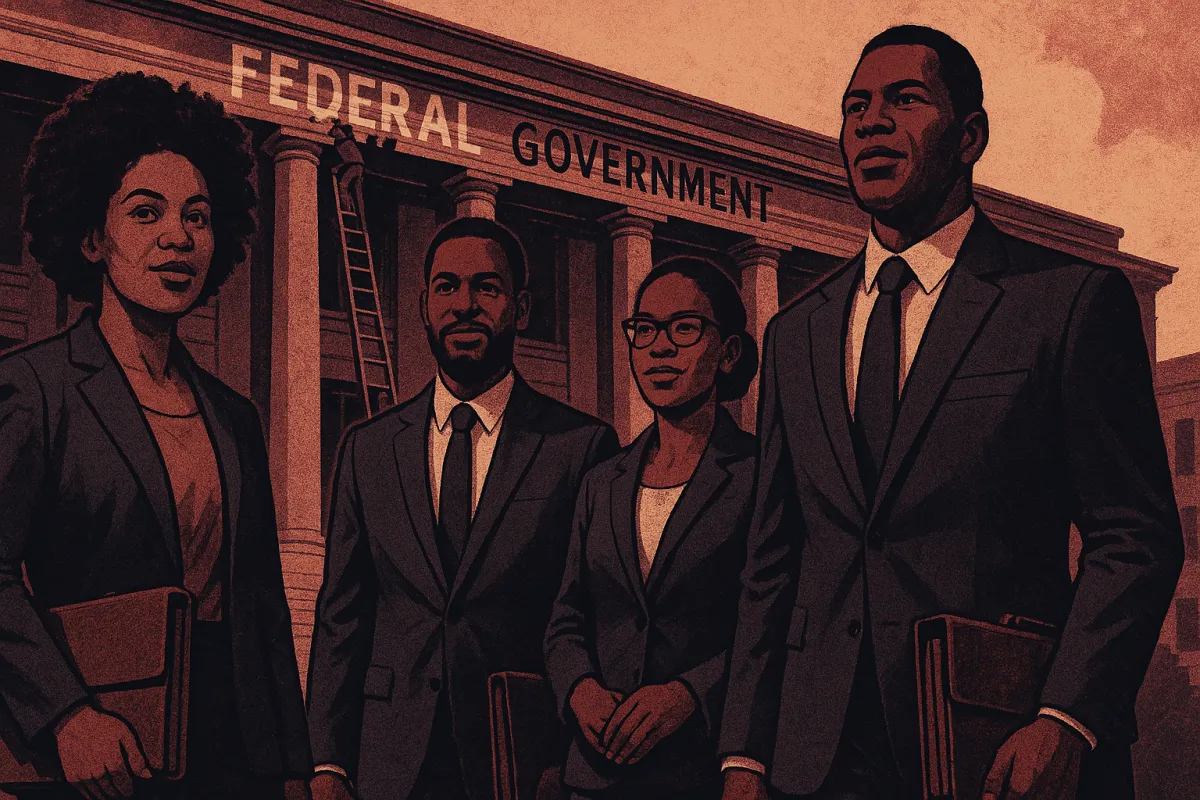
How Anti-DEI Executive Orders Are Erasing Black Workers from the Federal Workforce
What's Happening
A series of executive orders targeting diversity, equity, inclusion, and accessibility (DEIA) programs across the federal government are having a direct and devastating impact on Black workers. The elimination of federal DEIA positions and offices has not only eliminated jobs for Black workers — it has also dismantled the recruitment pipelines that helped build a diverse federal workforce over decades.
The 8(a) Program at Risk
Among the programs now in jeopardy is the 8(a) Business Development Program — a nine-year federal contracting and training initiative for small business owners from socially and economically disadvantaged backgrounds. In fiscal year 2024, the federal government spent approximately $755 billion on federal contracts, with a portion set aside through programs like 8(a) to provide opportunities for entrepreneurs from marginalized communities.
New DEI guidance could jeopardize the ability of racially diverse contractors to continue government business through such programs, cutting off a crucial economic pathway for Black entrepreneurs and business owners.
The Human Cost
Beyond contract programs, the broad rollback of DEIA policies is reshaping who gets hired, promoted, and retained across the federal government. Black federal workers — who have historically relied on civil service protections and DEI policies as a bulwark against workplace discrimination — now face an uncertain future.
A class action lawsuit has already been filed seeking to certify a class of potentially thousands of federal employees who were allegedly separated from their positions under anti-DEI executive orders. Among the sub-classes being sought is a Title VII Race/Ethnicity Subclass including African American and Black federal employees.
Why DEI Matters for Black America
DEI programs did not create racial inequality — they arose because racial inequality already existed. These programs were imperfect but necessary tools for addressing systemic barriers that have historically locked Black workers out of economic opportunity. Rolling them back does not level the playing field; it tilts it further.
The current political environment demands that Black communities, advocates, and allies remain vigilant, engaged, and vocal in defending the policies that protect economic equality.


Digital Books To Awaken Your Merkaba
Knowledge Is No Longer Hidden