
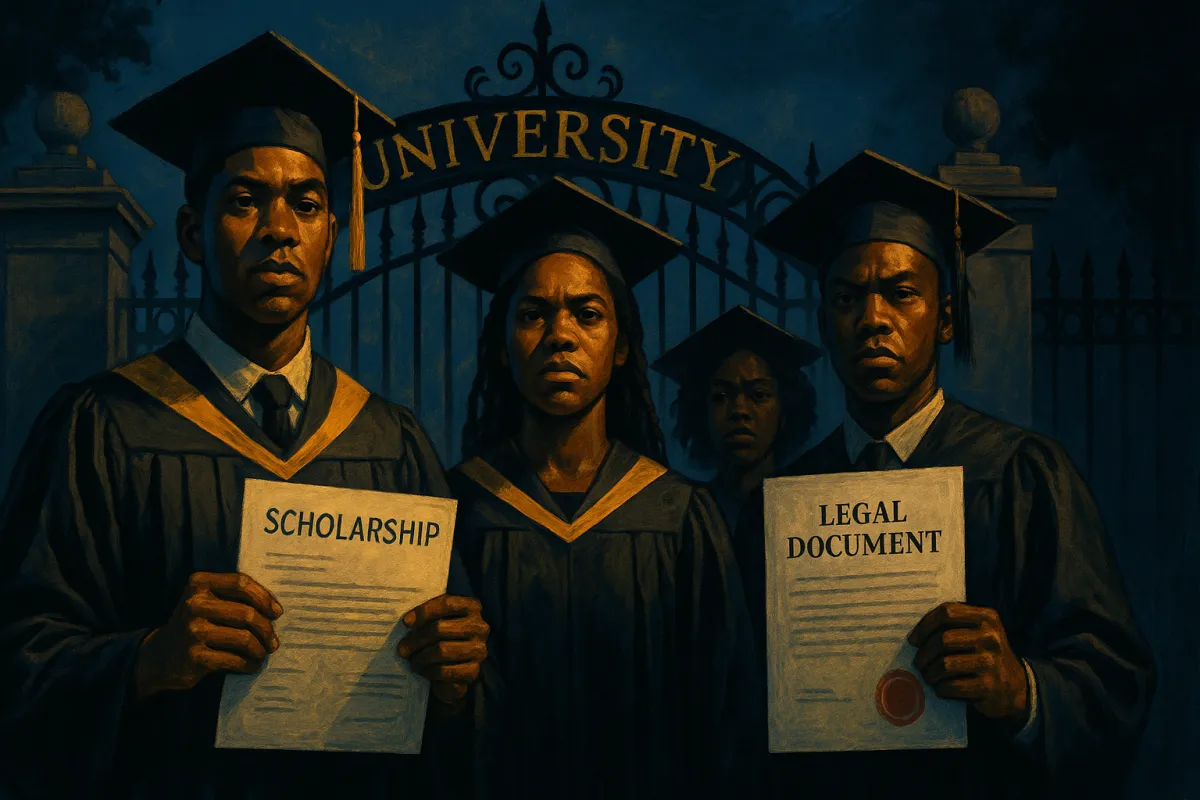
Black Student Scholarships Under Legal Attack: What You Need to Know
What's Happening
A new lawsuit is challenging scholarships specifically designated for Black students, filed under the Civil Rights Act of 1866. Legal analysts and civil rights advocates warn that this case is part of a broader legal strategy to systematically eliminate race-conscious remedies — programs designed to address historical inequities that continue to shape educational and economic outcomes today.
The Legal Argument Being Made
Plaintiffs in the lawsuit argue that scholarships limited to Black students constitute racial discrimination under existing civil rights law. This argument deliberately ignores the historical context that created the need for such scholarships in the first place — centuries of deliberate exclusion of Black Americans from educational institutions, wealth-building opportunities, and social mobility.
Supporters of these scholarships argue they are not about preferential treatment — they are remedies for documented, systemic harm. As legal scholars have noted, affirmative action-style programs have been among the most effective tools for addressing the pernicious legacy of slavery and systemic exclusion.
The Bigger Picture
This lawsuit does not exist in isolation. It is part of a coordinated wave of legal challenges targeting race-conscious policies across education, employment, and government contracting. From challenges to majority-Black voting districts, to the rollback of DEI programs in the federal workforce, to the dismantling of affirmative action in higher education — the pattern is clear.
The targets remain familiar: Black communities, and anyone whose presence challenges systems that have historically excluded them.
What's at Stake
If courts rule against race-specific scholarships, the impact could be devastating. Black students already face significant financial barriers to higher education. These scholarships — many funded by organizations like the Congressional Black Caucus Foundation, HBCUs, and private donors — have been lifelines for generations of Black scholars who otherwise could not access higher education.
Eliminating them would not create equity. It would cement inequality.
What You Can Do
- Donate directly to HBCU scholarship funds and organizations supporting Black student education
- Follow the legal case and share accurate information about it in your networks
- Support organizations like the NAACP Legal Defense Fund and ACLU that are fighting these challenges in court
- Contact your representatives and demand they protect educational equity programs
The fight for equal access to education is never finished. Stay engaged. Stay informed. Stay vigilant.


Digital Books To Awaken Your Merkaba
Knowledge Is No Longer Hidden