
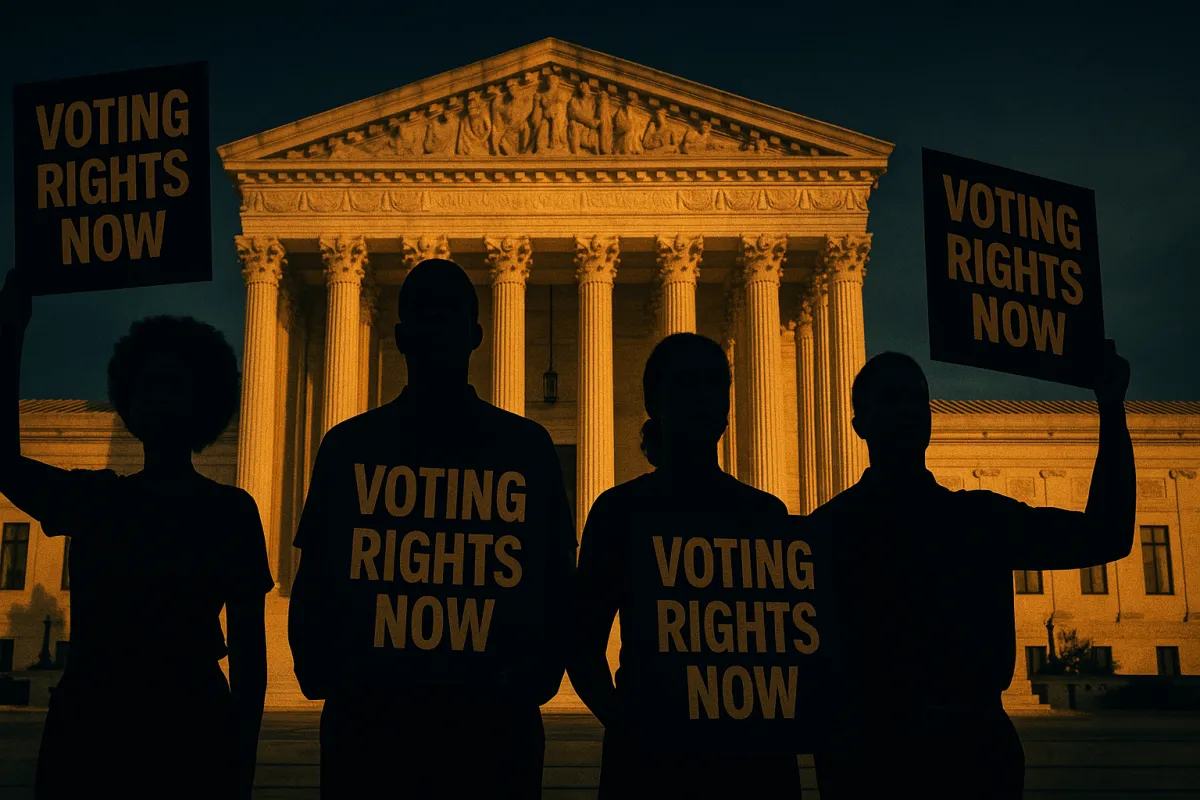
Louisiana v. Callais: The Supreme Court Case That Could Silence Black Voters
What Is Louisiana v. Callais?
A landmark case currently before the Supreme Court, Louisiana v. Callais, threatens to fundamentally weaken the Voting Rights Act protections that have long safeguarded Black voters' ability to elect representatives of their choice. If the court rules against existing VRA protections, majority-Black congressional districts could be redrawn — dramatically reducing effective Black political representation across the country.
Why This Case Matters
The Voting Rights Act of 1965 was a hard-won achievement of the Civil Rights Movement, designed to eliminate discriminatory voting practices that had systematically excluded Black Americans from the political process for generations. Today, it remains one of the most powerful legal tools protecting Black voting power.
Louisiana v. Callais is a direct legal pathway to weakening majority-Black districts. Civil rights advocates warn that a ruling against VRA protections could reverse decades of progress in ensuring Black communities have a meaningful voice in elections.
The Broader Attack on Black Voting Rights
This case doesn't exist in a vacuum. It comes alongside a wave of legislation and executive actions targeting voting access. An executive order recently created a federal voter eligibility list and restricted the distribution of mail-in ballots — a move civil rights groups say disproportionately burdens marginalized communities with limited access to in-person voting. Lawsuits challenging the order have already been filed.
Additionally, the proposed SAVE America Act could potentially disenfranchise millions of eligible voters by imposing documentary proof-of-citizenship requirements — burdens that would fall disproportionately on communities of color, seniors, and low-income voters.
What You Can Do
The erosion of civil rights protections rarely happens all at once. It happens through a series of decisions that, taken together, reshape the law and limit accountability. Now more than ever, it is critical to:
- Stay informed about voting rights cases before federal and state courts
- Register to vote and help others in your community register
- Support organizations fighting for voting rights through litigation and advocacy
- Contact your elected representatives and demand protection of the Voting Rights Act
The fight for Black voting power is not over. It is ongoing — and your voice matters.


Digital Books To Awaken Your Merkaba
Knowledge Is No Longer Hidden