Every Sunday, Black Atlanteans brings you the news that matters most to our community — the stories the mainstream buries, the victories we must celebrate, and the battles we refuse to lose. Today is June 21, 2026. Here is what you need to know.

1. Justice for Baby Kohen: A Nation Demands Answers
One week ago today, in a Walmart parking lot in the small Mississippi town of Senatobia, the life of 1-year-old Kohen Kartier Wiley was cut short by police gunfire. Officers responding to a shoplifting call fired into a vehicle where Kohen sat. His mother, Vellesiya Wiley, says she raised her baby up — physically lifted him into view — so officers could see he was there. They fired anyway. Kohen was struck in the rib cage and pronounced dead at Senatobia hospital. An adult in the car was critically injured. The officer who pulled the trigger has not been publicly identified and has been placed on administrative leave.
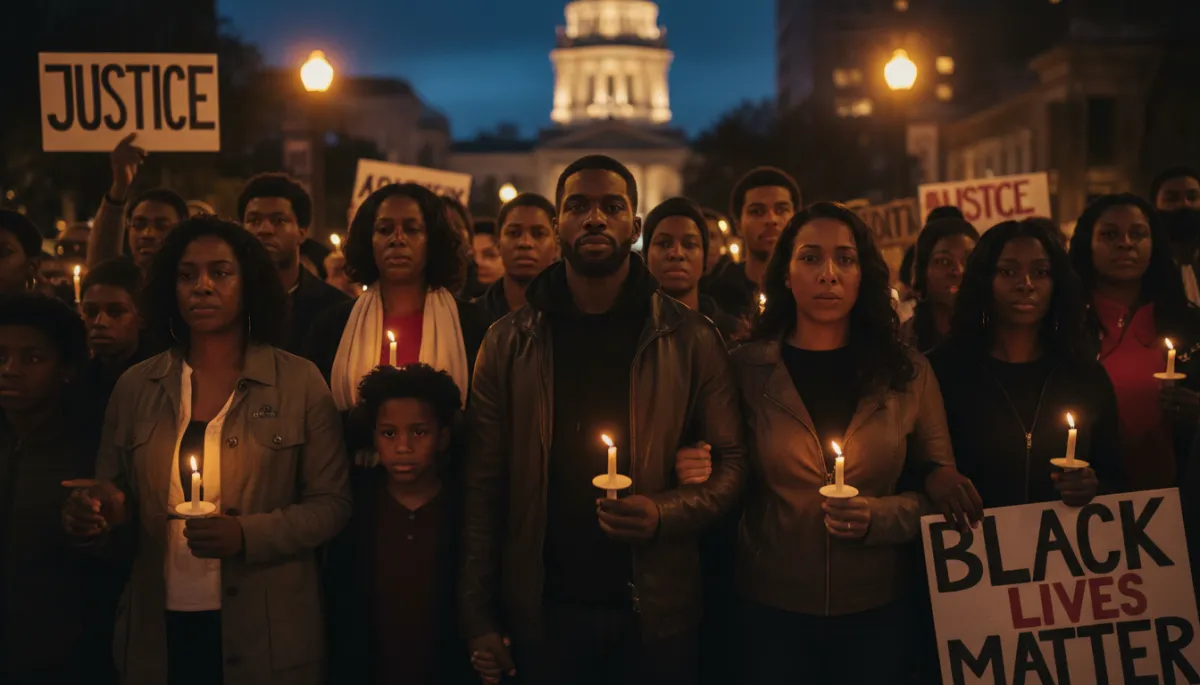
In the days that followed, hundreds took to the streets of Senatobia. Protesters filled downtown and surrounded city hall, holding signs reading "Justice for Kohen" and "End Police Terror." Law enforcement responded with tear gas outside the Walmart where the shooting occurred. Civil rights attorney Ben Crump — who now represents the Wiley family — called it exactly what it was: "A one-year-old child is dead after police officers in Mississippi opened fire on a vehicle in a crowded Walmart parking lot." The Mississippi Bureau of Investigation is reviewing body camera footage, dash camera footage, and Walmart surveillance video, but has yet to release any of it publicly.
Bernice King, daughter of Dr. Martin Luther King Jr., captured the moral weight of the moment when she wrote: "We are treating items on a shelf as more valuable than a child." The truth is: this happened because a community in Mississippi — like communities across this nation — has long endured police aggression that treats Black lives as disposable. Kohen Wiley was a baby. He deserved to grow up. The entire nation must demand full accountability, immediate release of all footage, and criminal charges where evidence supports them. Say his name. Kohen Kartier Wiley.
2. Black Voters Fight Back — Georgia Republicans Abandon Redistricting Push
This past Wednesday, June 17, something remarkable happened at the Georgia State Capitol — and it happened because Black Atlanta showed up. Hundreds of demonstrators, civil rights organizations, labor unions, and community advocates flooded the Capitol as a special legislative session opened. Their mission: stop a Republican plan to redraw Georgia's voting maps in a way that would have gutted Black political representation across the state. The chant echoed through marble hallways: "Black voters matter!"
The threat was real. Following the U.S. Supreme Court's 6-3 ruling in Louisiana v. Callais — which weakened the Voting Rights Act's protections for majority-minority districts — Governor Brian Kemp had called a special session to redraw Georgia's political maps before 2028. Experts and civil rights leaders warned that the new maps would scatter Black voters across districts, effectively silencing the voices of a community that makes up approximately one-third of all eligible voters in Georgia. The Congressional Black Caucus estimated that Republican redistricting efforts nationally could reduce its ranks by as much as one-third.
But the people pushed back — and it worked. Just hours before the session was set to begin, House Speaker Jon Burns sent Governor Kemp a letter announcing that Republicans would not take up redistricting during the session. Civil rights lawyer Gerald Griggs summed it up perfectly: "They said protesting doesn't work… this time, it did — for now." Senator Raphael Warnock had called the redistricting scheme "a betrayal of the highest American ideals." The fight is not over — Republicans have not promised to abandon future redistricting efforts — but today, our power was seen, heard, and respected. Register. Organize. Vote. The maps that protect our power were earned in court and in the streets.
3. African Nations Make World Cup History — And Atlanta is the Stage
If you've been anywhere near downtown Atlanta this week, you've felt it: the drumbeats, the jerseys, the pride. The 2026 FIFA World Cup has arrived, and Atlanta — our city — is right at the center of it. Matches are being played at Mercedes-Benz Stadium, and for the first time in World Cup history, 10 African nations are competing simultaneously: Algeria, Cape Verde, Ghana, Morocco, Côte d'Ivoire, Democratic Republic of the Congo, Egypt, Senegal, Tunisia, and South Africa. This is not just soccer. This is a cultural reckoning and a global showcase of African excellence.
Cape Verde, making their very first World Cup appearance, stunned the world by holding tournament favorite Spain to a 0-0 draw on June 15. South Africa played at Atlanta Stadium (the name Mercedes-Benz Stadium takes during the tournament) in a Group A match against Czechia on June 18. Atlanta's African and Caribbean diaspora community has rallied around every match. Restaurants like Ike's Cafe and Grill in Norcross and Marietta hosted vibrant watch parties with live music, jersey contests, and West African cuisine. Ghanaian co-owner Marcy Kwarteng captured the spirit: "It's a beautiful thing to see that we can unite as a continent and push each other forward and do so on such a grand scale."
The FIFA Fan Fest at Centennial Olympic Park has been electric, drawing record crowds — at points reaching maximum capacity. Summer Walker performed there, representing Atlanta on the world stage. For Atlanta's Black and African diaspora community, this tournament is more than sport. It's homecoming. It's heritage on a global stage. If you haven't been to a watch party yet — find one this week and show up. Our teams need us in the stands and in the streets.
4. A Silent Emergency: Young Black Men Are Dying by Suicide at Historic Rates
There is a crisis unfolding in our community that doesn't trend on social media, doesn't get prime-time coverage, and too often goes unspoken even in our own circles. New data from the Centers for Disease Control and Prevention reveals that Black Americans experienced a 53% increase in suicide deaths between 2014 and 2024 — a rate more than ten times faster than that of white Americans. Let that land. Ten times faster.
The numbers are most alarming among young Black men. Black males between the ages of 16 and 29 are now dying by suicide at higher rates than their white counterparts — a first in recorded history. The crisis peaks among Black men ages 20 to 24, whose suicide death rate stands at 31.9 per 100,000 people, the highest of any age group in America. Mental health professional Brandon Jones, who works directly with young Black men, frames it as an accumulation of unresolved pain: young people are feeling a deep trauma response, shaped by racism, police violence, economic pressure, social media overload, and a system that was never designed to see their humanity.
This is not a crisis happening somewhere else. It is happening in our families, our churches, our barbershops, our schools. The stigma that surrounds mental health in the Black community — the belief that we must be strong, that therapy is weakness — is costing us our sons, our brothers, our fathers. Check on your people. Be the person who asks, "Are you okay?" and actually means it. If you or someone you love is struggling, call or text 988 (the Suicide & Crisis Lifeline). Our community cannot afford to lose one more brilliant Black life to silence.
5. Black Business Power: The Village Market Takes Over the World's Busiest Airport
This is the kind of story that makes you proud to be Black in Atlanta. Dr. Lakeysha Hallmon, founder of The Village Market, has done something extraordinary: she has placed 35 Atlanta-based Black-owned brands inside a retail store — The Village Retail — at Hartsfield-Jackson Atlanta International Airport, the busiest airport in the world, with over 108 million annual customers. The shop, located on Concourse B, carries apparel, accessories, bath and beauty products, and home goods crafted by Atlanta's Black entrepreneurs. Atlanta Mayor Andre Dickens celebrated the opening as "an authentic representation of Atlanta's culture, creators, and entrepreneurs."
Hallmon has built something more than a store. She has built a pipeline. The Village Market started as pop-up events supporting Black start-ups across Atlanta. It grew into a brick-and-mortar at Ponce City Market. And now it has landed in prime real estate at the world's most-traveled airport. Her philosophy is simple: "When I lift, when I rise, and you come with me, that is how we shift and transform community." This is what collective economics looks like in action. Her tagline, "Support is a verb," is a direct challenge to all of us.
Atlanta continues to lead the nation in Black entrepreneurship. According to the most recent Census data, 10.7% of all employer businesses in the Atlanta metro area are Black-owned — compared to just 3.4% nationally. That means Atlanta's rate of Black business ownership is more than three times the national average. We built this city. We continue to build it. Find a Black-owned business in Atlanta this week — and spend your money there intentionally.
6. The Reparations Debate Heats Up: Who Qualifies — and Who Decides?
New York's state reparations commission — established by law in December 2023 — held a public hearing this month that laid bare a fierce and important debate within the Black community itself: who should be eligible for reparations? Advocates from the Freedmen Project, a group representing Foundational Black Americans (those who are direct descendants of enslaved people in the United States), argued passionately that eligibility must be tied to lineage. Their position: reparations exist to address the specific, documented harm of American slavery and its aftermath — and that claim belongs to descendants of those who were enslaved, not to all marginalized groups broadly.
The debate grew contentious, with some attendees clashing sharply over how to define belonging and injury. Some in the room feared that broadening the scope of reparations to include all marginalized communities or recent immigrants would dilute the movement's legal standing and moral clarity. Others pushed for a more expansive vision. The hearing reflects a national conversation that is only growing louder as cities, states, and the federal government grapple with how — and whether — to make amends for centuries of state-sanctioned racial injustice and stolen wealth.
This conversation matters deeply to Black Atlanteans. Georgia was one of the epicenters of both the antebellum slave economy and the civil rights movement that fought for the freedom that was owed from the start. Whatever form reparations ultimately take, the moral argument is unimpeachable: this nation extracted centuries of labor, life, and wealth from Black people — and has never made it right. Stay engaged in this conversation. Your voice — and your lineage — matters in shaping what justice looks like.
We Are Still Here. We Are Still Rising.
From the streets of Senatobia to the Capitol in Atlanta. From the pitch at Mercedes-Benz Stadium to the concourse at Hartsfield-Jackson. From the barbershop conversations about mental health to the reparations hearings rewriting America's moral ledger — Black people are showing up, speaking up, and building something that cannot be taken away. We are not just surviving. We are defining what this era will be remembered for. Black Atlanteans: stay informed, stay connected, and stay powerful. See you tomorrow.
— The Black Atlanteans Team