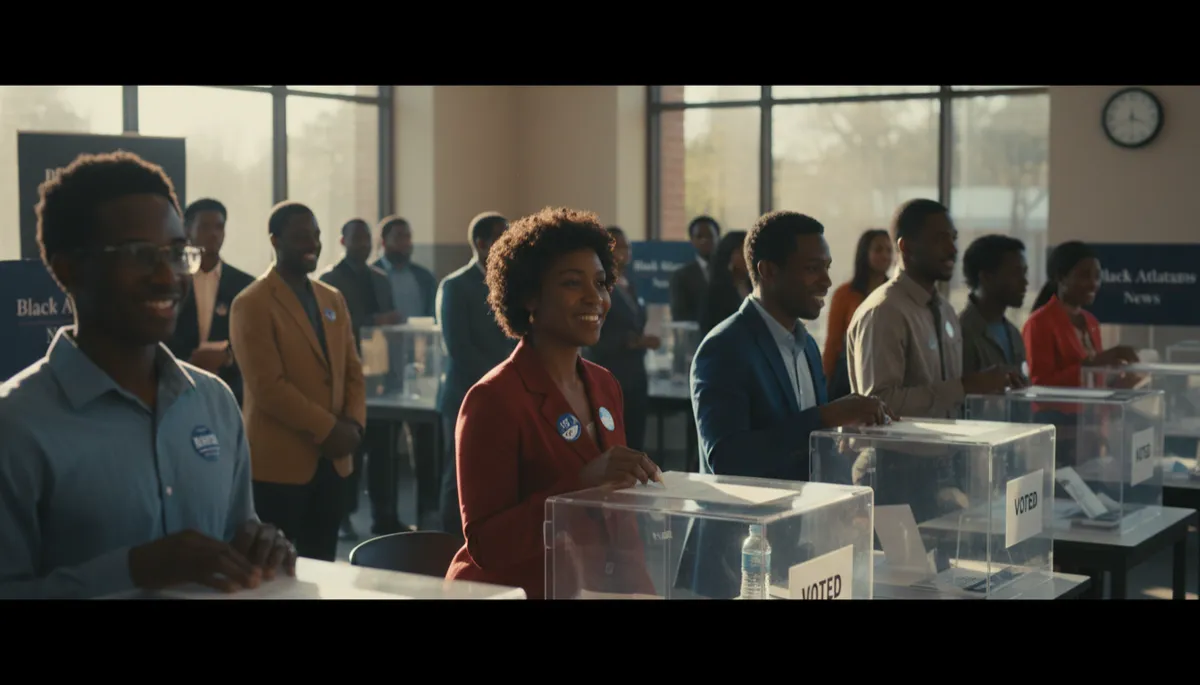
2026 Midterms: Key Black Voter Deadlines
Politics, 2026 midterms, Black voter registration, Voting rights, Black Atlanteans
2026 Midterms: Black Voter Registration Deadlines You Cannot Miss
The 2026 midterm elections will decide who writes our laws, draws our maps, and funds our neighborhoods. For Black Americans — and especially Black Atlanteans — the clock is ticking. Some registration deadlines have already passed, others are racing toward us, and the stakes for Black political power have not been this high in a generation.
Deadlines Already Gone: Who Missed the Window?
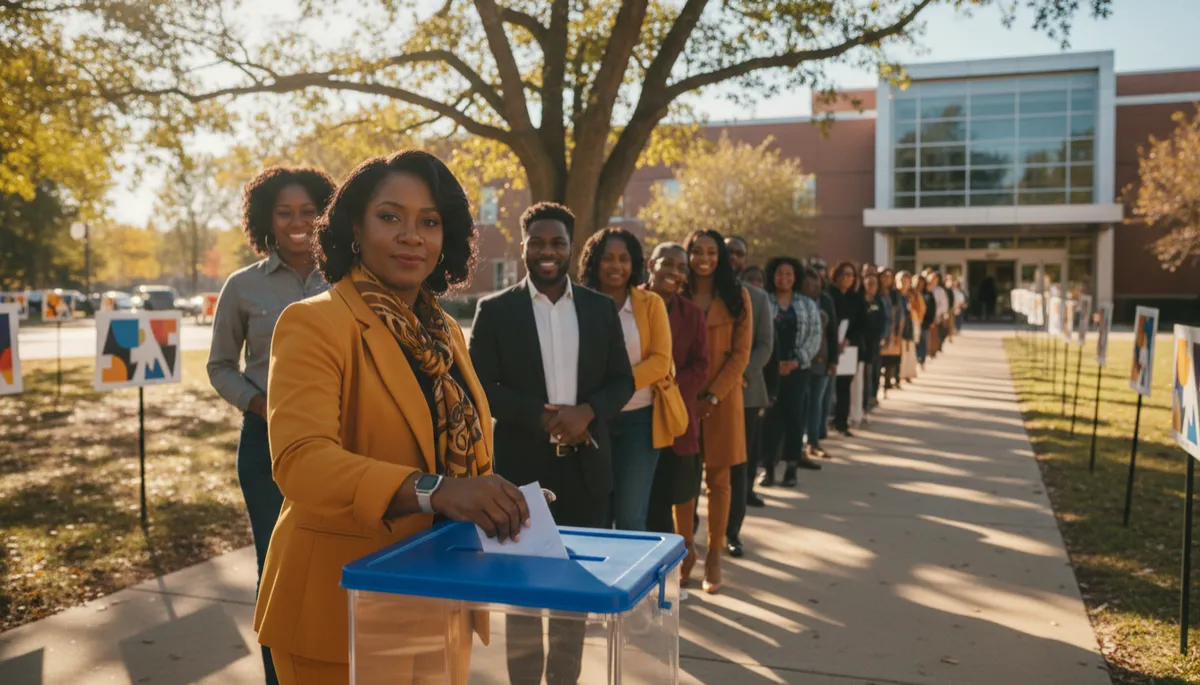
First, the hard truth: voter registration deadlines have already passed in several key states for the November 3, 2026 midterm elections. If you live in Texas, Florida, or Arizona, your deadline was October 5, 2026. In Alaska, Rhode Island, and South Carolina, the cutoff came even earlier, on October 4, 2026, according to nonpartisan election guide VoteU (voteu.org). If you are not already registered in those states, you cannot newly register for this election.
For Black voters in those states, this is not an accident of the calendar — it is the product of a system that has long tried to run out the clock on our power. But for millions of Black Americans in Georgia and across the country, there is still time to move with urgency, get registered, and make sure every eligible Black voter in our lives is ready to cast a ballot that counts.
Why the 2026 Midterms Are a Turning Point for Black Power
The 2026 midterms are not a “low-stakes” election. Every single seat in the U.S. House of Representatives is on the ballot, along with 33 U.S. Senate seats and a staggering 39 governorships nationwide. That means the people who will decide voting rights, criminal justice, housing, student debt, and reproductive freedom for the next decade are being chosen right now — not in some future presidential year, but this fall.
For Black Atlanteans, the House races are especially critical. If Democrats retake control, Hakeem Jeffries is poised to become the first Black Speaker of the House in U.S. history. That would put a Black leader second in line to the presidency and at the center of every negotiation over budgets, policing, and voting rights. That future is not guaranteed — it depends on turnout in Black communities from Bankhead to Birmingham, from Southwest Atlanta to South Carolina’s Lowcountry and beyond.
The SAVE Act and a Supreme Court Rolling Back Protections
At the same time that our votes are more powerful than ever, powerful forces are working overtime to limit who can use that power. One major threat is the SAVE Act, a proposed federal law marketed as an election “integrity” measure but widely criticized by civil rights groups as a tool to restrict voting access. By adding new documentation demands and bureaucratic hurdles, the SAVE Act could make it harder for eligible voters — especially Black, low-income, and younger voters — to stay on the rolls and cast a regular ballot.
Layered on top of this are recent decisions from the U.S. Supreme Court that have steadily eroded voting rights protections. In Louisiana v. Callais (2026), the Court narrowed how states must comply with Section 2 of the Voting Rights Act, making it harder to challenge racially gerrymandered maps. In Allen v. Milligan, the Court ordered lower courts to apply these stricter standards, signaling that the federal judiciary will be less willing to step in when Black political power is sliced apart through redistricting. Justice Kagan warned that Section 2 is being turned into “all but a dead letter” — and for Black voters across the South, that is not theory, it is lived reality.
National Urban League Warning: Our Progress Is Under Attack
The National Urban League’s 50th State of Black America report puts this moment in stark terms: the hard-won progress Black communities have made is under direct attack. From voting rights rollbacks to anti-DEI laws and book bans, the report describes a coordinated backlash aimed at silencing Black voices and erasing Black history from public life. This is not just about symbolism. When our access to the ballot is weakened, our leverage over budgets, schools, policing, and public health shrinks with it.
The report’s message lines up with what many Black Atlanteans already feel: progress is not a straight line. We are living through a tug-of-war between those who want a multiracial democracy and those who fear the power of a fully engaged Black electorate. The 2026 midterms are one of the biggest tests yet of which side will win that struggle.
What Black Voters Are Saying: Early Signals from the 2026 Black Census
Even as politicians talk about Black voters, Black communities are speaking for ourselves. Black Futures Lab has launched the third iteration of its Black Census Project, aiming to be the largest survey of Black people in U.S. history. Early data from more than 6,000 responses in the 2026 cycle show what many of us already know: Black voters are demanding policy that is real, economical, and tangible — not just speeches and symbolism.
Across income levels and regions, respondents point to the same core issues: the cost of living, wages that do not keep up with rent, medical debt, student loans, public safety without overpolicing, and schools that prepare our children for thriving futures. The message to Democrats, in particular, is unmistakable: if you want Black turnout, you must offer something concrete that improves Black lives right now — not vague promises about the distant future. Black voters are not apathetic; we are evaluating.
Black Atlanteans: What You Must Do Right Now
If you are in Georgia, your registration deadline is October 5, 2026, but if you are reading this after that date and you are already registered, you can still confirm your status, make a plan, and bring others with you. If you live in a state where the deadline has not yet hit, you still have a narrow window to act. Visit tools like Vote.gov, VoteU.org, or your state’s official election website to confirm your 2026 midterms voter registration status, find your polling place, and learn whether your state offers same-day registration or early voting options.
- Check your registration today. Even if you voted in 2024, you may have been purged. Do not assume — verify.
- Know your state’s deadline. If you are outside Georgia, look up your exact cutoff and whether your state allows same-day or Election Day registration.
- Build a voting squad. Make a list of at least five Black family members, friends, or coworkers. Text them the deadline, confirm their status, and plan to go together.
- Vote the whole ballot. From school board to sheriff to governor to senator, every line shapes Black life in Atlanta and beyond.
Our Ancestors Paid in Blood. We Pay with Ballots.
The Supreme Court may weaken the Voting Rights Act. Congress may push the SAVE Act. State legislatures may draw maps that try to split and shrink our power. But none of that changes this fact: when Black voters are registered, informed, and organized, we change what is possible in this country. We have done it in Atlanta, in Georgia, and across the South before. We can do it again in 2026.
Our elders faced literacy tests, poll taxes, and billy clubs. Today, the barriers wear suits and speak the language of “integrity” and “colorblindness,” but the goal is the same: to keep Black people from deciding our own future. We honor those who fought and died for the ballot not just with memory, but with action. Registration is step one. Turning out, together, is step two. Demanding real, economical, and tangible results is step three.
Black Atlanteans, Black Southerners, Black voters nationwide: the 2026 midterm elections are not happening to us; they are happening through us. The question is not whether this system will try to silence us. It already is. The question is whether we will answer with silence — or with a wave of Black ballots so powerful that every level of government has no choice but to listen.
The deadlines are real. The attacks are real. But so is our power. Do not miss your registration window. Do not sit out November 3, 2026. Our future is on the ballot — and so are we.




