AI and Black America: Fighting for Civil Rights in the Digital Age
Artificial intelligence is transforming every corner of American life — from hiring decisions and home loan approvals to criminal justice risk assessments and social media feeds. For Black Americans, that transformation carries a familiar warning: technology built without us, deployed against us.
In 2026, the stakes couldn't be higher. AI is accelerating job displacement, deepening health inequities, polluting Black neighborhoods, and reinforcing the same racial biases that have long structured American society. But a growing movement — led by Black lawmakers, technologists, and community advocates — is fighting back.
The Jobs Crisis: Automation and Black Workers
Black Americans are overrepresented in exactly the industries most vulnerable to AI automation. Manufacturing, call centers, customer service, data entry, transportation logistics — these are the economic footholds that generations of Black workers fought to secure. And now, corporations are automating them at a rapid pace, without retraining pipelines, severance protections, or pathways into the higher-wage tech jobs driving the AI economy.
Algorithmic Bias: Discrimination in Code
When AI systems are trained on biased historical data — which is to say, most AI systems — they learn to replicate and amplify existing inequities. This manifests in concrete, life-altering ways for Black Americans:
- Hiring algorithms that screen out Black candidates based on proxies for race like zip code, school name, or even first name.
- Credit and mortgage scoring models that systematically undervalue Black applicants, perpetuating the racial homeownership gap.
- Social media recommendation systems that amplify harmful content and suppress Black voices on matters of justice.
- Criminal justice risk tools that consistently overestimate recidivism risk for Black defendants.
AI Data Centers and Environmental Injustice
The booming AI industry requires massive data centers — and those data centers require enormous amounts of energy and water. These facilities are being built disproportionately in communities of color. According to researchers, AI data centers have been linked to increased respiratory illnesses and cancer risks in predominantly Black neighborhoods — an environmental justice crisis largely flying under the national radar.
The AI Civil Rights Act: A Line in the Sand
Congressional Black Caucus Chair Rep. Yvette D. Clarke has introduced the AI Civil Rights Act — landmark legislation designed to hold tech companies accountable for the harm caused by their AI tools. The bill would require AI systems used in high-stakes decisions — employment, housing, healthcare, lending — to be audited for bias, and would create enforceable standards for algorithmic fairness.
The legislation represents a pivotal moment: the recognition that civil rights must extend into the digital domain, and that Black Americans cannot afford to let the AI revolution happen to them without a fight.
Atlanta's Black Tech Renaissance
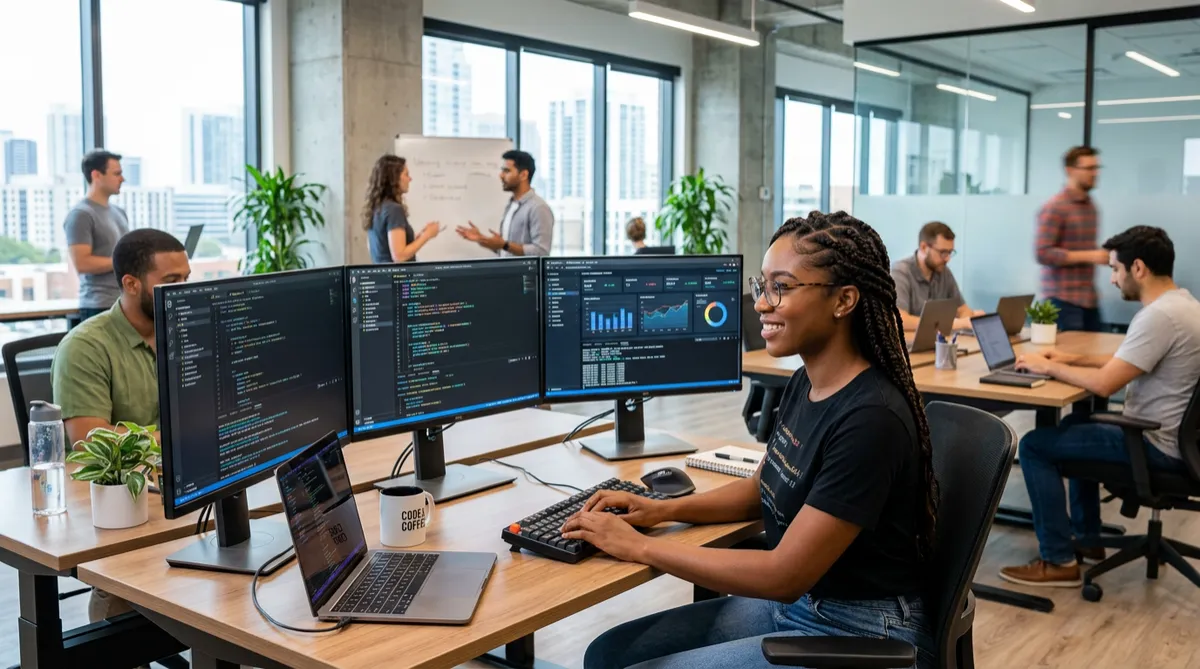
Atlanta is at the center of the movement for equitable AI. With Georgia Tech, Spelman College, Morehouse College, and Clark Atlanta University all investing in technology education, the Black Mecca is positioning itself as a hub for equitable AI innovation. Black-led tech accelerators are creating pipelines for the next generation of Black AI engineers, data scientists, and entrepreneurs.
The Bottom Line
Technology is not neutral. It reflects the values, biases, and power structures of the people who build it. For Black America to thrive in the AI age, we must fight for civil rights in digital spaces with the same urgency our ancestors fought for them in physical ones. The AI Civil Rights Act is a start. But the real work — of building, advocating, educating, and demanding equity — belongs to all of us.
The algorithm may not see us clearly. But we see ourselves — and we're building our own future anyway.




