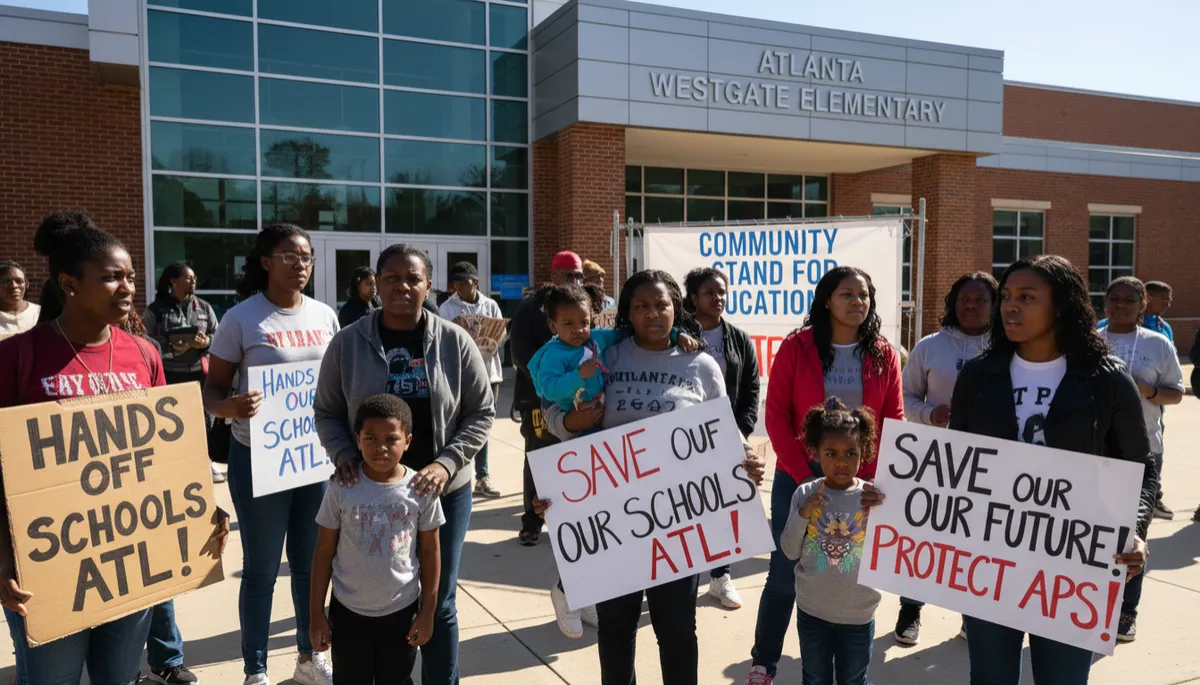
Atlanta School Closures: Data Reveals Black Neighborhoods Disproportionately Targeted
The Data Does Not Lie
When Atlanta Public Schools officials began discussing potential school closures to address declining enrollment and budget pressures, they framed it as a practical, data-driven decision. But new analysis is revealing a more troubling picture: the schools slated for closure are disproportionately located in Black neighborhoods.
For Atlanta's Black community, which has watched its neighborhoods gentrify, its families displaced, and its political power threatened, this is not simply a school board decision. It is a pattern. And patterns have consequences.
What the Data Reveals
Analysis of the proposed closure list shows a clear geographic clustering. The overwhelming majority of schools under consideration for closure are located in predominantly Black areas of Atlanta. These schools serve as more than educational institutions. They are community anchors. They are where children get breakfast, where families build relationships, and where neighborhood identity is formed and sustained.
Closing these schools does not just affect children's access to education. It ripples through entire communities: property values, community cohesion, family stability, and the ability of neighborhoods to retain residents all take serious hits when a neighborhood school closes.
A Familiar Playbook
This is not the first time Black communities in Atlanta have faced the systematic removal of institutions. The story of urban renewal, highway construction through Black neighborhoods, and the quiet erosion of Black political and cultural centers is well documented in Atlanta's history. School closures, advocates argue, are the latest chapter in that story.
The National Urban League's 2026 State of Black America report notes that public education systems remain under-resourced and unstable, weakening traditional talent pipelines for Black students. When the schools that serve Black children are closed while schools in wealthier neighborhoods remain open, the message sent to Black families is clear and corrosive: your children matter less.
Community Response
Atlanta's Black community is responding. Parents, educators, faith leaders, and elected officials are organizing, attending school board meetings, and demanding transparency about the criteria being used to select schools for closure. They are asking the fundamental question that should be at the center of every such decision: Who benefits, and who bears the cost?
What Needs to Happen
Community advocates are calling for:
- A transparent, independent demographic analysis of all proposed closures before any decision is finalized.
- Meaningful community input, not just public hearings that serve as rubber stamps, but genuine co-design processes that include affected families.
- Investment before closure. If enrollment is low, communities deserve investment in programs, facilities, and wraparound services that make schools attractive before closure is considered.
- Accountability from elected officials, including Atlanta City Council members and state legislators, who must be on record on this issue before the next election.
This Is Atlanta's Test
The proposed school closures are a test of whether Atlanta's leadership is willing to act on its stated values or whether Black neighborhoods will once again be asked to sacrifice for the convenience of a city that claims to love them.
Black Atlanteans: attend the school board meetings. Sign the petitions. Call your representatives. Your children's futures depend on it.
Sources: Atlanta News First; National Urban League 2026 State of Black America Report; Atlanta Black Tech Summit 2026




