Monday, October 19, 2026 — Black Atlanteans Daily News Brief
Opening: Why Today Matters
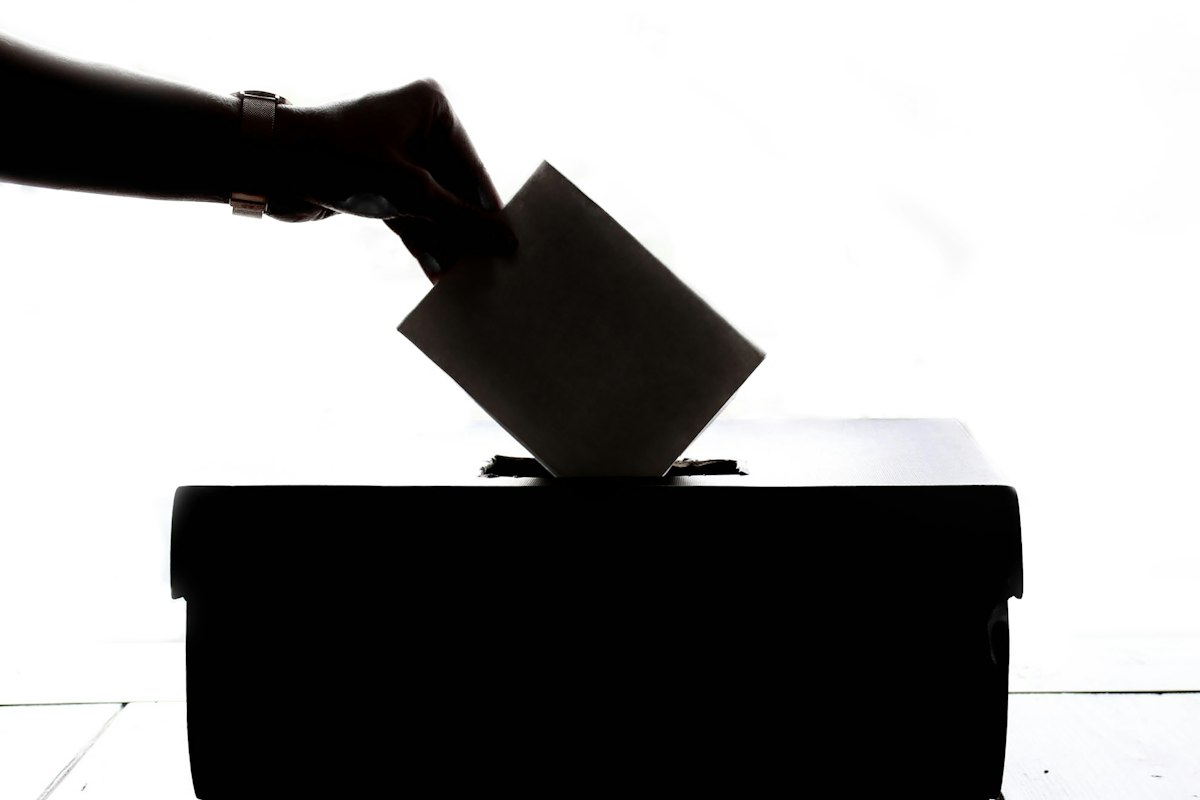
With the 2026 midterm elections now less than three weeks away, Black communities across the United States are navigating one of the most consequential political and economic moments in a generation. The Supreme Court has gutted key sections of the Voting Rights Act. Black unemployment has hit a five-year high. Black women are exiting the workforce at historic rates. And yet, across every challenge, our communities are organizing, investing, building, and showing up. Today’s briefing gives you the facts, the context, and the tools to move forward with purpose.
Sources reviewed for this edition: 14 credible articles and primary sources from the Congressional Black Caucus Foundation, National Urban League, NAACP Legal Defense Fund, Brennan Center for Justice, The Emancipator, New York Amsterdam News, Word in Black, Essence Magazine, Brookings Institution, The 19th, National Partnership for Women & Families, Black Wall Street USA, African Diaspora Network, and the United Nations.
📰 Top Stories — October 19, 2026
1. ✅ The 2026 Midterms: Everything Is at Stake for Black Voters
The November 3 midterm elections are now 15 days away, and the stakes could not be higher for Black communities. Early voting has already begun in several states, and 82% of likely Black voters surveyed by the Leadership Conference on Civil and Human Rights say they fear their rights are being rolled back. Roughly 37% of Black Americans doubt whether their state and local governments will run fair elections — compared to 27% of white Americans.
Senator Raphael Warnock has been traveling the country, arguing that Democrats need congressional majorities capable of putting “guardrails” on the current administration. Meanwhile, the Black Futures Lab released early results from its 2026 Black Census Project, a national survey of more than 6,000 respondents, underscoring that Black voters want something “real, economical, and tangible” — not just symbolic representation.
💡 Why it matters: If Democrats retake the House, Congressional Black Caucus leader Rep. Hakeem Jeffries is positioned to become the first Black Speaker of the House. The composition of Congress will determine the fate of healthcare, voting rights, economic programs, and much more for Black communities.
🔴 Takeaway: Know your polling location. Check your registration. Early vote if available in your state. Every vote matters — especially now.
2. ⚖️ Supreme Court Guts the Voting Rights Act — And States Are Fighting Back
The Supreme Court’s ruling in Louisiana v. Callais has sent shockwaves through civil rights law. The decision gutted Section 2 of the 1965 Voting Rights Act, making it far harder for Black voters to challenge discriminatory congressional maps in court. The ruling has directly resulted in the dismantling of majority-Black congressional districts across Louisiana, Virginia, Tennessee, and Alabama. As Rep. Cleo Fields of Louisiana — whose own district was dismantled — said: “They basically gutted Section 2 and basically ended the Voting Rights Act.”
In response, the NAACP has filed lawsuits and emergency injunctions in federal courts. The NAACP Legal Defense Fund is also calling on Congress to pass the John Lewis Voting Rights Advancement Act to restore federal preclearance protections.
However, there is significant good news at the state level: five states enacted or expanded State Voting Rights Acts in 2026 alone — Washington, Maryland, New Jersey, Delaware, and California. These State VRAs provide critical protections that the weakened federal law no longer guarantees.
💡 Why it matters: More than a dozen Black and Latino lawmakers are at risk of losing their seats as a direct result of new discriminatory maps drawn after the Callais ruling. The elimination of Black-majority districts means fewer voices for our communities in Congress.
🔴 Takeaway: Contact your state legislators and demand State Voting Rights Act protections. Support the NAACP and NAACP LDF in their ongoing litigation. Participate in every election — local, state, and federal — to make your voice undeniable.
3. 💉 Black Women Are Being Pushed Out of the Workforce at Historic Rates
The economic crisis for Black women is severe and documented. In 2026, the overall Black unemployment rate has reached 7.5% — the highest level since October 2021. More than 300,000 Black women left the workforce in the first half of 2025. Black women’s unemployment is now equivalent to what white women experienced during the bleakest moments of the Great Recession.
The primary drivers: federal government layoffs through DOGE-led reductions disproportionately targeted agencies where Black women were most concentrated, including the Department of Education (where Black women were more than a quarter of all workers), HHS, HUD, USAID, and the Consumer Financial Protection Bureau. Black women, who make up 12% of the federal workforce — nearly double their 7% share of the overall labor market — bore an outsized share of these cuts.
Meanwhile, the Institute for Women’s Policy Research projects it will take 200 years for Black women to achieve equal pay in America. The Brookings Institution warns that further Medicaid cuts threaten to eliminate healthcare jobs in industries where Black women are heavily represented.
💡 Why it matters: When Black women’s economic security collapses, it is a harbinger of broader economic pain for all working families. Black women are disproportionately primary breadwinners and caregivers.
🔴 Takeaway: Advocate for fair pay legislation, paid family leave, and robust enforcement of workplace discrimination protections. Support organizations like the National Partnership for Women & Families that center Black women’s economic recovery.
4. 🏥 Medicaid Cuts Are a Direct Threat to Black Maternal Health
The stakes of this year’s elections are written in data that is difficult to read without urgency: Black women in the United States die from pregnancy-related causes at nearly 3.5 times the rate of white women. The maternal mortality rate for Black women was 50.3 per 100,000 live births in 2023 — and while overall maternal deaths declined that year, deaths among Black women increased.
Medicaid funds roughly 65% of all births to Black mothers. The “One Big Beautiful Bill” signed in July 2025 represents the largest cut to Medicaid in the program’s history, and coverage changes will begin taking effect this November. Programs designed to reduce racial disparities in birth outcomes — including Black infant health initiatives, community-based perinatal care, and doula access — are being defunded under executive actions targeting equity-related grants.
On a hopeful front, guaranteed income pilot programs in Atlanta and New Orleans have shown promising results: the March of Dimes launched UBI trials providing $1,000 per month to pregnant women in the highest-need ZIP codes. Advocates, researchers, and cities are building community-based solutions where the federal government has retreated.
💡 Why it matters: More than 80% of maternal deaths are preventable. Losing Medicaid coverage before, during, or after pregnancy is a direct increase in mortality risk for Black mothers.
🔴 Takeaway: Demand your elected officials protect Medicaid. If you or someone you know uses chlorthalidone (a blood pressure medication — a condition that disproportionately affects Black Americans), note that Invincia Healthcare has issued a voluntary recall of affected 25-milligram tablets. Consult your healthcare provider before stopping any medication.
5. 🚨 Families and Lawmakers Demand Federal Investigation Into Hanging Deaths of Black Americans
A deeply disturbing pattern has emerged in 2026: at least 10 Black Americans have been found hanging across the country, involving people as young as 18 and spanning Mississippi, Michigan, and New York. Families in several of these cases have publicly questioned official rulings of suicide, and the circumstances vary significantly across cases.
Representative Ayanna Pressley of Massachusetts, along with 59 congressional colleagues, sent a formal letter to the Department of Justice and the FBI calling for comprehensive federal investigations into these deaths. For Black Americans, the image of a Black person hanging from a tree carries generations of historical weight — the legacy of racial terror and public lynchings that must never be minimized or dismissed without thorough investigation.
💡 Why it matters: Families deserve answers, transparency, and independent review. The pattern demands federal attention, not silence.
🔴 Takeaway: Contact your congressional representatives to support Rep. Pressley’s call for federal investigations. Amplify these families’ demands for truth and accountability.
6. 🌍 The African Diaspora’s $96 Billion Economic Engine
Amid difficult domestic news, one of the most powerful economic stories in the world belongs to the African diaspora. The African diaspora — representing more than 170 million people of African descent living outside the continent, recognized by the African Union as Africa’s “sixth region” — contributes an estimated $96.4 billion annually in remittances, exceeding both foreign direct investment and official development assistance combined.
In several countries — including The Gambia (21.1% of GDP), Lesotho (20.9%), Comoros (18.3%), and Somalia (17.5%) — remittances from diaspora communities represent more than 10% of national GDP. The West African regional stock exchange (BRVM) returned an extraordinary 25.26% in 2025 — 42% in USD terms — positioning francophone West Africa as one of the world’s most compelling emerging equity markets.
The African Diaspora Network has also expanded its presence, opening a Washington, D.C. office and receiving $100,000 in new funding to strengthen diaspora-led science, innovation, and global research partnerships. Meanwhile, Benin has opened citizenship applications to all people of African descent worldwide, joining a growing list of African nations formally recognizing historical links with the global diaspora.
💡 Why it matters: The diaspora is not only a cultural force — it is a $96 billion economic pillar for the African continent. Investing in Africa is investing in ourselves.
🔴 Takeaway: Explore diaspora investment platforms, research Africa-focused financial products, and support organizations like the African Diaspora Network that are building institutional infrastructure for our collective prosperity.
7. 🏠 The Black Wall Street Renaissance: Building the Economy Within
On the domestic front, Black business ownership is experiencing a new chapter rooted in both digital innovation and old-school community investment. Black entrepreneurs now participate in virtually every major sector of the American economy — from healthcare and finance to technology and advanced manufacturing. The modern Black Wall Street movement embraces both physical business districts and digital commerce, using technology to expand economic cooperation across geographic boundaries.
This month, the ICABA World Network is observing Black Professionals Month (BPM), celebrating the excellence of Black leaders and entrepreneurs globally with a major wealth-building summit on October 24th. Meanwhile, the Emerald Book platform — a free all-in-one directory for the Black economy — notes that less than 2% of Black buying power currently circulates back into Black-owned businesses, and that redirecting just 1% more would inject an estimated $21 billion back into our communities.
The National Urban League’s 50th State of Black America report, while documenting setbacks, also charts a way forward: America’s racial and economic transformation, combined with a new technological revolution, holds real promise — if Black communities demand it and leaders rise to meet it.
💡 Why it matters: Economic self-determination has always been a cornerstone of Black freedom. Building Black business ecosystems creates jobs, wealth, and community stability that no administration can easily dismantle.
🔴 Takeaway: Be intentional about where you spend your dollars. Use free directories like Emerald Book to find Black-owned businesses near you. Attend the BPM Wealth Summit on October 24th. Invest in Black institutions.
8. 🧠 The Mental Health of Black Voters: You Are Allowed to Feel This
The pressure of this political moment is real, and so is its toll on mental health. Dr. Wendi Williams, president of the American Psychological Association, says people in Black communities are “at their edge — and understandably so.” More than three in four Black adults expressed concern about peaceful protesters being harmed by federal agents, the military, or police — a higher rate than any other group surveyed.
Dr. Williams urges Black voters to recognize the stress and vote “for the care of each other.” She also encourages small acts of restoration: rest, spirituality, time in nature, a short walk, or a phone call with someone who loves you. These are not luxuries. They are survival strategies.
💡 Why it matters: A community that is mentally depleted cannot organize, vote, build, or thrive. Taking care of yourself is a political act.
🔴 Takeaway: If you are in a mental health crisis or concerned about someone else, call or text the Suicide & Crisis Lifeline at 988. Help is available 24/7. TTY users can dial 711, then 988.
📚 Black History Moment: The Voting Rights Act at 61 — And the Fight That Never Ended
The Voting Rights Act of 1965 was signed into law on August 6th of that year — a generational breakthrough that ended poll taxes, literacy tests, and other intimidation tactics designed to keep Black Americans from the ballot box. It created the Civil Rights Division of the Department of Justice as a watchdog for voting rights, equal employment, and fair housing.
Sixty-one years later, the National Urban League — in its landmark 50th annual State of Black America report — issued an urgent warning: “Our democracy, civil rights, and hard-won progress are under attack.” From the Supreme Court’s 2013 decision in Shelby County v. Holder to this year’s ruling in Louisiana v. Callais, the protections that generations of Black Americans marched, bled, and died for have been systematically eroded.
But history also tells us: our people have never stopped fighting. Not after Reconstruction was betrayed. Not after Jim Crow was entrenched. Not after Shelby County. We adapt, we organize, we build, and we show up. That is what the November 3 election demands of us now.
🌟 Community Takeaway: Show Up. Build Up. Rise Up.
This is not a moment for despair — it is a moment for deliberate action. Our votes are being suppressed because they are powerful. Our businesses are being starved of capital because they build wealth. Our women are being pushed out of the workforce because their leadership is transformative. Every attack on Black progress is also, in its own way, a testament to our power.
Here is what you can do today:
- ✅ Check your voter registration and confirm your polling location at vote.org.
- ✅ Early vote if your state allows it — do not wait for November 3.
- ✅ Spend Black — find Black-owned businesses near you through directories like Emerald Book.
- ✅ Protect your health — if you take chlorthalidone for blood pressure, contact your provider about the current recall of 25mg tablets.
- ✅ Support Black maternal health — advocate for Medicaid protection and expanded doula and midwifery care.
- ✅ Rest and restore — call or text 988 if you or someone you know needs mental health support.
- ✅ Stay connected to the diaspora — our strength is global, and Africa’s economic rise is our rise too.
We are not just surviving this moment. We are building through it. And we will be here — every morning — to keep you informed, grounded, and moving forward.
— Black Atlanteans Editorial Team
📰 Sources Reviewed for This Edition
- Congressional Black Caucus Foundation — Five Key Policy Issues for Black Americans in 2026 (cbcfinc.org)
- National Urban League — State of Black America 2026: Is the American Dream Dead? (nul.org)
- NAACP Legal Defense Fund — State Voting Rights Acts: Protecting Voting Rights and Democracy (naacpldf.org)
- Brennan Center for Justice — Finishing Off the Voting Rights Act, Supreme Court Declares Racism Over Again (brennancenter.org)
- The Emancipator — Race, Rights and Power: What’s at Stake in the 2026 Midterm Elections (theemancipator.org)
- New York Amsterdam News — Voting Under Pressure: 2026 Midterms and Black Emotional Health (amsterdamnews.com)
- Essence Magazine — Black Americans Found Hanging Across the Country — Families Want Answers (essence.com)
- Word in Black — Cash for Moms: Cities Test a New Approach to Black Maternal Health (wordinblack.com)
- The 19th — Black Women’s Unemployment Has Skyrocketed. Here’s What Happened. (19thnews.org)
- Brookings Institution — The Exit Economy Is Leaving Black Women Behind (brookings.edu)
- Black Executive Journal — Diaspora Investment Trends 2026 (blackexecutivebrief.com)
- African Diaspora Network — News and Funding Updates 2026 (africandiasporanetwork.org)
- United Nations — International Day for People of African Descent 2026: Expanding Human Rights (un.org)
- Mother Jones — Because of the Supreme Court, Majority-Black Voting Districts Are Disappearing Across the South (motherjones.com)
Black Atlanteans publishes empowerment-focused, fact-based daily news for Black communities and the African diaspora. Published every morning at 7:00 AM CT. Share this post with someone who needs it today.




