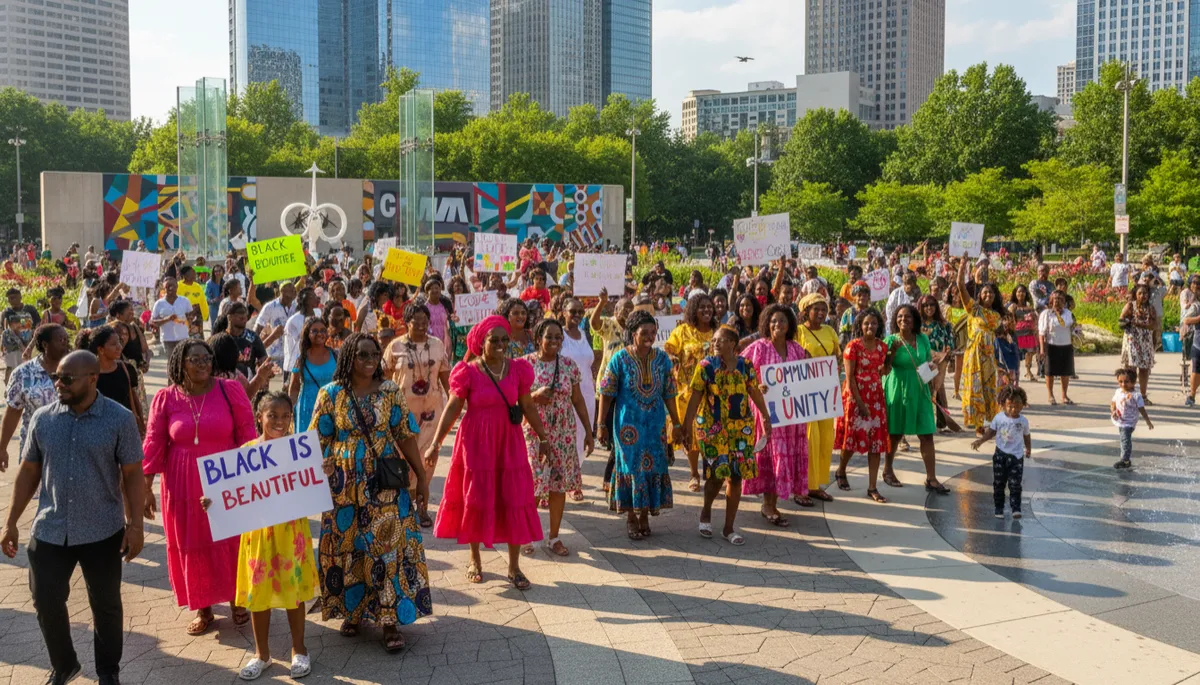
Black August 2026: Honoring the Legacy of Resistance and Liberation
Black August 2026: Honoring the Legacy of Resistance and Liberation
August is not just a summer month. For Black Americans, August is a time of profound historical memory, political education, and renewed commitment to freedom. Black August, observed each year as a month of remembrance, study, and reflection on Black resistance, reminds us that the struggle for liberation is not a relic of the past. It is ongoing, it is urgent, and it belongs to all of us.
The Origins of Black August
Black August was born in the harsh reality of California's prison system. In the late 1970s, incarcerated Black activists inside San Quentin and other facilities established the observance to honor those who died in struggles connected to racial justice and the prison movement. Among those honored was George Jackson, a revolutionary thinker whose killing by guards at San Quentin on August 21, 1971 shook the Black liberation movement. His brother Jonathan Jackson had been killed the year before in a bold courthouse action. Supporters developed Black August as a memorial tradition honoring these figures and others connected to Black liberation.
What began as a memorial tradition gradually expanded beyond prison walls. Communities across the country adopted Black August as an opportunity to study African American history, reflect on freedom, and connect the struggles of the past to the injustices of the present.
August: A Month Drenched in History
There is a reason Black August resonates so deeply. The month is saturated with pivotal moments in Black history. On August 21, 1831, Nat Turner launched one of the most consequential slave revolts in American history in Southampton County, Virginia. His uprising shook the foundations of the slave system and terrified slaveholders across the South. On August 30, 1856, abolitionist John Brown fought pro-slavery forces at the Battle of Osawatomie in Kansas. And on August 28, 1963, more than 250,000 people gathered in Washington, D.C. for the March on Washington, where Dr. Martin Luther King Jr. delivered his immortal speech. These moments were not isolated events. They were expressions of a continuous, multigenerational tradition of Black people demanding what was rightfully theirs.
The Many Forms of Black Resistance
Black August teaches us that resistance has never taken just one form. The history of Black liberation is a tapestry woven from countless threads. Abolitionism gave us Harriet Tubman, who personally led hundreds of enslaved people to freedom, and Frederick Douglass, whose powerful writings exposed the horrors of slavery to the world. Investigative journalism gave us Ida B. Wells, who documented the epidemic of lynching with unflinching courage at a time when speaking truth was a death sentence. Legal battles gave us W.E.B. Du Bois and the NAACP founders who fought in courtrooms to dismantle segregation. Direct action gave us Rosa Parks and Malcolm X, who challenged Black America to claim its humanity and power. And community organizing gave us the thousands of unnamed block captains, church leaders, and everyday people who did the unglamorous work of building power from the ground up.
Black August honors all of them, the famous and the forgotten alike.
Black August in Atlanta 2026
Here in Atlanta, the birthplace of the civil rights movement and home to some of the greatest institutions of Black intellectual and cultural life, Black August holds special resonance. This city walked with Dr. King. It nurtured John Lewis. It produced Maynard Jackson, Shirley Franklin, and generations of Black leaders who bent the arc of history toward justice.
In 2026, Atlanta's museums, universities, community organizations, and families can use Black August to dig deeper into this history. Visit the National Center for Civil and Human Rights. Explore the Martin Luther King Jr. National Historic Site. Attend community conversations and film screenings. Read books by James Baldwin, Angela Davis, or Michelle Alexander. Have conversations at your kitchen table about what freedom really means and what it demands of us today.
Connecting History to the Present
The power of Black August is not nostalgia. It is clarity. When we understand the sacrifices made to secure the right to vote, we understand why attacks on that right are an emergency. When we know the economic terror that Black business owners faced during Reconstruction and Jim Crow, we understand why today's commercial rent crisis in Atlanta's Black neighborhoods is not just a real estate issue. It is a civil rights issue.
Black August invites us to look at the present through the lens of the past and to ask: what is our generation's act of resistance? What are we building? What are we protecting? What are we willing to fight for?
How to Honor Black August
Observing Black August starts with a commitment to learning and action. Read a book about Black history or liberation. Attend a community event or panel in your neighborhood. Support Black-owned businesses and institutions in Atlanta. Register to vote and bring someone with you. Have the conversations that matter with your family, friends, and community. Black August is not just a remembrance. It is a charge. The legacy of resistance is ours to carry forward.
Follow Black Atlanteans for daily news, history, and community stories that keep our culture alive and moving forward.




