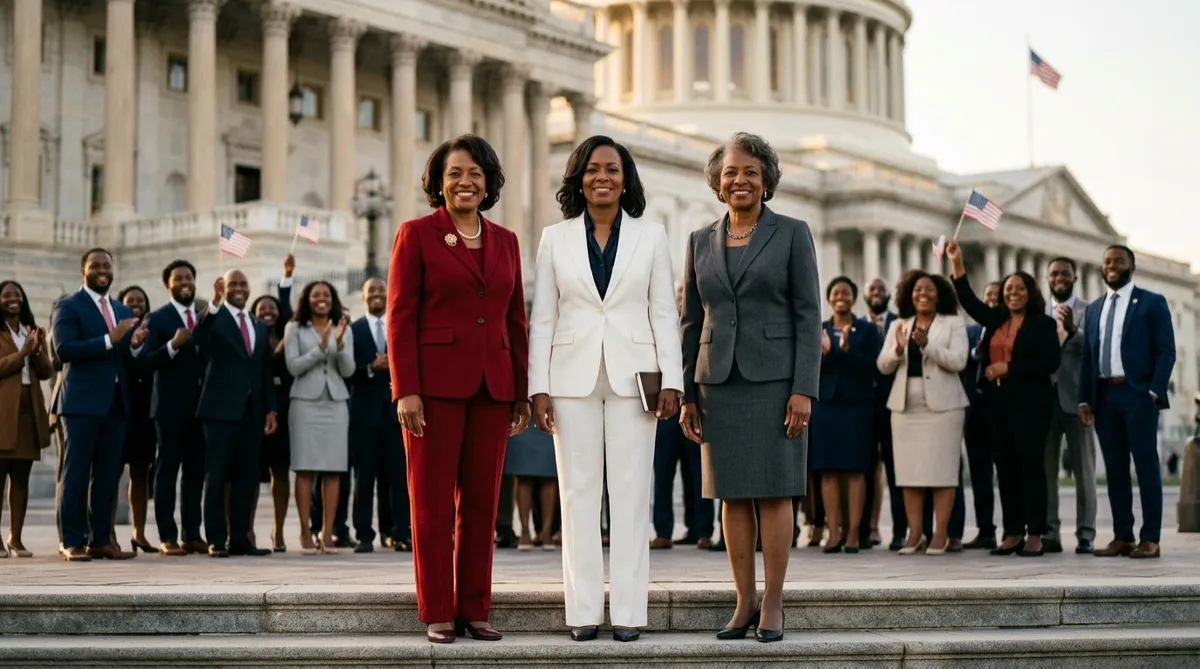
Standing on Shoulders of Steel: Black Women Break Barriers From the Governor's Mansion to the U.S. Senate
By Thomas, Black Atlanteans
Georgia woke up on Wednesday to a headline that generations of Black women organized, marched, registered voters and prayed for. Former Atlanta Mayor Keisha Lance Bottoms has been elected governor, making her the first Black woman elected governor of any U.S. state. Hours earlier and a few states away, Illinois voters sent Lt. Gov. Juliana Stratton to the U.S. Senate, where she will make history alongside two colleagues. This is a story about Black women's political power, and it begins right here at home.
What happened
According to NBC News, Bottoms defeated Republican Rick Jackson, a wealthy healthcare executive, flipping the Georgia governor's office for Democrats for the first time in 24 years. NBC News, NPR, the Georgia Recorder and the Atlanta Journal-Constitution all report that she is the first woman and the first Black person to be elected governor of Georgia, and that she is the first Black woman elected governor in the country. NPR reports she is 56 and will succeed term-limited Republican Gov. Brian Kemp.
She did it while badly outspent. NBC News reports that Jackson put more than $100 million of his own money into the race, while OPB reports he tapped more than $200 million of his fortune. The Georgia Recorder reports that Jackson's ads leaned heavily on her record as Atlanta's mayor, including images from the 2020 protests. After the race was called, Jackson said Bottoms "deserves our congratulations and our prayers as she prepares to take office," the Georgia Recorder reported.
Bottoms ran on affordability. Newsweek reports she campaigned on expanding Medicaid, raising the minimum wage to $15 an hour and raising pay for teachers, firefighters and police officers. On election night, she told supporters, "I will be a governor for all of Georgia," according to Newsweek.
She was not the only Black woman to win a top post in Georgia. NewsOne reports that Penny Brown Reynolds was elected Secretary of State and Tanya Miller was elected Attorney General, and that all three women will serve in the upper levels of state government.
In Washington, Word In Black reports that Stratton, who won the seat of retiring Sen. Dick Durbin, will become only the sixth Black woman ever to serve in the Senate. She will join Sens. Angela Alsobrooks of Maryland and Lisa Blunt Rochester of Delaware, which means three Black women will serve in the Senate at the same time for the first time in U.S. history.
Roots that run deep
The day before the election, NewsOne reports, Bottoms traveled about 90 miles outside Atlanta to Crawfordville, Georgia, where she visited the grave of her great-great-grandmother, Betsy Peek, who was born into slavery in 1845. Bottoms said she was "standing on shoulders of steel." Word In Black adds that the victory also reflects the organizing power of Black women, especially Stacey Abrams, whose 2018 and 2022 campaigns helped build the registration drives, networks and coalitions that transformed Georgia into a competitive state.
OPB notes that Georgia has now had three straight governor's races led by a Black woman at the top of the ticket, and that Bottoms was one of eight Black major-party nominees for governor on the ballot.
Why it matters to Black Americans
Representation changes who gets heard and which problems get prioritized. For Black Georgians, many of whom have spent years fighting restrictive election laws, a Black woman in the governor's office and in two other statewide offices is a profound shift in who holds power. The Black Atlanteans community knows this history well: Atlanta is the city of Dr. King, of Black mayors, and of the organizers who made Georgia a battleground.
It also matters because of what voters said they wanted. The 19th reports that one voter, identified as Wilson, named Medicaid expansion as her top issue because she has a grandson with special needs and worries about his care. NPR reports that Medicaid expansion is a top Bottoms promise, but it would require legislative approval, so the policy win is not guaranteed by the election alone.
There is also a warning. The 19th reports that Black Georgians face the potential of redistricting after the U.S. Supreme Court's April ruling weakening key parts of the Voting Rights Act. It reports that Republican leaders shelved a plan to redraw the maps, but some Democrats believe the effort is only being delayed until after the election. Word In Black also cautions that the election does not erase the Trump administration's executive orders or anti-DEI policies, and that full racial breakdowns of turnout are not yet available, so claims about exactly how Black turnout changed should be treated carefully.
Why it matters to America
NPR notes that Georgia has gone from a reliably Republican state to a swing state with Democratic senators, though the governor's office and legislature stayed Republican until now. Fox News and NBC News both point out that the state flipped its top office for the first time in more than two decades. Word In Black reports that at least four Black governors are expected to serve at the same time, including Maryland's Wes Moore, Wisconsin's David Crowley and Florida's Byron Donalds, the first Black Republican elected governor. That mix is a reminder that Black political leadership is not confined to one party or one viewpoint, even as Black voters hold leaders of every party accountable.
Community voices
- Quantavius Foster, 35, drove nearly three hours from Swainsboro to Bottoms' election-night event and told The 19th he hopes she will be a "bridge over troubled water" for both parties.
- Keisha Lance Bottoms told the crowd that Georgia has always "fought for better," according to The 19th.
- Mississippi NAACP Executive Director Charles Taylor, speaking about Black political power in his state, said, "Mississippi is not just a moral argument. It is simple math," Word In Black reported.
Not everyone cheered. Fox News published opinion commentary criticizing Bottoms' time as mayor, and Jackson's campaign made her tenure the centerpiece of its attacks. Voters will judge her on results, and that is exactly how it should be.
What you can do: turning a historic win into lasting change
- Hold the promises to a timeline. Medicaid expansion, a higher minimum wage and better pay for public servants all depend on lawmakers. Call or write your state representative and senator, and ask where they stand. A short, polite, specific message is more effective than silence.
- Stay ready on redistricting. Follow local news and attend public hearings on any proposed map changes. Show up, sign in and speak, because district lines shape representation for a decade.
- Check your voter registration every year. Use your Secretary of State's official website to confirm your registration, polling place and address, and help a neighbor, a church member or a college student do the same.
- Join an organizing group. Groups such as the NAACP, local churches, sororities and fraternities, and voting-rights organizations are always looking for volunteers for registration drives, rides to the polls and poll-worker recruitment.
- Look at local seats. School boards, county commissions and city councils decide budgets that touch daily life. Consider running, or encourage someone you trust to run.
- Mentor the next leader. Invite a young woman to a town hall, a council meeting or a legislative visit. Representation grows when people can see the path.
- Check your health coverage options. If you or a family member lacks coverage, talk with a licensed navigator or your local health department about what is available now, and stay informed about any Medicaid changes.
- Support Black women-led organizations. Donate, volunteer or share their work. The groundwork behind this victory was built by years of unpaid, unglamorous organizing.
Sources
NBC News; NPR; Georgia Recorder; Atlanta Journal-Constitution; OPB; Newsweek; Fox News; The 19th; NewsOne; Word In Black.
Signing off
The ancestors who could not vote watched Georgia make history this week. Let us honor them by doing the unglamorous work that follows a celebration: staying informed, staying engaged and holding every leader to the promises they made. Until the next report, stay encouraged and stay involved.
Thomas
Black Atlanteans


