Data Reveals Proposed Atlanta School Closures Disproportionately Target Black Communities
A Community Under Threat: Atlanta's Proposed School Closures Hit Black Neighborhoods Hardest
A new data analysis has revealed what many Black Atlanta parents and community advocates have long feared: proposed school closures in Atlanta are not randomly distributed across the city. They are concentrated in predominantly Black neighborhoods — a pattern that follows a decades-long national trend of disinvestment in Black educational institutions and communities.
The findings have sent shockwaves through Atlanta's Black community, reigniting urgent conversations about educational equity, institutional racism, and the future of Black children in a city that prides itself as the epicenter of Black excellence.
What the Data Shows
The analysis reviewed proposed closure locations against neighborhood demographic data and found a clear and troubling correlation: schools slated for closure are disproportionately located in areas with higher concentrations of Black residents. While Atlanta Public Schools officials have cited factors such as declining enrollment, aging facilities, and budget constraints, critics argue that these explanations don't account for why the burden consistently falls on Black communities.
For Black families, school closures are never just about a building. They represent:
- Displacement and longer commutes for children who may already face transportation challenges
- Loss of community anchors — schools are not just educational institutions but the heart of neighborhoods
- Potential property value declines in affected areas, deepening wealth disparities
- Disruption to student achievement, particularly for children with special needs or those enrolled in specialized programs
- The erasure of institutional memory — schools that have served generations of Black families
A Familiar Pattern With a Painful History
This is not the first time Black communities have faced school closures driven by decisions made far from their neighborhoods. Across the country — in Chicago, Philadelphia, Detroit, and New Orleans — school closure campaigns have disproportionately targeted Black schools, often under the banner of reform, efficiency, or fiscal responsibility.
The pattern is consistent: predominantly Black schools are closed, children are merged into larger institutions, community gathering places are lost, and neighborhoods begin to hollow out. In Atlanta, a city that has watched gentrification displace Black families from historic neighborhoods like Old Fourth Ward, Vine City, and Summerhill, school closures threaten to accelerate that displacement.
The Community is Fighting Back
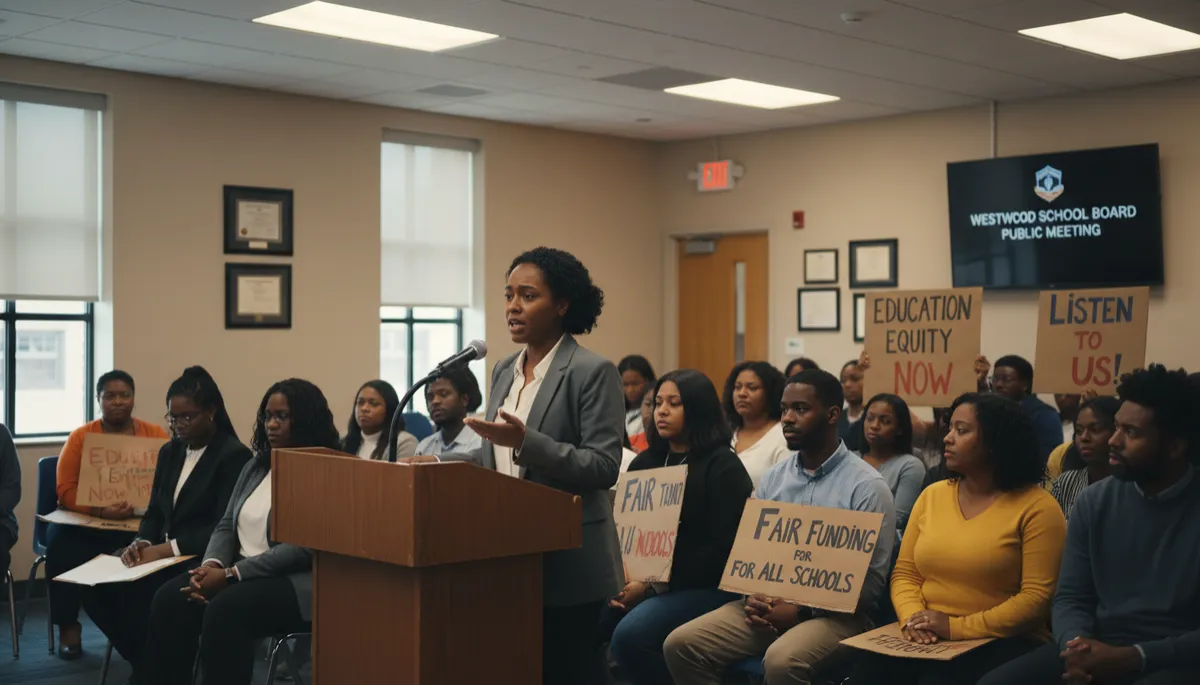
Black parents and advocates across Atlanta are not taking this lying down. Community meetings have been called, parent coalitions are forming, and legal advocates are reviewing whether the proposed closures may violate civil rights law or federal regulations regarding equitable treatment of minority students.
Parents who have attended public hearings describe feeling unheard and dismissed by district officials. "They bring out the PowerPoint presentations and the demographic charts," said one Southwest Atlanta parent. "But what they don't show is the generations of families who've been in these schools, the teachers who know our children by name, the community programs that run out of these buildings."
What You Can Do Right Now
If you are a Black Atlantean, this issue directly affects your community — whether you have children in Atlanta Public Schools or not. Here are concrete steps you can take:
- Attend school board meetings. Atlanta Public Schools Board of Education meetings are open to the public. Show up. Speak during public comment. Make your voice heard on the record.
- Sign petitions and join coalitions. Search for parent advocacy groups in your neighborhood. Local neighborhood associations are organizing responses.
- Contact your city council member and state representatives. School funding and policy decisions involve city and state government, not just the school board.
- Demand transparency. Request the full data behind the closure decisions. Ask which criteria were used and what alternatives were considered.
- Support affected families with practical support — childcare assistance, transportation planning, and information about school options.
- Involve your faith community. Atlanta's Black churches have always been pillars of advocacy. Bring this issue to your pastor and church council.
The Stakes Could Not Be Higher
Education is the great equalizer — or at least, it should be. When schools in Black neighborhoods are systematically closed while resources flow elsewhere, that promise is broken. When children must travel further for education while their neighborhood schools sit empty or become luxury condos, the system is not failing accidentally. It is working exactly as designed for some, and against the interests of others.
Atlanta's Black community built this city's civil rights legacy by refusing to accept unjust systems quietly. The same spirit that sat at lunch counters, marched down Auburn Avenue, and organized Freedom Riders is alive in Atlanta's neighborhoods today. The question is whether we will answer the call. Our children's futures depend on it.
Share this article widely. If you have information about upcoming Atlanta Public Schools community meetings or public hearings on school closures, share them in your community networks.




