Defend the Vote March 2026: New Voices Rise
Politics, Voting Rights, Black America, Atlanta
“Defend the Vote” March on Washington 2026: A New Generation Takes the Mic
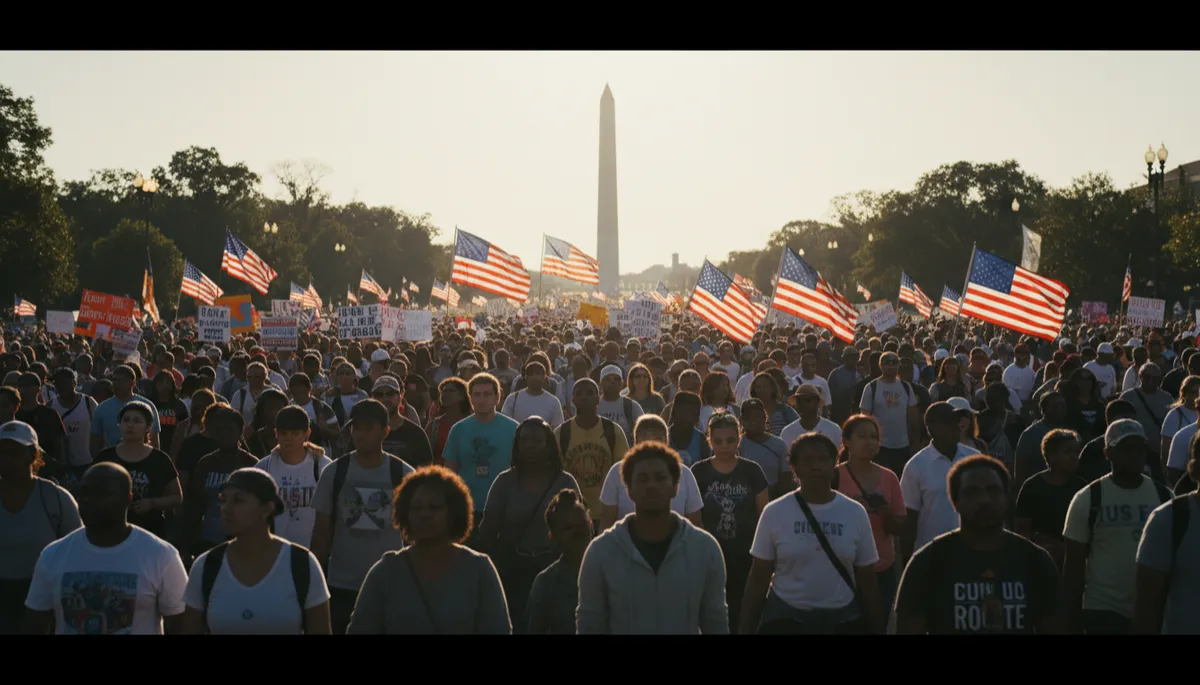
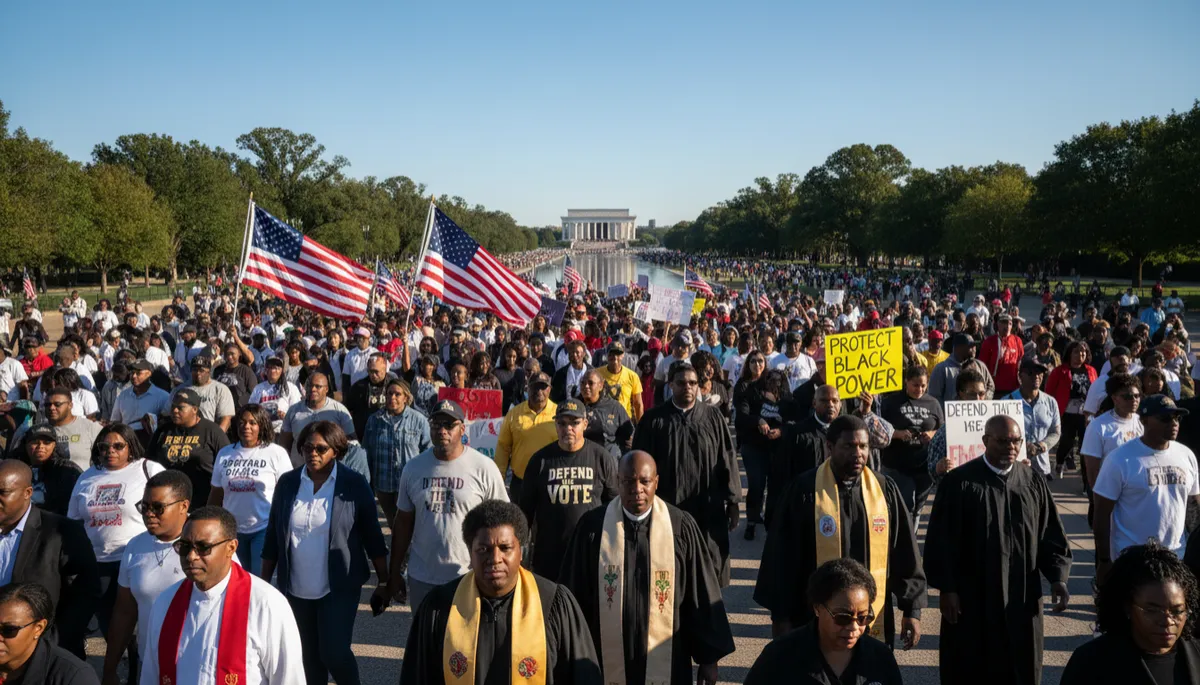
On August 28, 2026, exactly 63 years after Dr. Martin Luther King Jr. declared “I Have a Dream,” thousands of Black Americans and allies filled the National Mall again—this time to defend that dream at the ballot box. The “Defend the Vote” March on Washington was not nostalgia. It was a warning flare, a rally, and a strategy session in the open air before the November midterms decide whether Black political power moves forward or gets pushed back.
Why Black America Came Back to the Mall in 2026
Co-organized by Rev. Al Sharpton’s National Action Network and Martin Luther King III’s Drum Major Institute, the 2026 march was born out of urgency. From Atlanta to New Orleans to Birmingham, Black voters have watched state legislatures chip away at voting access, redraw districts, and roll back diversity and equity programs. The April Supreme Court decision in Louisiana v. Callais was the breaking point—a signal that the Voting Rights Act of 1965, once a shield, is now being thinned out in real time.
Thousands traveled by bus, train, and car caravans—Greek-letter organizations in matching shirts, church choirs, labor unions, HBCU students, and Gen Z organizers with QR codes for voter registration taped to their signs. From the steps of the Lincoln Memorial, speakers reminded the crowd that the generation of 1963 won the Voting Rights Act; this generation has come to defend it, protect it, and expand it for the 21st century.
What the Supreme Court’s Louisiana v. Callais Ruling Really Means
On April 29, 2026, the Supreme Court issued its decision in Louisiana v. Callais, striking down Louisiana’s congressional map that had created a second majority-Black district. On paper, the Court said states can still consider race to comply with Section 2 of the Voting Rights Act. In practice, legal experts warn the ruling makes it much harder to prove when Black voters’ power is being diluted—and easier for states to claim they are just drawing “race-neutral” maps even when the political effect is clear.
The very next day, Louisiana’s governor suspended primaries and ordered lawmakers to redraw the map before November. That chaos is the point: when the rules are rewritten at the last minute, communities have less time to organize, less clarity about who represents them, and fewer chances to send Black champions to Congress. Commentators across the South, including former Vice President Kamala Harris, have warned that Callais weakens the Voting Rights Act at a moment when Black voters are already battling new ID rules, polling place closures, and voter roll purges.
How Redistricting Threatens Black Congressional Power
Redistricting sounds technical, but its impact is brutally simple: the lines decide who has a real shot at power. When Southern legislatures redraw maps after rulings like Callais, they can:
- Crack Black communities—splitting strong Black neighborhoods into multiple districts so they are outvoted in each one.
- Pack Black voters into a few “safe” districts—concentrating us so heavily that our influence disappears in surrounding seats.
- Mute growing Black suburbs—especially around cities like Atlanta, where Black professionals, creatives, and working families are reshaping the electorate.
The result is fewer Black members of Congress, fewer committee chairs, and fewer voices at the table when budgets, policing, housing, and student loan policies are written. When districts are drawn to dilute Black voting strength, it is not just about one election—it is about locking in a decade of decisions that touch every part of Black life, from healthcare access in rural Louisiana to transit funding on Atlanta’s Southside.
A New Civil Rights Coalition Steps Up for 2026
Recognizing the scale of the threat, major civil rights and legal organizations have formed a coordinated front to protect Black voters in the 2026 midterms. The Lawyers’ Committee for Civil Rights Under Law, the National Bar Association, and the National Urban League are working together to monitor redistricting, challenge discriminatory maps, and build rapid-response legal teams for Election Day and beyond.
This coalition is doing more than filing lawsuits. They are training volunteer lawyers and law students to staff hotlines, deploying nonpartisan poll monitors, and educating voters on how to document and report suppression—whether that’s a mysteriously long line in a Black precinct or confusing last-minute changes to absentee ballot rules. Their message is clear: the courts may be shifting, but Black communities are not stepping back from the fight for fair representation.
Hakeem Jeffries and the Fight for the First Black Speaker of the House
Hovering over the 2026 midterms is a history-making possibility: Representative Hakeem Jeffries of New York could become the first Black Speaker of the House. For that to happen, his party must win enough seats in districts where Black voters are central to the coalition—from Atlanta’s west side to Houston’s suburbs, from Birmingham to Baton Rouge and beyond.
A Black Speaker would not be symbolic alone. The Speaker controls which bills get a vote, which investigations move forward, and what priorities define Congress. Imagine a House where voting rights restoration, police accountability, environmental justice for Black neighborhoods, and serious investment in HBCUs are not afterthoughts but agenda items. That is what is on the line when maps are redrawn and turnout rises or falls in Black communities.
What’s at Stake for Black Atlanteans—and All Black America—in November
For Black Atlanteans, the stakes could not be clearer. Metro Atlanta has become one of the most powerful hubs of Black political, cultural, and economic life in the world. Yet that power is being targeted through proposals to carve up majority-Black areas, weaken county control, and dilute the influence of Black voters who have turned Georgia into a national battleground. Every congressional seat anchored in metro Atlanta helps shape national debates on voting rights, criminal justice reform, housing affordability, and student debt relief.
For Black Americans across the country, November 2026 will decide:
- Whether states use Louisiana v. Callais as a green light to quietly erase Black-majority or Black-influence districts.
- Whether Congress will have the votes to restore and strengthen the Voting Rights Act—or allow it to be hollowed out case by case.
- Whether Black communities will gain or lose leverage over federal funding for schools, healthcare, transportation, and climate resilience.
The marchers who stood in the August heat at the National Mall carried a simple message back home: “We Came. We Marched. Now We Keep Going.” For Black Atlanteans, that means turning protest into precinct work, frustration into phone banking, and social media posts into actual ballots. For Black voters nationwide, it means recognizing that the same forces trying to redraw us out of power are counting on fatigue and confusion to finish the job.
From the Mall to the Block: Defending the Vote Starts at Home
The 1963 march helped birth the Voting Rights Act. The 2026 “Defend the Vote” march is about making sure that law—and the power it unlocked for Black people—does not die on our watch. The Supreme Court has spoken, but so have the people. The next word belongs to us, written not in speeches but in turnout numbers and district maps that either reflect our communities or erase them.
From the West End of Atlanta to the wards of New Orleans, from Detroit to Dallas, Black America has already proven that when we show up in force, the political map of this country changes. November 2026 is another test. The march on Washington sounded the alarm; now the question is whether we will answer it—one registration, one ride to the polls, one defended vote at a time.




