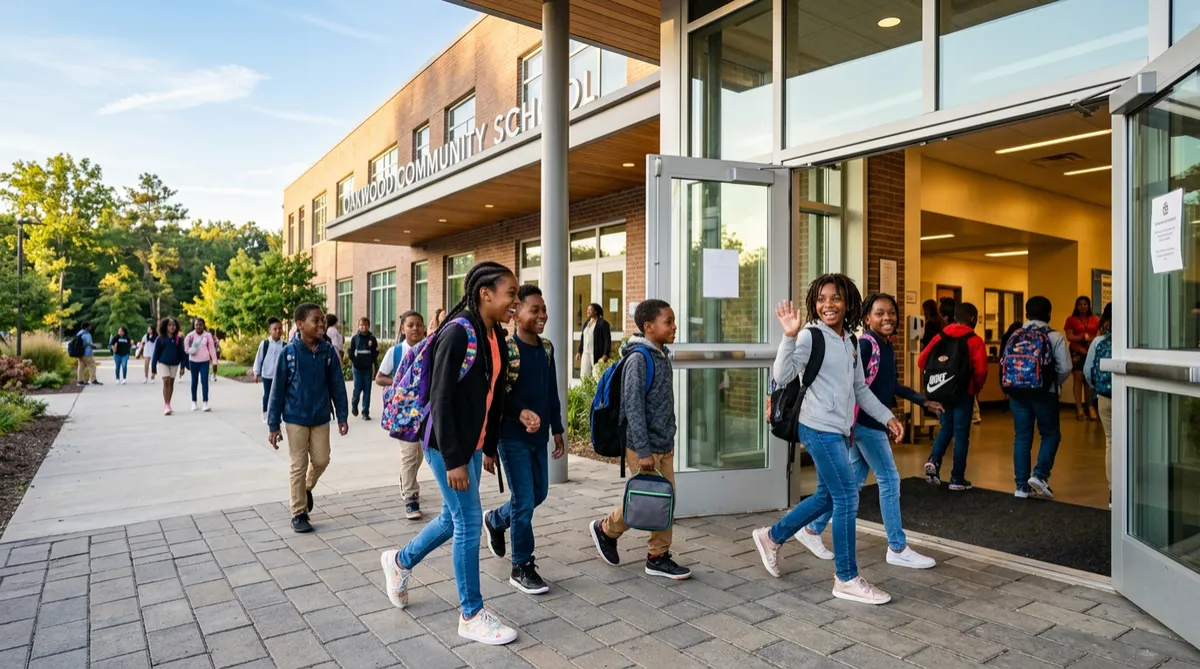
Impact of DOJ Ending School Desegregation Cases
Education Justice, Civil Rights, Black Students
DOJ Ends Over 50 School Desegregation Cases — What It Means for Black Students
On September 24, 2026, the U.S. Department of Justice quietly announced a decision that lands loudly in Black communities: the Civil Rights Division is dismissing more than 50 long‑standing school desegregation consent decrees, many in place for over six decades, across Georgia, Mississippi, Louisiana, Alabama, and other Southern states. For Black families who have fought for generations for equal education, this is not just a technical legal move — it is a test of whether America is still committed to Brown v. Board of Education or ready to walk away.
What Exactly Did the DOJ Do on September 24, 2026?
In its September 24 announcement, the Justice Department’s Civil Rights Division declared that it was ending federal oversight in more than 50 desegregation cases nationwide, including 15 districts in Georgia, 13 in Mississippi, 11 in Louisiana, and 5 in Alabama, along with others from Connecticut to Florida (justice.gov). These cases were born out of the civil rights struggle of the 1960s and 1970s, when federal courts ordered school districts to dismantle dual systems — one for Black children, one for white.
Assistant Attorney General Harmeet K. Dhillon framed the move as a long‑overdue house‑cleaning. She argued that “prolonged federal oversight” does not reflect “the reality of those classrooms today” and that school districts should be freed from “onerous and outdated consent decrees” so they can redirect taxpayer dollars “back to students” (justice.gov). In other words, the Trump‑era DOJ is saying: the job is done; it’s time to move on.
What Were These Desegregation Consent Decrees, and Why Do They Matter?
To understand the stakes, we have to go back to 1954, when the Supreme Court decided Brown v. Board of Education and declared state‑sanctioned school segregation unconstitutional. But Brown did not magically open school doors. White officials across the South resisted, delayed, and defied. It took years of organizing, lawsuits, and federal enforcement to force districts to adopt desegregation plans — from busing and redrawn attendance zones to faculty integration and equal access to advanced courses.
Many of those plans were locked into place through consent decrees — legally binding agreements, overseen by federal judges, that required districts to dismantle racially separate systems “root and branch.” These decrees have done quiet but vital work for decades: monitoring whether Black and white students share the same buildings, teachers, buses, sports teams, and opportunities. In cities like Atlanta, Jackson, and New Orleans, they have been one of the few tools communities could point to when school boards tried to slide backwards.
Why Civil Rights Advocates Call This a Rollback
The DOJ’s upbeat language about “ending” these cases has been met with fierce pushback. The NAACP Legal Defense Fund (LDF) blasted the announcement as misleading, stressing that many of these cases are still actively litigated by LDF lawyers and that the underlying inequities have not been cured (naacpldf.org). In other words, the federal government may be stepping away, but the fight is far from over.
Kristen Clarke, General Counsel at the NAACP and former head of the DOJ’s Civil Rights Division, was even more direct. She called the move “a relentless campaign to dismantle work done to end racial segregation in our nation’s public schools” and “a stain on our democracy” (cbsnews.com). For Clarke and many in Black communities, this is not bureaucratic housekeeping; it is part of a broader rollback of civil rights enforcement that treats our children’s futures as expendable.
The Trump Administration’s Civil Rights Retreat
This decision does not come out of nowhere. Under the Trump administration, the DOJ has steadily narrowed its civil rights mission — from pulling back on police pattern‑and‑practice investigations to weakening protections for voting rights and LGBTQ+ students. In education specifically, the administration has signaled skepticism toward race‑conscious remedies, backed away from guidance promoting school diversity, and championed “local control” even when local decisions deepen racial inequity.
Ending desegregation decrees fits squarely into that pattern. It shifts responsibility from the federal government — which once used its power to force open school doors — back to states and districts that often helped close them in the first place. For Black families in the South, where memories of “massive resistance” and closed schools are not distant history but living testimony, that shift feels dangerous and familiar.
What This Could Mean for Black Students on the Ground
When federal oversight fades, history tells us what usually follows: re‑segregation. Research has already documented that schools across the country have been sliding back toward racial and economic separation for years, especially where court supervision has ended (epi.org). Without the pressure of a judge’s order, districts can quietly redraw attendance zones, close schools in Black neighborhoods, or expand selective programs that mostly serve white and affluent children.
That re‑segregation is not just about who sits next to whom. It is about resources. Desegregation decrees have often been the legal backbone for demands that Black students receive equal facilities, transportation, technology, and access to rigorous coursework. When those decrees disappear, it becomes harder to challenge overcrowded classrooms on the south side of town while shiny new STEM labs appear in majority‑white suburbs (brookings.edu).
The consequences ripple out: widening achievement gaps, lower graduation rates, fewer college‑ready Black seniors, and communities locked into cycles of underinvestment. When schools are separate and unequal, neighborhoods become more segregated, job opportunities narrower, and democracy weaker. Our children pay the price not only in test scores, but in the daily message that their education is negotiable.
For Black Atlanteans and Southern Communities, the Fight Continues
For Black families in Atlanta, Savannah, Jackson, Birmingham, and beyond, this moment demands vigilance. The end of a consent decree does not have to mean the end of community power. Local school boards still answer to voters. State legislatures still control funding formulas. Grassroots coalitions, PTAs, student groups, and Black educators can still demand transparency on discipline data, advanced‑course enrollment, and school boundary decisions — and organize when those numbers expose inequity.
Civil rights lawyers are not walking away either. The NAACP Legal Defense Fund and other advocates have made it clear that they will continue litigating many of these cases, challenging the DOJ’s attempt to declare them “over” by press release. New lawsuits can also be filed when districts adopt policies that recreate segregation in all but name. Federal oversight may be weaker, but the Constitution — and Brown — still stand.
Choosing Our Children, Not Convenience
The DOJ insists that dismissing these decrees will free up money and reflect “today’s reality.” But whose reality is that? For too many Black students, “today’s reality” is still crumbling buildings, police in hallways but not enough counselors, and AP classes they are quietly steered away from. Ending oversight in more than 50 desegregation cases does not magically erase those conditions — it risks cementing them.
Our communities have never had the luxury of being passive about our children’s education. From the parents who risked their jobs to sign onto early lawsuits, to the students who integrated schools under escort, to today’s organizers demanding equitable funding and culturally relevant curriculum, Black people have carried the promise of Brown v. Board on our backs. The Trump administration’s DOJ may be stepping away from that promise, but we do not have to.
For Black Americans — and especially for Black Atlanteans who have long seen education as the heartbeat of our political power — this moment is a call to recommit. The question is not only what the DOJ’s decision means for Black students, but what we are prepared to do to ensure that, decree or no decree, our children walk into schools that truly honor their brilliance, protect their dignity, and prepare them to lead.




