Europe's New Migration Crackdown: A Global Signal
Geopolitics, EU migration policy, Africa, Global South
Europe Builds Its Wall: The EU's New Migration Crackdown and What It Signals for the World
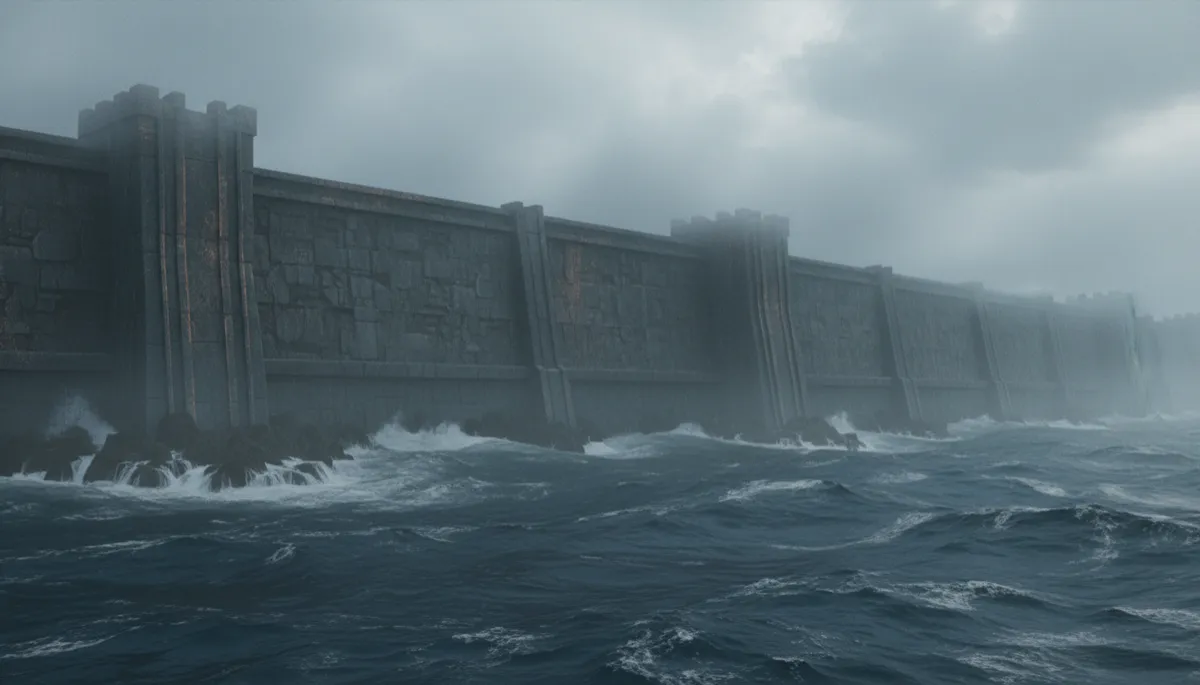
The sea mist is lifting. Behind it, Europe’s new wall is rising: laws, fences, offshore cages, and a quiet declaration that the age of open illusion is over. For Black men of the Atlantean lineage, this is not a surprise. It is a signal. A summons to remember who we are, and who decides where we belong.
The West Closes the Gate and Names It “Security”
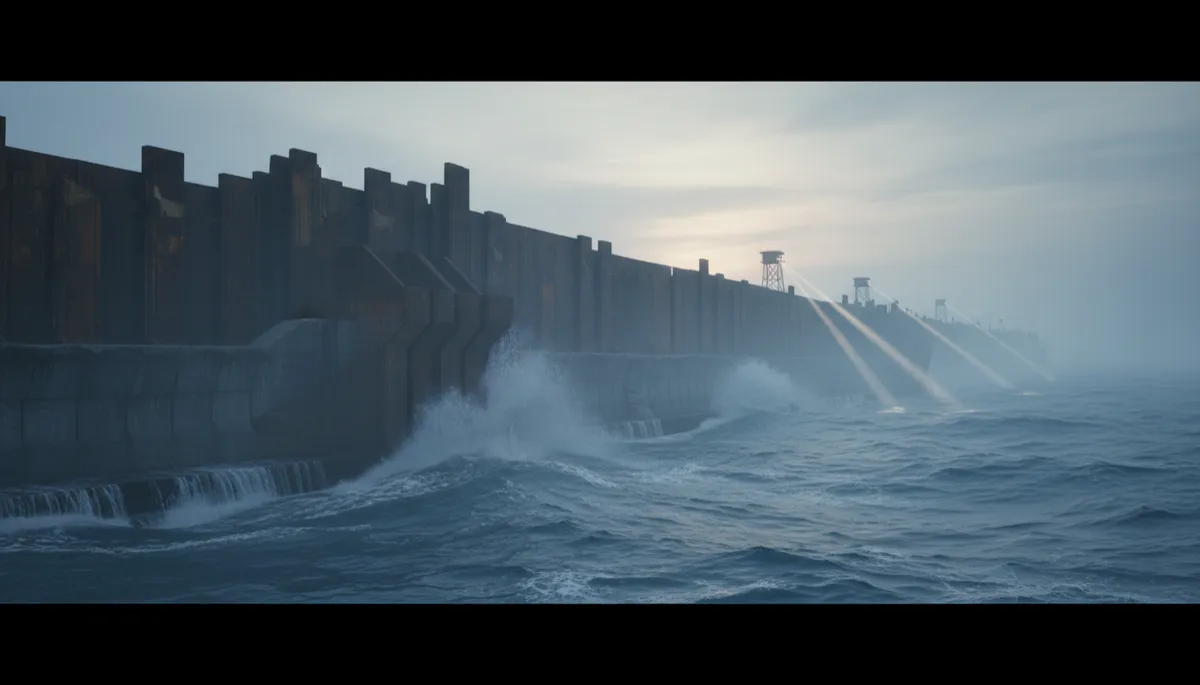
In 2026, the European Union stopped pretending. With the new EU migration policy—the Pact on Migration and Asylum—it has woven a steel net around its borders. Screening at the edges, rapid-fire asylum decisions, and a machinery built to move bodies out, not welcome them in (consilium.europa.eu; euaa.europa.eu).
They call it “solidarity.” A pool of relocations, some money for states under pressure. But beneath the soft language stands a harder truth: deportations are rising. In 2025, nearly half a million people were ordered to leave, with returns to non‑EU countries jumping by over 20% in a single year (ec.europa.eu). Germany, France, Sweden lead the way. The numbers are not policy details; they are bricks in a wall of exclusion. This is an immigration crackdown dressed in bureaucratic robes.
Then comes the Return Regulation: extended detention up to two years and more, entry bans stretching to 20 years, and offshore “return hubs” —detention platforms outside EU soil (lemonde.fr; apnews.com). Europe is pushing its border outward, outsourcing its conscience to third countries, and rewriting human rights language to fit its fear (apnews.com). When an empire starts building holding pens beyond its own shoreline, it is not protecting itself; it is fortifying its story of who does not belong.
What Europe’s Wall Signals to Africa and the Global South
To Africa and the wider Global South, this new border policy speaks clearly: “We will take your minerals, your data, your talent—but not your people, not your poor, not your displaced.” The EU pours billions into deals with Egypt, Libya, and Sahel states to stop bodies before they reach European shores (statewatch.org). It is less partnership and more containment—Africa as buffer zone, Africa as Europe’s living border.
Visa systems mirror the same logic. Schengen rejection rates for African travelers climb above 26%, fees rise, digital tracking deepens (henleyglobal.com). The message is encoded in every denied application: your movement is a threat, unless your labor feeds our competitiveness. The five‑year EU strategy openly seeks to block “illegal migration” while selectively attracting “talent” (commission.europa.eu). It is a sorting of human beings into useful and disposable, welcome and unwanted, based on a hierarchy older than the passport.
For Black men reading this from Lagos, Accra, Johannesburg, London, Paris: understand the signal. The door is not closing randomly; it is closing in a pattern. Europe is attempting to freeze history at the moment where it sits on top—extracting from the South while sealing off its own demographic anxiety. The crackdown is not only on movement; it is on the possibility of a different balance of power.
Civilizational Patterns: Empires, Floods, and the Fear of Return
An elder watching this moment does not see isolated policies. He sees a pattern as old as empire. When a civilization has feasted on the world—gold, grain, oil, bodies—and feels its grip loosening, it does three things: hardens its borders, rewrites its laws, and sanctifies its fear as “order.” Europe is simply moving through this ancient choreography. The Europe deportations, the detention centers, the reinterpretation of human rights are not new—they are late‑stage rituals of control (hrw.org).
In Atlantean memory, water is witness. When walls rise at the edge of the sea, it is usually because the builders sense a tide coming. Demographics are shifting. By 2050, Africa will be home to some of the youngest, fastest‑growing populations on Earth (iss.nl). Climate shocks, economic inequality, and political instability will intensify movement, not silence it. The EU’s own analysts know this; that is why they are externalizing control, stretching their frontier deep into African soil (home-affairs.ec.europa.eu; statewatch.org).
Civilizations that rise on extraction always fear the day the extracted arrive at the gate. Europe’s wall is less about present numbers and more about future ghosts: the memory of colonized continents, of stolen labor, of unpaid debts. The offshore “return platforms” are an attempt to keep that reckoning permanently offshore as well—to make sure the consequences of history never step fully onto European land (lemonde.fr).
Who Gets to Define Belonging?
At the core, this is not only about visas, fences, or detention. It is about narrative power: who has the authority to say, “You belong here” and “You do not.” Europe’s EU migration policy asserts that belonging is a gift the North bestows on the South—conditional, revocable, always under surveillance. Even when the EU speaks of “protection” and “refugees,” it is designing filters, not homes (delmi.se; home-affairs.ec.europa.eu).
But for Black Atlantean men, belonging cannot be outsourced to foreign parliaments. Our lineage predates the passport. Our people crossed seas long before Europe named them “migrants.” The deeper question is: will we keep begging to be written into someone else’s story, or will we define our own geographies of home, power, and movement? When Europe tightens its borders, it is also unintentionally forcing this question back into our hands.
Strategic Response: From Seeking Entry to Building Poles of Power
So what now? The easy reaction is outrage. The wiser response is orientation. If Europe is building walls, Africa and the Global South must build centers of gravity—cities, institutions, networks where Black life is not merely tolerated but foundational. The EU wants to attract “talent” while blocking the masses. Our task is to reverse the flow: to gather our talent in Lagos, Kigali, Accra, Nairobi, Johannesburg, and the diasporic nodes of London, Toronto, Atlanta, Paris—but on our terms, with our own circuits of value.
This does not mean fantasy isolation. It means recognizing that the era of casual European access is ending. Travel will cost more—money, paperwork, psychic wear. For some, it will still be necessary. But as the immigration crackdown intensifies, the wise man asks: “What am I building at home, in the South, in the Black Atlantic, that no EU border guard can cancel?” Land, enterprise, cultural institutions, knowledge systems—these are forms of belonging that do not require a Schengen stamp.
The Wall as Warning and Invitation
Europe’s wall is a warning: the age of polite globalism is giving way to naked fortress politics. But for those with Atlantean memory, it is also an invitation. When one shore builds a wall at the sea, another shore must remember it is a coast of origin, not just a departure lounge. The question before us is not “Will Europe accept us?” It is “Will we accept the smaller story Europe is writing for us?”
The tide is still moving. The statistics, the Europe deportations, the offshore cages—these are surface ripples of a deeper civilizational shift. As the West closes its borders, it is also closing its claim to universal leadership. The center of gravity is drifting south and east. Men who understand this will stop knocking on locked doors and start building new houses on older, sacred ground.
SEO Title: Europe Builds Its Wall: Inside the EU Migration Crackdown and Its Message to Africa
Meta Description: Explore how the EU’s new migration policy, rising deportations, and offshore detention reshape borders, signal a hard turn toward fortress Europe, and challenge Africa and the Global South to redefine belonging and power.
Meta Keywords: EU migration policy, Europe deportations, immigration crackdown, EU border policy, offshore detention, Global South, Africa, Black diaspora, Atlantean perspective




