Five Black Women DAs Challenge Georgia's HB 369
Politics, Black Power, Metro Atlanta
Five Black Women DAs in Metro Atlanta Unite to Strike Down Georgia's HB 369
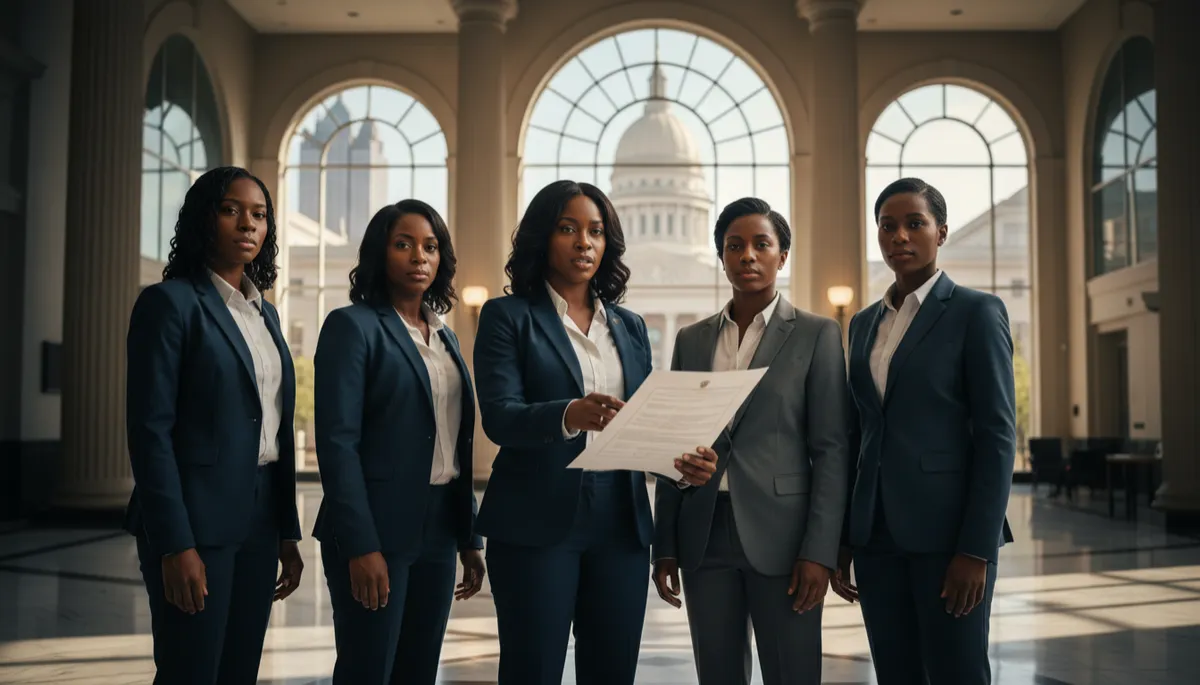
In a high-stakes showdown over who controls justice in Metro Atlanta, five Black women district attorneys are taking Georgia to court — and the future of Black political power in this region is on the line.
A Targeted Law Aimed at Five Counties — and Five Black Women
Georgia House Bill 369, signed by Governor Brian Kemp in May 2026, doesn’t pretend to be a statewide reform. Instead, it zeroes in on just five metro Atlanta counties — Fulton, DeKalb, Gwinnett, Cobb, and Clayton — and forces their district attorneys to run in nonpartisan elections starting in 2028 (gov.georgia.gov). Out of Georgia’s 159 counties, only these five are affected.
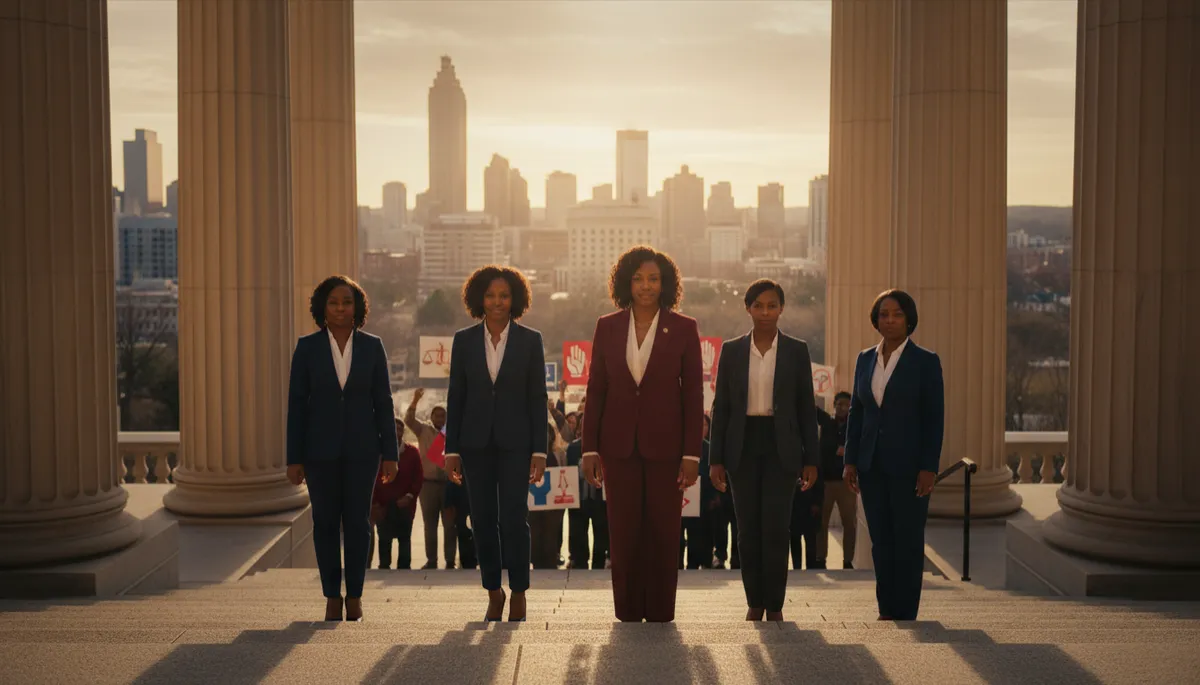
Lawmakers claim that’s because these are the only counties that use a medical examiner system instead of an elected coroner. But it’s no coincidence that these same five counties also share something else: each one has a Black Democratic woman serving as district attorney — Fani Willis in Fulton, Sherry Boston in DeKalb, Patsy Austin-Gatson in Gwinnett, Sonya Allen in Cobb, and Tasha Mosley in Clayton (atlantapatriot.com).
Together, these five counties are home to nearly 4 million people, with large and growing Black communities that have transformed Metro Atlanta into a center of Black political power in the South. HB 369 reaches directly into those communities and changes the rules — only for them.
How HB 369 Changes the Rules — and Why It Matters
Under HB 369, elections for district attorneys and several other county offices in these five counties will no longer list party labels. That means no “D” or “R” next to a candidate’s name on the ballot. Supporters, like Republican Sen. John Albers of Roswell, argue the law is about “reducing partisan politics from local law enforcement.” But for Black voters in Metro Atlanta, the impact is far more complicated — and potentially harmful (georgiarecorder.com).
Party labels are not just about team colors; they are critical information, especially in down-ballot races where many voters don’t personally know the candidates. Stripping party IDs can disadvantage working-class and Black voters who rely on those cues to make informed choices in crowded races. Critics warn HB 369 is a backdoor way to confuse voters and weaken Democratic turnout in offices that directly shape policing, charging decisions, and criminal justice reforms (wabe.org).
The law also alters the campaign playing field. Because the races become nonpartisan, candidates will no longer be able to fundraise across both primary and general election cycles. That effectively caps fundraising potential and makes it harder for challengers — especially Black women and grassroots candidates — to build the resources needed to reach voters across sprawling metro counties. In a region where media markets are expensive and misinformation spreads fast, that fundraising cap is no small thing.
From Liberty Plaza to Fulton County Court: The Lawsuits Begin
Black women prosecutors in Metro Atlanta are not taking this quietly. On a June morning in 2026, DeKalb County DA Sherry Boston stood at Liberty Plaza, just across from the Georgia Capitol, and announced the first lawsuit against HB 369. Filed in Fulton County Superior Court, Boston’s suit argues that the law is not just bad policy — it is unconstitutional (ebs.publicnow.com).
Boston’s legal team says HB 369 violates Georgia’s Uniformity Clause and Equal Protection guarantees. The Uniformity Clause requires that statewide laws apply fairly across Georgia, not just to cherry-picked counties. By singling out only five jurisdictions — all with Black women DAs and large Black electorates — HB 369, she argues, treats nearly 4 million Metro Atlanta voters differently from the rest of the state with no legitimate reason. That, Boston says, is a constitutional red flag, not an administrative tweak (ebs.publicnow.com).
On August 21, 2026, Gwinnett County DA Patsy Austin-Gatson filed a second, separate lawsuit in Fulton County Superior Court, reinforcing that this fight is regional, not isolated. At her press conference days later, Austin-Gatson did not mince words: “HB 369 is very strange and prejudicial legislation. Legislation was passed that only covers five metro areas that happen to have five Black women as district attorneys and without input by you, the people.” (wsbtv.com)
The Constitutional Fight: Uniformity, Equal Protection, and Power
The lawsuits filed by Boston and Austin-Gatson raise deep constitutional questions that go far beyond party labels. At their core is a simple issue: Can Georgia’s legislature write one set of election rules for mostly Black, Democratic Metro Atlanta counties and another set for the rest of the state?
Under the Uniformity Clause, Boston argues, the answer should be no. Laws governing county elections are supposed to apply evenly unless there is a real, defensible reason to carve out exceptions. Tying HB 369 to the medical examiner system is, in her view, a thin pretext for targeting the state’s most diverse, politically powerful Black communities (ebs.publicnow.com). The Equal Protection claims go even further, asserting that the law discriminates by focusing its impact on counties led by Black women and populated by large Black electorates, without any rational justification.
Judges have already signaled that these arguments deserve to be heard. In September 2026, Fulton County Superior Court Judge Thomas A. Cox denied the state’s motion to dismiss Boston’s case, allowing it to proceed. While the court has not yet ruled on the merits, that decision confirms the plaintiffs have raised serious, legally grounded concerns (georgiarecorder.com).
The Trump Shadow: Fani Willis and the Political Backdrop
HB 369 did not appear in a vacuum. Many observers, including civil rights advocates and legal scholars, see the law as part of the political fallout from Fulton County DA Fani Willis’s high-profile prosecution of Donald Trump and his allies over their efforts to overturn Georgia’s 2020 election results. That case turned Willis — and by extension, Metro Atlanta’s prosecutorial power — into a national symbol of accountability (georgiarecorder.com).
In that context, a law that only changes election rules for the very counties that elected Willis, Boston, Austin-Gatson, Allen, and Mosley looks less like neutral reform and more like retaliation. When Black women use the power voters gave them to challenge white political and economic interests, the rules of the game suddenly shift. HB 369 is one more attempt to reassert control over who gets to wield prosecutorial power in a rapidly changing Georgia.
What’s at Stake for Black Atlanta — and What Comes Next
The bill passed the Georgia Senate 32–21 and the House 93–64 before Kemp signed it into law in May. Unless the courts intervene, HB 369 is scheduled to take effect on January 1, 2028 — just in time to reshape the next election cycle in Metro Atlanta’s justice system (gov.georgia.gov; atlantapatriot.com).
For Black Atlanteans, the stakes could not be higher. Fulton, DeKalb, Gwinnett, Cobb, and Clayton are not just dots on a map; they are the heart of Black political, cultural, and economic life in Georgia. These counties decide whether police shootings are prosecuted, whether low-level offenses are diverted, and whether the justice system serves as a tool of harm or healing. Changing how we elect the people in charge of those decisions is, undeniably, a matter of Black self-determination.
How Black Voters Can Stay Ready — and Stay Powerful
While the lawsuits move forward — and they may ultimately reach the Georgia Supreme Court — Black voters in Metro Atlanta cannot afford to wait on judges alone. HB 369 is a reminder that when our communities build power, that power will be challenged. The answer is not retreat; it is deeper engagement.
That means learning the names and records of local candidates even when party labels are stripped away. It means supporting organizations that educate voters about judicial and prosecutorial races. It means showing up at county commission meetings, court hearings, and community forums where these battles are being framed long before Election Day. And it means standing publicly with leaders like Willis, Boston, Austin-Gatson, Allen, and Mosley when they are targeted for doing the work our communities elected them to do.
The five Black women DAs at the center of this fight are sending a clear message: Metro Atlanta’s Black communities will not surrender their voice in the courts without a struggle. As these cases move forward, the question is whether we, as Black Atlanteans, will match their courage with our own — at the courthouse, at the Capitol, and at the ballot box, however they try to redesign it.




