Freedom 250 Rally: Worship or Political Power Play?
Politics, Faith, Christian Nationalism, Church and State
Freedom 250’s Prayer Rally Is Not Just Worship. It’s a Power Play.
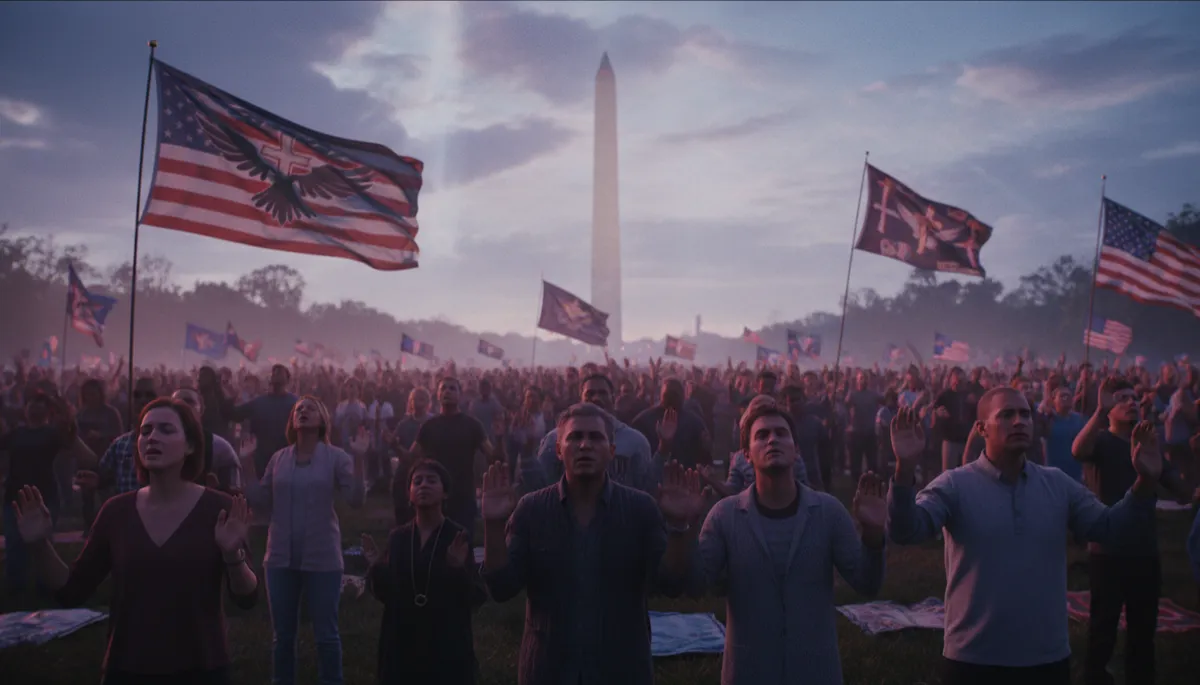
On the National Mall, under fading light and fluttering flags, Freedom 250’s “Rededicate 250” gathering wrapped Jesus in the American flag and called it unity. For Black Atlanteans and other politically awake believers, this moment demands clear eyes and a firm voice.
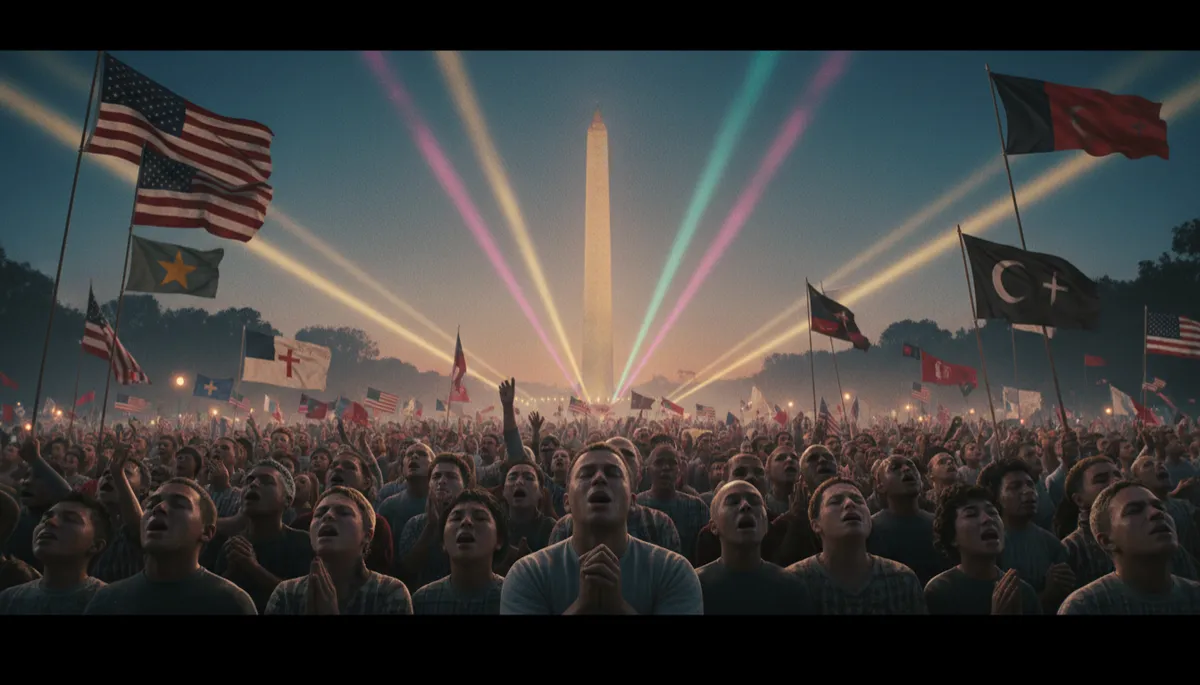
This wasn’t a spontaneous revival. It was a White House–backed, public–private production, featuring Cabinet officials, congressional leaders, military bands, and celebrity pastors, all framed as a “National Jubilee of Prayer, Praise, and Thanksgiving” ahead of America’s 250th birthday (freedom250.org, apnews.com). When the state helps stage a mass Christian worship service on the nation’s front lawn, that is not neutral government. That is power choosing a preferred faith.
The State Is Preaching, Not Just Hosting
Freedom 250 is presented as a patriotic partnership, but its message is theological: America must be publicly rededicated as “One Nation under God” through explicitly Christian worship. With taxpayer-supported logistics and top officials onstage, the government is not merely allowing religion in the public square; it is endorsing a specific religious narrative. That is the intersection of religion and state power in real time — and it tilts in one direction.
This rally lands in a broader moment where a federal Religious Liberty Commission openly calls separation of church and state “a lie,” while courts greenlight Ten Commandments displays in classrooms and expand protections for conservative Christian institutions (washingtonpost.com, latimes.com). None of this is random. It is coordinated, intentional, and aimed at rewriting the civic rules in Christian nationalist ink.
Christian Nationalism in Full View
Christian nationalism insists that “real” America is, and must remain, officially Christian. Freedom 250’s stage — packed with conservative politicians, megachurch leaders, and military pageantry — is that ideology made flesh. It wraps spiritual language around a political project: cement Christian identity as the default setting of the state and treat dissent as betrayal, not disagreement (pewresearch.org, npr.org).
For Black communities who know how easily “God and country” rhetoric has justified slavery, segregation, and surveillance, this is a blaring siren. Christian nationalism has never been neutral toward Black freedom; it has often been its theological enemy. To see it center stage on the Mall, under presidential blessing, is to watch old ghosts step back into the spotlight.
Pluralism on the Line
Yes, a rabbi appeared. Yes, the language of “unity” and “thanksgiving” flowed. But sprinkling in token diversity does not change the core script: America is being symbolically claimed for one faith tradition, at a moment when courts and commissions are working to harden that claim into policy. That is a direct challenge to religious pluralism and the separation of church and state that protects it.
Black Atlanteans who are both spiritually grounded and politically alert cannot afford to romanticize this spectacle. We can honor God without handing the state a pulpit. We can pray for the nation without letting the nation’s rulers define whose prayers count. The wall between church and state is not anti-faith; it is the thin barrier that keeps any one faith from becoming the government’s weapon.
The Mall crowd may have come for worship. The state came for something else: legitimacy, loyalty, and a holy cover for hard power. We should name that clearly — and refuse to bow.




