HBCU Resurgence 2026: Record Enrollment, Historic Graduates, and a Movement Growing Stronger
Education and Excellence | HBCUs | Higher Education 2026
HBCU Resurgence 2026: Record Enrollment, Historic Graduates, and a Movement Growing Stronger
At a time when systems meant to support Black students in higher education are being systematically dismantled, Historically Black Colleges and Universities are doing what they have always done: rising to meet the moment. In 2026, HBCUs are experiencing a historic resurgence in enrollment, philanthropy, prestige, and the sheer magnitude of the excellence they are producing. The numbers are staggering. The stories are inspiring. And for Black Atlanteans, the hometown implications hit close to home.
Howard University: A Record-Breaking Class of 2026
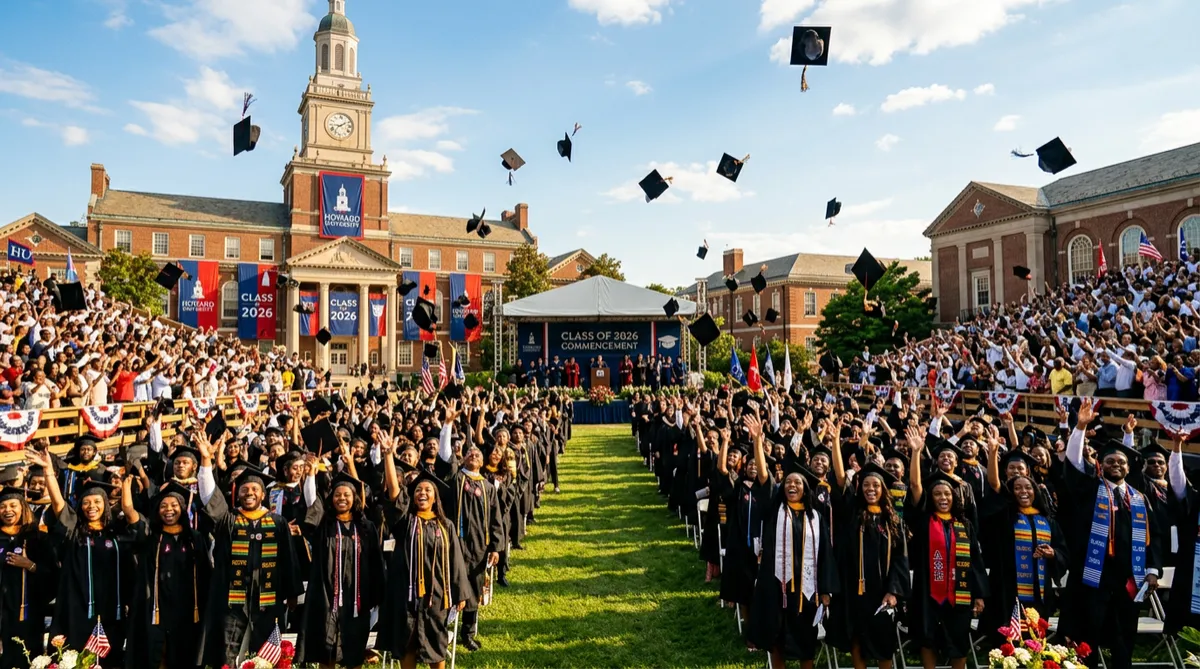
On May 9, 2026, Howard University held its 158th Commencement Convocation with more than 3,100 students, making it the largest graduating class in the university's entire history. Among those graduates: 198 students who earned perfect 4.0 GPAs, 134 military veterans, and students representing 41 countries and 47 U.S. states. In February 2025, Howard became the first HBCU ever to achieve Research One Carnegie Classification, placing it among the most research-intensive universities in the United States alongside institutions like MIT, Stanford, and Michigan.
Atlanta's Own: Spelman's Seven Valedictorians
In Atlanta, Spelman College made its own piece of HBCU history in 2026. In a remarkable demonstration of collective excellence, Spelman crowned seven co-valedictorians for the Class of 2026: Alyssa Richardson, Sophia Davis, Alexis Renae Sims, Mariama Diallo, Cori'Anna White, Aiyana Ringo, and Nia-Sarai Perry, all of whom earned perfect 4.0 GPAs. Forbes ranked Spelman among its top 500 colleges in America in 2026, the only HBCU on that list besides Howard, with a 76% graduation rate that is the highest of any HBCU.
Record Enrollment: More Black Students Are Choosing HBCUs
In September 2025, North Carolina A&T State University became the first HBCU to ever enroll more than 15,000 students. HBCU applications and enrollment have been climbing nationally, driven by the Supreme Court's 2023 ruling ending race-based affirmative action at primarily white institutions and the Trump administration's assault on diversity programs in higher education. For many Black students, HBCUs are not an alternative. They are the first choice.
$1 Billion in HBCU Philanthropy
Between 2020 and 2026, philanthropist MacKenzie Scott donated over $1 billion in total to 24 public and private HBCUs, with every contribution setting a donation record at the institution it supported. Scott also donated $70 million to the United Negro College Fund, which supports 37 private HBCUs. Data consistently shows that HBCUs produce 20% of Black members of Congress, 80% of Black judges in the United States, and 40% of Fortune 500 Black executives, all while serving student bodies where 73% of students are Pell Grant eligible compared to a national average of 34%.
Homecoming Season: The HBCU Experience at Its Finest
This October, the HBCU resurgence is visible and tangible in Atlanta as homecoming season begins. SpelHouse Homecoming, the joint celebration of Spelman and Morehouse, starts the week of October 10. HBCU homecoming season is more than a party. It is a reunion of the extended family that HBCUs create: the network that connects generations of Black graduates, the relationships that launch careers, and the culture that sustains communities. For Black Atlanteans who live in a city shaped by HBCU alumni like Martin Luther King Jr., homecoming season is a reminder of the extraordinary heritage that defines this city.
The Work Continues
HBCUs are thriving, but the fight to sustain them is ongoing. Federal funding disparities persist. The Trump administration's anti-DEI policies have created new pressures. But in 2026, the direction is clear: more Black students are choosing HBCUs, more philanthropists are investing in them, more researchers are emerging from them, and more graduates are entering the world with the knowledge, confidence, and community that HBCUs alone provide. The HBCU resurgence is not a moment. It is a movement. And it is growing stronger by the year.




