Israel Seizes Gaza Aid Flotilla in International Waters — And Why Black America Should Care
International Law, Gaza, Black Global Politics
Israel Seizes Gaza Aid Flotilla in International Waters — And Why Black America Should Care
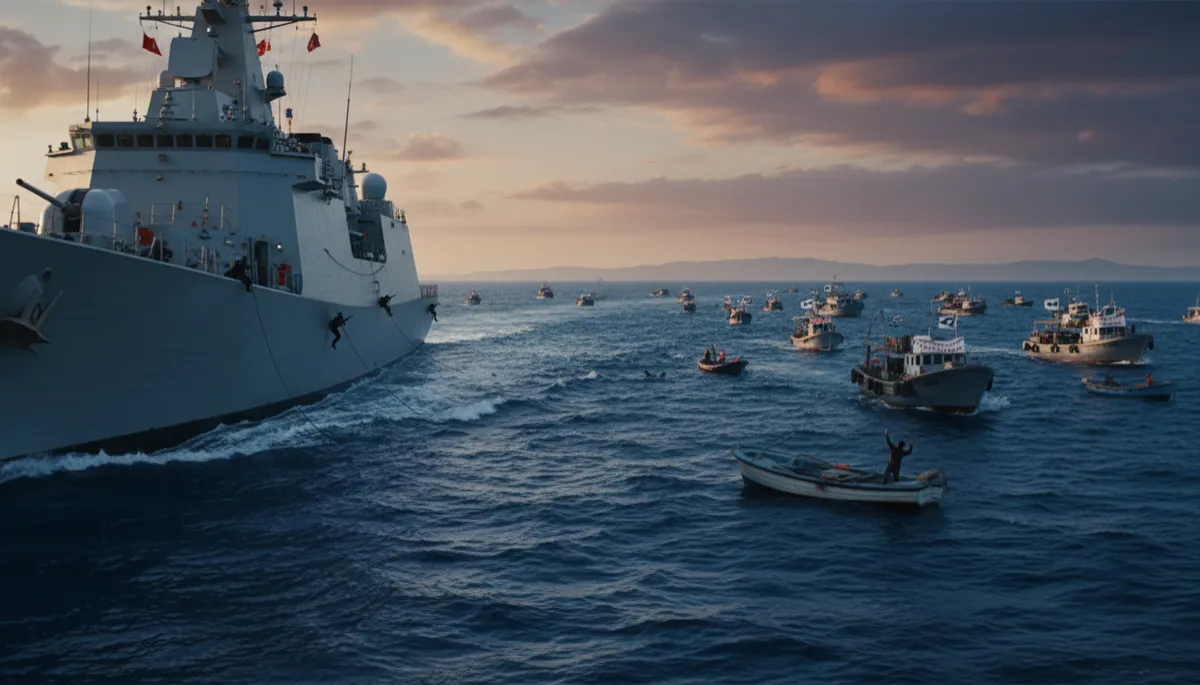
Israeli forces have seized yet another Gaza-bound aid flotilla in international waters, this time more than 40 civilian boats west of Cyprus, in an operation that raises hard questions about international law, humanitarian access, and global patterns of state violence Black communities know too well.
What Happened on the Water
The Global Sumud flotilla set sail from Turkey carrying food, medical supplies, and building materials for Gaza, where more than a year and a half of war and blockade have pushed over two million Palestinians to the brink. Organizers say more than 40 vessels were intercepted in international waters west of Cyprus, far from Gaza’s coast, with some activists reporting rubber bullets, water cannons, and dangerous naval maneuvers as Israeli commandos boarded the boats (Al Jazeera, AP).
This is not the first time. Just weeks earlier, Israeli forces intercepted 22 boats from the same flotilla near Crete, detaining at least 175 activists. Two, Saif Abu Keshek and Thiago Ávila, were brought to Israel, held, and later deported after being labeled “professional provocateurs” and suspected of terrorism-linked activity (AP, UN Human Rights Office).
Netanyahu’s Message: Enforce Isolation at Any Cost
From Tel Aviv, Prime Minister Benjamin Netanyahu praised the raid, telling naval commandos they were “neutralizing a malicious plan designed to break the isolation we have imposed on Hamas terrorists in Gaza” (JNS). The language is blunt: this is about maintaining isolation, not just intercepting weapons. He even joked that “the water looks wonderful,” underscoring how casually this high-stakes operation is being treated at the top.
Legal and Humanitarian Fault Lines
Under the United Nations Convention on the Law of the Sea, ships on the high seas have a right to free navigation. States can interfere only in narrow cases: piracy, slave trading, or clear security threats like arms smuggling. Here, the flotilla was openly declared, civilian, and carrying aid. UN human rights experts have stated plainly that “aid delivery is not a crime” and called these interceptions unlawful (UN Human Rights Office).
Israel leans on earlier findings, like the Palmer Report, to argue its naval blockade is legal during armed conflict and that it can enforce that blockade even in international waters. But that justification depends on proportionality and allowing humanitarian relief. When unarmed boats carrying food and medicine are treated as security threats, that standard collapses. Amnesty International and other rights groups have called these seizures “brazen and unlawful,” warning of arbitrary detention and reported mistreatment of activists in custody.
What This Means for People in Gaza
Every intercepted boat is not just a diplomatic incident; it is fewer medical kits, fewer sacks of flour, fewer generators reaching a population already living under siege. Gaza’s health system has been bombed and strangled. UN agencies describe catastrophic hunger and collapsing hospitals. When Israel blocks land crossings, restricts air drops, and now seizes sea convoys hundreds of miles from its own shores, it is tightening a deliberate economic chokehold on civilians, not just on Hamas fighters.
International law is clear that civilians must have access to life-saving aid, even in wartime. By cutting off nearly every route, Israel is turning Gaza into a laboratory for collective punishment. The flotilla was an attempt, however symbolic, to break that logic. Its seizure sends a clear signal: even symbolic breaches of isolation will be met with force.
The Parallels Black Communities Recognize
For Black Americans, none of this is abstract. We know what it means when a state decides a whole community is a security problem and then uses law, policy, and force to lock that community in place. We have lived through redlining, food deserts, over-policing, and economic blockades dressed up as “public safety” and “urban renewal.”
Gaza’s isolation is extreme, but the logic is familiar: control movement, criminalize survival, and then label any outside help as a threat. The way police shut down mutual aid, protest encampments, and community defense here at home echoes how Israel moves against aid flotillas and solidarity activists. In both cases, the state uses legal language to justify what is fundamentally political punishment of marginalized people.
Why This Matters Now
Black communities in the U.S. are already on the front lines of debates about policing, prisons, and borders. The seizure of a Gaza aid flotilla in international waters is part of that same global story: who gets to move, who gets to eat, who gets to live — and who gets labeled a criminal for trying to help. Paying attention is not a distraction from our struggles; it is a mirror held up to them.




