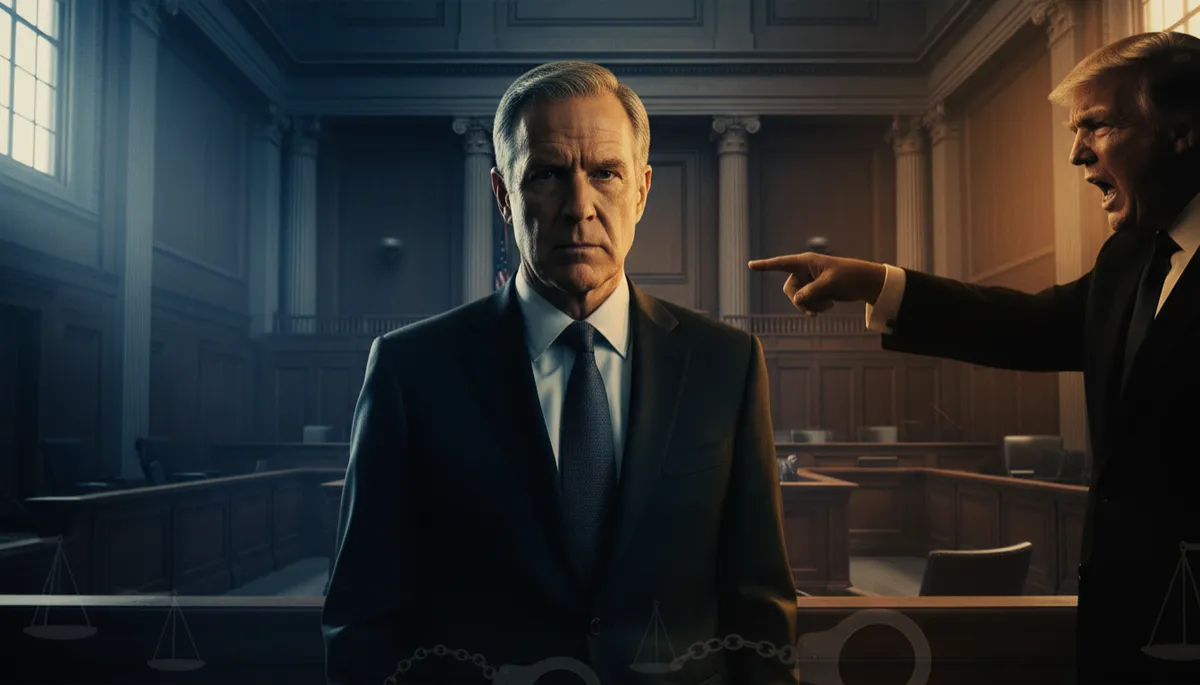
James Comey's Trial Puts Trump's Justice System on the Stand
Politics, Justice, Trump Era
James Comey’s Trial Puts Trump’s Justice System on the Stand
Former FBI Director James Comey is heading toward a federal trial on charges that he threatened President Donald Trump’s life, a case that exposes not just one man’s fate but the raw machinery of power in the Trump era. For Black Americans who have watched prosecutors stretch the law for us and bend it for others, this case lands differently — and the double standards are impossible to ignore.
The Case: An Instagram Post Becomes a Federal Crime
On April 28, 2026, a federal grand jury in the Eastern District of North Carolina indicted Comey on two counts: threatening the President and transmitting a threat in interstate commerce. Prosecutors say an Instagram photo he posted in May 2025 — seashells arranged to read “86 47” — amounts to a knowing, willful threat to Trump’s life, with “86” interpreted as “kill” and “47” as Trump’s place in presidential history (justice.gov). Acting Attorney General Todd Blanche insists the case is built on 11 months of evidence, not just one cryptic image (nbcnewyork.com).
Comey surrendered in Virginia on April 29 and was released on his own recognizance. A pretrial conference is set for late May, arraignment for June 30, and a tentative trial date for July 15, 2026, before Judge Louise Flanagan (goodmorningamerica.com). His lawyers are already signaling a First Amendment defense and calling the case vindictive prosecution (washingtonpost.com).
Political Context: Retaliation, Not Just Rule of Law
This is not happening in a vacuum. Comey was the FBI director Trump fired in 2017, the man who oversaw the early stages of the Russia investigation. For Trump loyalists, he has long been the face of the so‑called “deep state.” For Trump himself, he is unfinished business. That matters, because the same president who publicly demanded prosecutions of his enemies now presides over a Justice Department charging a former top cop over a stylized social media post.
Legal analysts across outlets from The Week to the Associated Press note that political speech enjoys strong First Amendment protection, and that proving a true, imminent threat from “86 47” will be an uphill climb for prosecutors (theweek.com). That’s why many see this less as a neutral enforcement of the law and more as the state flexing against a former adversary — a warning to anyone who crosses the president, even from inside the system.
Prosecuting a Former FBI Director: A System Exposes Itself
Indicting a former FBI director is unprecedented and, on paper, could look like accountability finally reaching the highest levels of law enforcement. But the facts undercut that hopeful reading. This isn’t about police shootings, surveillance abuses, or civil rights violations. It’s about a thin, politically charged threat case that many experts doubt would be brought against anyone without Comey’s history with Trump.
That selective focus tells us what kind of “accountability” this Justice Department is interested in. When a former top lawman is finally hauled into court, it’s not for presiding over a system that disproportionately targets Black communities. It’s because he offended the president. The message is clear: the law swings hardest when power feels personally insulted, not when marginalized people are systematically harmed.
How Trump Uses Power: Law as a Political Weapon
The Comey case fits a broader Trump‑era pattern: the Justice Department as a political weapon. Blanche, a former Trump personal lawyer, is now the acting attorney general driving aggressive cases against Trump critics (theguardian.com). Prosecutors have reportedly resigned or been reassigned amid discomfort with these prosecutions (washingtonpost.com), signaling internal alarm at how far the line is being pushed.
If this case survives early motions, it will chill not just former officials but anyone with a platform. If it collapses, it still serves Trump’s narrative: that his enemies are criminals, even if the courts “let them off.” Either way, the process becomes the punishment. That is how power operates when it stops pretending to be neutral — it makes you fight the state just to prove you’re allowed to speak.
Black Americans and the Double Standard on Prosecution
For Black readers, none of this is abstract. We know what it looks like when prosecutors want to make a case: they stretch gang statutes, stack charges, and lean on vague language about “threats” and “menace” to lock people up. Young Black men have been arrested over lyrics, social posts, even hand gestures that prosecutors claimed signaled violence. The law becomes elastic when it’s used against us.
Watching that same elastic standard suddenly applied to a white, former FBI director is jarring. On one hand, it proves what we’ve always said: if they want you, they will find something. On the other, it exposes how rarely that energy is aimed upward. Comey is being prosecuted not because the system finally cares about abuse of power, but because he fell out with the man who controls it.
The double standard cuts both ways. Black people see everyday violence from the state — police killings, overcharging, wrongful convictions — met with shrugs or settlements. Yet a cryptic Instagram post aimed at a president triggers a federal indictment and a nationally watched trial. The signal is unmistakable: threaten power, and the law moves; threaten Black life, and the system debates what “accountability” even means.
What This Trial Really Tests
James Comey will stand before a judge in July, but the real defendant is the Trump‑era justice system. This case will test whether federal courts will bless the president’s desire to criminalize his critics, and whether the First Amendment still offers protection when power takes things personally. For Black America, the lesson is familiar and sobering: the law is not blind; it is aimed. The only question is where — and at whom — it’s pointed next.




