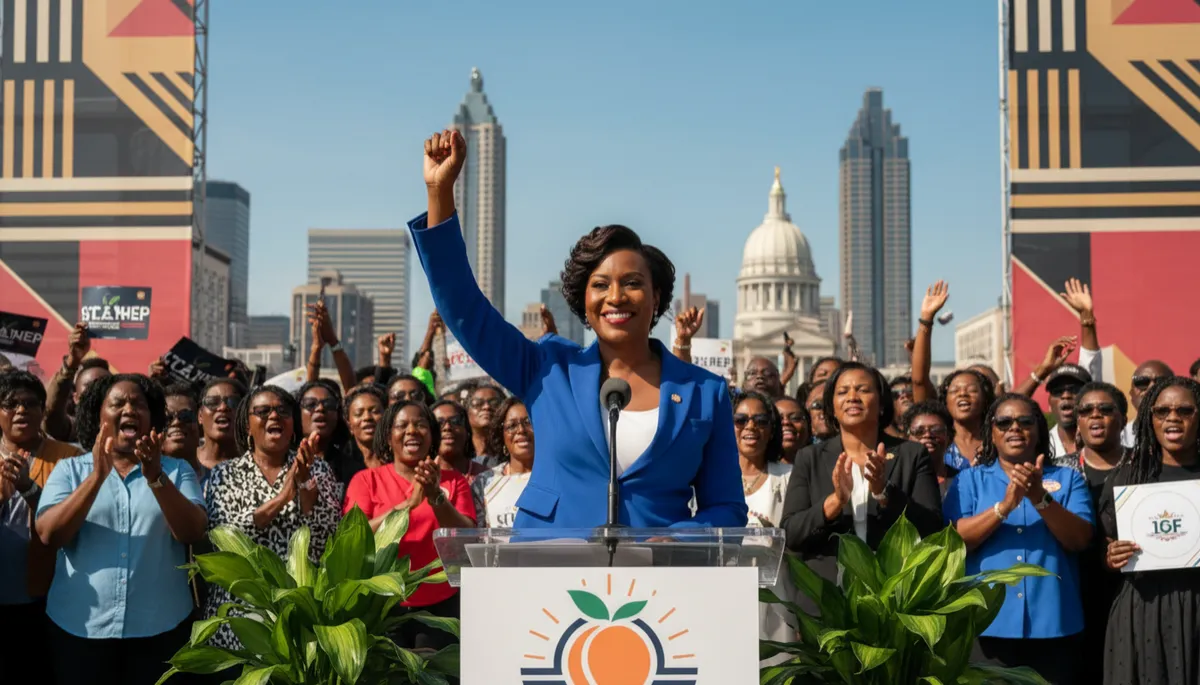
Keisha Lance Bottoms' Historic Georgia Governor Run
Politics, Georgia, Black Leadership, Elections
Keisha Lance Bottoms’ Historic Run for Georgia Governor Electrifies Black Voters
With a wave of national Black support and a surge of grassroots energy at home, Keisha Lance Bottoms is turning Georgia’s governor’s race into a defining battle over leadership, legacy, and the future of Black political power in the South.
A Powerful Moment in Black Political History
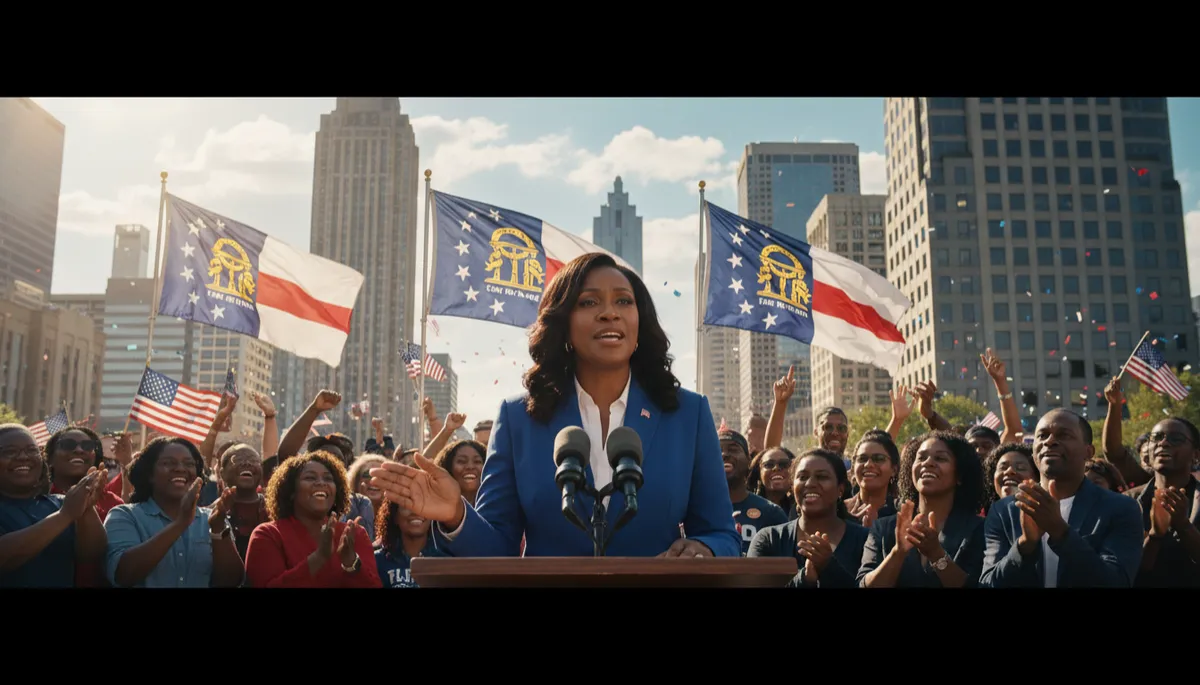
Georgia has never had a Black governor. Never. Not during Reconstruction, not during the Civil Rights era, not during the modern wave of Black political power that has reshaped Atlanta and the metro suburbs. That is the ceiling Keisha Lance Bottoms is now aiming to shatter as the Democratic nominee for governor — and Black voters across Georgia are watching with clear eyes and high expectations.
On Sunday, that energy crystallized in a bold, unapologetic show of support. Roughly 1,000 people logged on for a virtual “Men for Keisha” rally, a gathering designed to mobilize Black men behind her campaign and send a message: Black men are not sitting on the sidelines this cycle. They are organizing, speaking up, and standing shoulder to shoulder with a Black woman poised to make history in the governor’s mansion.
From Atlanta City Hall to the Statehouse: Bottoms’ Political Journey
Keisha Lance Bottoms is no stranger to pressure or the national spotlight. As mayor of Atlanta, she led the city through some of its most turbulent modern years — a global pandemic, uprisings for racial justice after the murder of George Floyd, and intense debates over policing and public safety. Her steady, visible leadership caught the attention of the White House, and she later joined President Joe Biden’s administration as a senior adviser for public engagement (as reported by CNN and NBC News), giving her a front-row seat to national policy and power.
Now, as the Democratic nominee for governor, Bottoms is bringing that experience — local, national, and deeply personal — back home to Georgia. Her candidacy is not just another election on the calendar; it’s a test of whether a state transformed by Black organizing and demographic change is ready to be led by a Black woman who has already proven she can govern under fire.
“Men for Keisha”: Black Men Step Forward
Sunday’s “Men for Keisha” rally was more than a Zoom call — it was a declaration. Organized to galvanize Black male voters, the event drew an impressive lineup of Black Democratic heavyweights and cultural voices: Atlanta Mayor Andre Dickens, U.S. Sen. Raphael Warnock, Maryland Gov. Wes Moore, former U.S. Ambassador Andrew Young, and singer and actor Tyrese. Their presence signaled that this race is national, and that Black leaders across the country understand what’s at stake in Georgia.
Mayor Andre Dickens, who succeeded Bottoms at Atlanta City Hall, offered an unequivocal defense of her leadership. “When the cameras were hot and the streets were tense, Keisha showed up,” he said, underscoring her performance during the 2020 protests and the pandemic. “Don’t let anyone rewrite that history. She led this city with grace, courage, and a fierce love for Atlanta’s people — and she’ll do the same for Georgia.”
Sen. Raphael Warnock framed Bottoms’ run as part of a larger story of Black political power in Georgia. “We turned this state purple with our votes and our organizing,” he told attendees. “Now we have the chance to turn the governor’s office into a place that finally reflects the people who built this state, raised families here, and fought for justice here. Keisha’s candidacy is a continuation of that movement.”
Maryland Gov. Wes Moore, himself a trailblazing Black governor, spoke directly to the symbolism and substance of the moment. “This isn’t about making history for the sake of headlines,” he said. “It’s about making history so our communities can finally get what we’ve been denied — fair funding for our schools, real economic opportunity, and a justice system that doesn’t criminalize our existence.”
Andrew Young, a living bridge to the Civil Rights era, reminded the audience that Georgia has always been a battleground for Black freedom. Tyrese, bringing cultural star power, spoke to younger voters about using their platforms and their ballots with equal force. Together, their voices formed a chorus: Black men have a critical role to play in lifting up a Black woman candidate — not as an afterthought, but as a driving force.
GOP Attacks and the Battle Over Narrative
Republicans have already made clear where they intend to hit Bottoms hardest: her record as Atlanta mayor. Expect a steady drumbeat of attacks painting the city as unsafe, ungovernable, and emblematic of “Democratic mismanagement.” That’s not accidental — it’s a familiar tactic aimed at undermining Black-led cities and Black women in power, turning complex challenges into cheap talking points.
The “Men for Keisha” rally was, in many ways, an answer to that strategy. By centering Black men publicly defending her leadership, the campaign is pushing back against the narrative that Black men are disillusioned, disengaged, or easily swayed by caricatures of Black women leaders. It’s a reminder that the people who lived through those years in Atlanta know the full story — and they’re ready to tell it.
What a Bottoms Governorship Could Mean for Black Georgia
If elected, Keisha Lance Bottoms would become Georgia’s first Black governor — and the implications for Black communities across the state would be profound. Symbolically, her victory would declare that the same Georgia that once enforced Jim Crow and resisted desegregation is now willing to be led by a Black woman from Atlanta. That matters to every Black child in a rural county classroom, every HBCU student in Atlanta, every Black entrepreneur trying to build something in this state.
Substantively, a Bottoms administration could reshape priorities on education, economic equity, criminal justice, and voting rights. Expect pressure for more state support for majority-Black school districts, stronger backing for HBCUs, and targeted investment in Black small businesses from Albany to Augusta to the Westside. On policing and public safety, her experience navigating Atlanta’s flashpoints could translate into statewide reforms that balance accountability with real community investment, not just more incarceration.
For Black Atlantans in particular, a governor who understands the city not as a talking point but as home could mean a new era of state–city partnership instead of constant friction. Transportation, housing, healthcare access, and economic development all sit at the intersection of local and state power. Having someone in the governor’s office who has walked Atlanta’s neighborhoods, governed its complexities, and still claims it proudly would be a game-changer.
The Call: From Watching History to Making It
This moment will not be decided by headlines, speeches, or even star-studded rallies alone. It will be decided by who shows up — and who doesn’t. Georgia’s Black voters, and especially Black men, are once again at the center of a race that could redefine what’s possible in the South. The question is not whether history is on the line. It is whether we are willing to claim it.
Civic engagement cannot be seasonal. It cannot be something we dust off every four years and then tuck away. The same energy that packed that virtual “Men for Keisha” rally must spill into voter registration drives, early-vote lines, church parking lots, barbershops, group chats, and family text threads. Check your registration. Help your cousin fix his ID issue. Offer a ride to the polls. Volunteer a few hours to phone bank or canvass. Talk to your sons, nephews, and brothers about why this race matters to their lives right now — not just in some distant future.
Keisha Lance Bottoms’ run for governor is a test of Georgia’s conscience, but it is also a test of ours. We have the power to move this state from a place where Black leadership is tolerated in pockets to a place where it is trusted at the very top. History is not something that happens to us; it is something we write, precinct by precinct, ballot by ballot. The pen is in our hands. Now it’s on us to use it.




