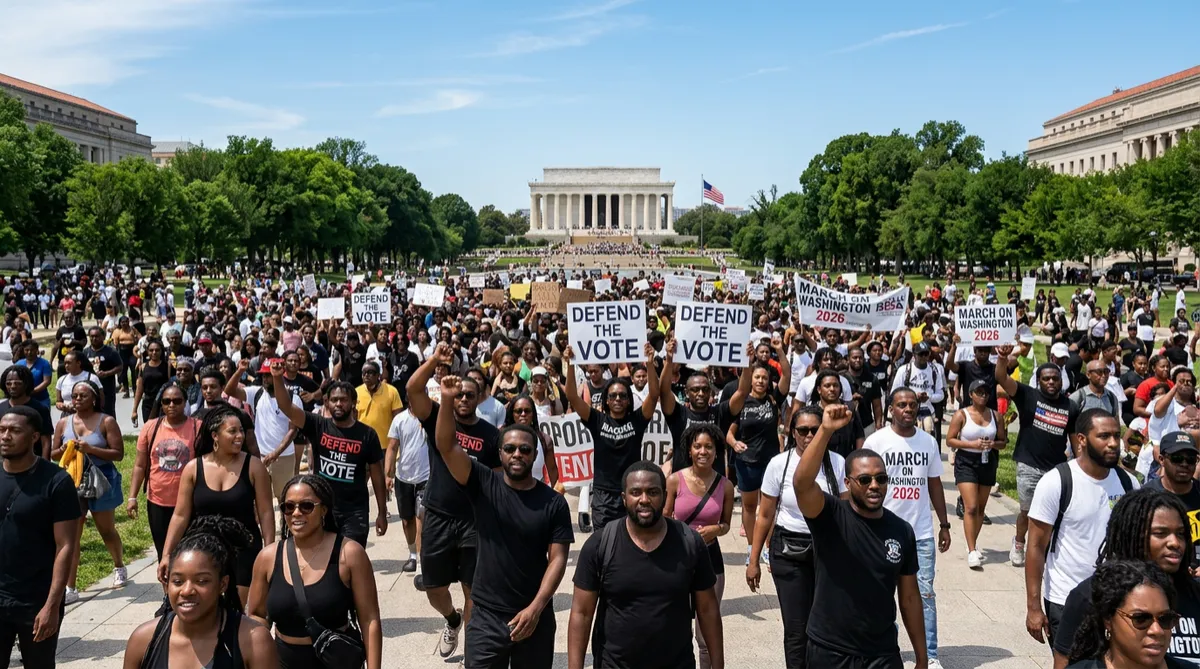
March on Washington 2026: Defend the Vote
Law, Civil Rights, Voting Rights
March on Washington 2026: Defend the Vote Returns to the Lincoln Memorial at a Turning Point for Democracy
Sixty-three years after Dr. Martin Luther King Jr. shared his dream with the world from the steps of the Lincoln Memorial, a new generation is preparing to fill the National Mall — this time to defend a right many assumed was settled: the right to vote.
A Historic Date, a New Emergency
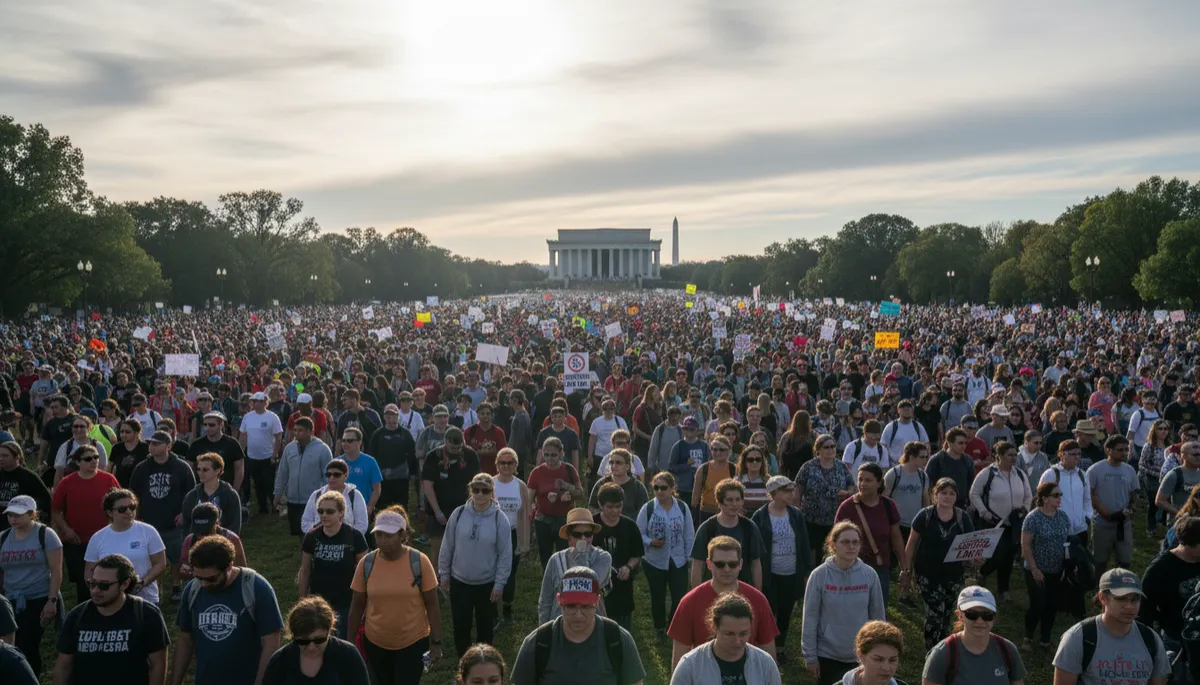
On Friday, August 28, 2026 — exactly 63 years after the 1963 March on Washington for Jobs and Freedom — thousands of Americans are expected to gather once again at the Lincoln Memorial in Washington, D.C. for the “March on Washington 2026: Defend the Vote.” Organizers describe the event as both a commemoration and an alarm bell, ringing out at a moment when hard‑won civil rights protections are being rolled back in real time.
The march is co-convened by Rev. Al Sharpton’s National Action Network (NAN) and the Drum Major Institute (DMI), the organization founded by Dr. King and now led by his family. It is co-chaired by Rev. Al Sharpton, Martin Luther King III, and Arndrea Waters King, signaling a direct throughline from the original civil rights movement to today’s struggle over the ballot box and economic survival.
Three Pillars: Voting Rights, Economic Dignity, and Affordability
Organizers have framed the 2026 march around three core pillars: Voting Rights, Economic Dignity, and Affordability. Together, they capture a reality Black communities know well — that political power, economic opportunity, and the cost of everyday life are inseparable.
Under the banner of Voting Rights, marchers will call for restoring and strengthening federal protections that once shielded Black voters from discriminatory maps, voter suppression laws, and targeted disenfranchisement. Economic Dignity speaks to jobs that pay a living wage, fair access to credit and capital, and the ability to build generational wealth. Affordability underscores the daily reality of families squeezed by rising housing costs, medical bills, student debt, and grocery prices — pressures that hit Black households especially hard.
The Callais Ruling: A New Blow to the Voting Rights Act
The urgency behind “Defend the Vote” sharpened on April 29, 2026, when the U.S. Supreme Court issued its decision in Louisiana v. Callais. In that ruling, the Court effectively gutted Section 2 of the Voting Rights Act of 1965, the landmark provision that for decades allowed Black communities to challenge racially discriminatory electoral maps that diluted their voting strength.
By sharply narrowing when and how Section 2 can be used, the Court raised the bar for proving discrimination and signaled skepticism toward race-conscious remedies — even when those remedies are designed to correct a long history of exclusion. Legal scholars and voting rights advocates warn that the decision will make it far more difficult to create or preserve majority-Black districts in places where Black voters have long been marginalized.
A Wave of Redistricting and a Threat to Black Political Power
In the months since the Callais decision, a wave of redistricting battles has swept across the South and beyond. State legislatures and map‑drawers have moved quickly to redraw districts in ways that, civil rights groups say, threaten Black political representation at every level — from Congress to statehouses to county commissions and school boards.
NAACP President Derrick Johnson has condemned the ruling as an attempt to “shrink us backwards into a 1950s reality.” For many Black Americans, especially in states like Georgia, Alabama, Louisiana, and Texas, that “reality” is not abstract. It recalls an era when lines were drawn to keep Black voices out of power, even as taxes, laws, and police still bore down on Black communities every day.
Echoes of 1963 — and a New Generation Stepping Forward
The 1963 March on Washington drew an estimated 250,000 people to the National Mall. That demonstration helped galvanize the passage of the Civil Rights Act of 1964 and the Voting Rights Act of 1965, reshaping American democracy and opening doors that had long been closed to Black voters and Black elected officials.
Now, Dr. King’s eldest son, Martin Luther King III, says the 2026 march is about more than honoring that legacy. “Sixty-three years after my father stood at the Lincoln Memorial, we are called to march again — not only in remembrance, but in action,” he said in announcing the mobilization. The presence of Arndrea Waters King alongside him underscores the role of Black women — often the backbone of organizing, turnout, and policy change — in leading this new chapter.
Sharpton, Warnock, and the Atlanta Connection
For Black Atlanteans, the 2026 march is not a distant national story — it is deeply local. Georgia has been at the center of modern voting rights fights, from long lines in majority‑Black precincts to purges of voter rolls and fierce battles over mail‑in ballots and drop boxes.
U.S. Senator Raphael Warnock, senior pastor of Ebenezer Baptist Church where Dr. King once preached, has been one of the most vocal critics of the Callais ruling. Warnock has called the decision “Jim Crow in new clothes,” warning that it threatens to lock in maps that dilute Black voting power even as Black communities drive population growth and economic dynamism across the South.
Rev. Al Sharpton, whose National Action Network is co-organizing the march, has been equally blunt about what is at stake. “The right to vote, the very foundation of our power, is being chipped away in statehouse after statehouse,” he said. For Sharpton and many other faith and civil rights leaders, the march is a way to make clear that Black voters will not quietly accept the erosion of rights their parents and grandparents bled to secure.
Nonpartisan, Interfaith, Intergenerational — and Open to All
Organizers emphasize that the March on Washington 2026: Defend the Vote is nonpartisan, interfaith, and intergenerational. It is Black‑led but intentionally multiracial, welcoming allies from across communities who believe that democracy only works when every voice can be heard and every vote can be counted.
From elders who remember segregated polling places to Gen Z voters casting ballots in their first presidential election, the march is designed as a space where stories, strategies, and strength can be shared. Faith leaders, labor unions, student groups, civil rights organizations, and community coalitions are all expected to send delegations to the Lincoln Memorial steps where history will again be written.
How to Take Part — From Atlanta to the Lincoln Memorial and Beyond
Participation in the March on Washington 2026 is open to everyone. People can attend in person in Washington, D.C., joining the crowd that will gather on the National Mall beginning early that Friday morning. For those who cannot travel — including many elders, parents, workers, and students — the program will also be available via livestream, allowing households, churches, and community centers to tune in from Atlanta and across the country.
Registration is free, and organizers encourage early sign‑ups to help coordinate buses, accessibility needs, and local mobilizations. Many Atlanta‑based congregations, civic groups, and student organizations are already planning caravans and watch parties, turning the march into a weekend of civic education, cultural celebration, and strategic organizing.
A Call to Action for Black Atlanteans
The 1963 march helped birth the laws that changed the South and opened doors for generations of Black leaders — including the very officials now sounding the alarm about Callais and its aftermath. The 2026 March on Washington: Defend the Vote is a reminder that progress is never permanent, and that every right we keep is a right we fight to protect.
For Black Atlanteans, the question is not whether history is repeating itself, but how we will respond. Whether you stand on the steps of the Lincoln Memorial, watch from a church fellowship hall on Auburn Avenue, or stream the program from your living room, this is a moment to recommit to the work of building a democracy worthy of our ancestors’ sacrifices and our children’s dreams.
On August 28, 2026, the nation’s eyes will again turn to Washington. The question is whose voices will rise. From Atlanta to D.C., the invitation is clear: show up, speak out, and help defend the vote.




