Scotlandville’s Political Struggle: Redistricting Impact
Politics, Voting Rights, Scotlandville, Redistricting, Black Representation
Scotlandville’s Voice on the Line: How Louisiana’s New Map Sidelines a Black Powerhouse — Again
A nearly all-Black community that helped power Louisiana politics for generations has been carved out of meaningful representation once more, exposing a national playbook for diluting Black political power — and the organizing muscle rising to confront it.
A Historic Black Community Pushed to the Political Edge
Scotlandville is not just a neighborhood on the north side of Baton Rouge; it is one of Louisiana’s historic Black anchors. Once a rural settlement, it grew into a majority-Black community of roughly 10,000 people, shaped by Jim Crow resistance, church networks, and the rise of nearby Southern University — one of the nation’s largest HBCUs. Families here have sent children into classrooms, pulpits, and public office across the South for generations.
That history is not abstract. Residents remember poll taxes, segregated schools, and the long fight to turn raw census numbers into real power at the ballot box. For many, having one of their own — Rep. Cleo Fields, who grew up in Scotlandville — represent them in Congress symbolized a hard-won shift from being counted to actually being heard. His career, and the community institutions he built, including the Louisiana Leadership Institute, are part of why elders here talk about Scotlandville as a “training ground for Black leadership,” not just a ZIP code.
Redistricting as a Tool to Dilute Black Voting Power — Twice in a Decade
In 2026, that legacy collided with a brutal reality: Scotlandville was shuffled into a majority-white congressional district for the second time under the same representative’s tenure. After the U.S. Supreme Court’s ruling in Louisiana v. Callais on April 29, 2026, the state’s remedial map — which had created a second majority-Black district — was struck down as an unconstitutional “racial gerrymander.” The decision weakened core protections of the Voting Rights Act and greenlit lawmakers to redraw lines with far less regard for Black voting strength (redistrictingonline.org).
The legislature moved fast. By May 29, 2026, Gov. Jeff Landry had signed SB 121, a new congressional map that effectively erased one of Louisiana’s two majority-Black districts and dropped Scotlandville into a majority-white seat (redistricting.lls.edu). The Black voting-age population in Cleo Fields’s district fell from around 50% to roughly 40%, transforming a district anchored in Black communities into one where Black voters are outnumbered and outgunned at the polls (AP).
This is not an accident of cartography. It is a strategy. By “cracking” Scotlandville out of a Black-influence district and scattering its voters into a majority-white one, lawmakers have once again turned a unified Black bloc into a numerical minority. It is the same story, under the same representative’s watch, playing out with new legal cover and higher stakes.
The Voting Rights Act Fight: From Shield to Battlefield
For decades, the Voting Rights Act (VRA) was the firewall that kept maps like this from becoming the norm. Section 2 required states to create majority-minority districts when racially polarized voting and demographics made it possible. Earlier court fights in Louisiana, echoing the Supreme Court’s 2023 decision in Allen v. Milligan, had forced lawmakers toward a second Black-majority district in a state where a third of residents are Black (Brennan Center).
But Callais shifted the ground. By labeling the remedial map a racial gerrymander, the Court blurred the line between remedy and violation, making it harder to explicitly use race to protect Black communities while leaving plenty of room to use politics — and race by proxy — to weaken them. The result: Scotlandville’s residents are told their new district is “race-neutral,” even as the impact falls squarely on Black voters who lose the ability to elect their candidate of choice.
Civil Rights Advocates Sound the Alarm — and Organize
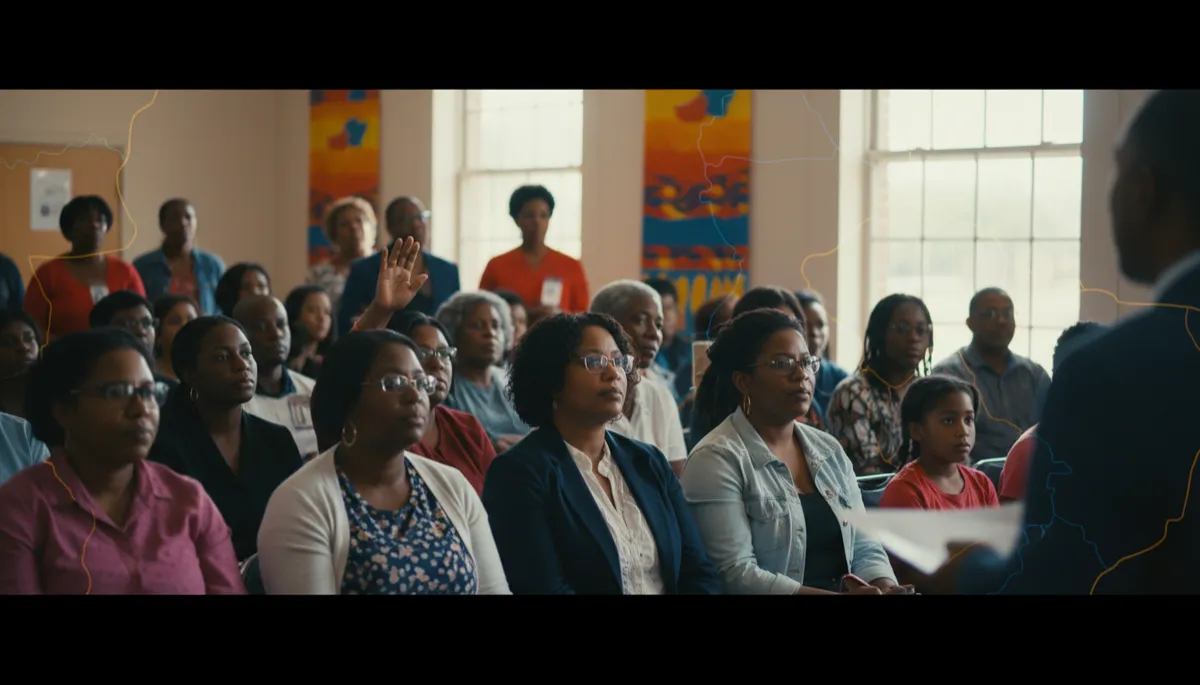
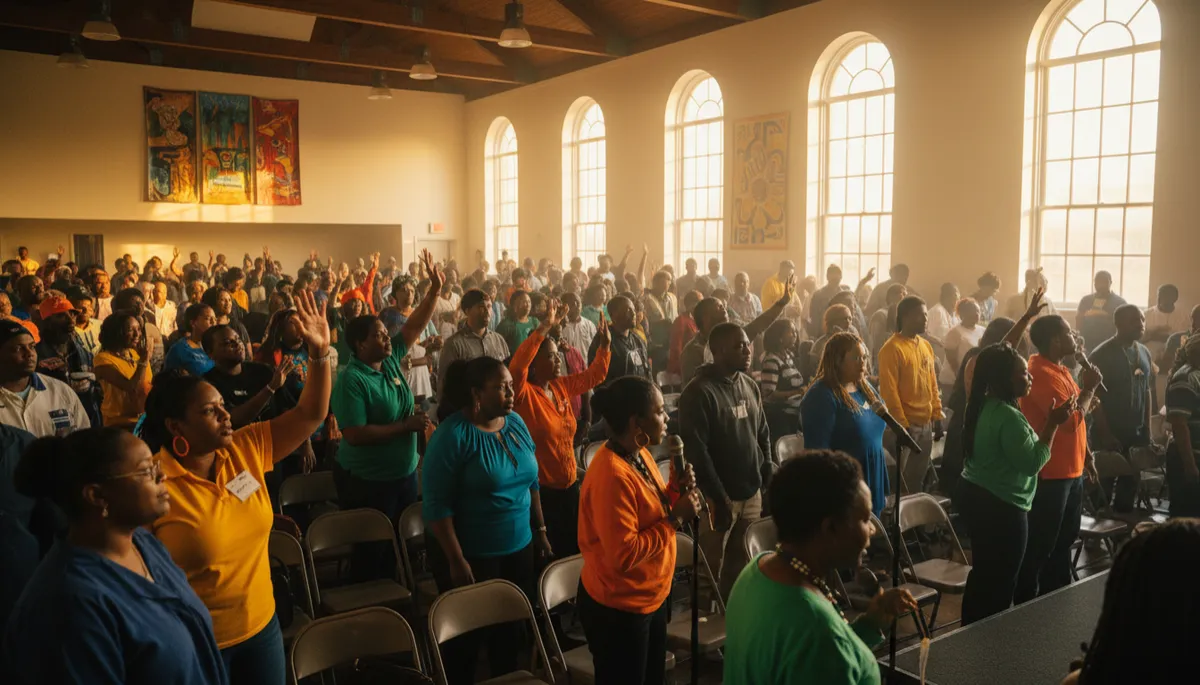
Civil rights groups saw this coming. On May 8, 2026, NAACP leaders and voting-rights advocates packed public hearings at the Louisiana Capitol, warning that dismantling Black-majority districts would gut representation and tilt the map toward Republicans for years (Louisiana Illuminator). They called the new map what it is: a partisan play built on racial math, designed to flip a Democratic seat and sideline Black voters in the process (ABC News).
In Scotlandville, the response has been both deeply personal and sharply political. “We’re back to where we were right after Reconstruction,” said 89-year-old activist Press Robinson Sr., describing the new map as yet another chapter in a long story of Black disenfranchisement (Washington Post). Small business owner Dakasha Caulfield Leonard voiced the fear many share: “If [Fields] doesn’t speak up and carry our voices, there’s nobody else to do that for us.”
A National Pattern: Cracking Black Power from Louisiana to Atlanta
What is happening in Scotlandville is not isolated. Across the country, from Alabama to Georgia to Texas, legislatures have used sophisticated mapping software and recent court decisions to either “pack” Black voters into a few districts or “crack” them across many. Both tactics blunt Black influence, even as overall Black population numbers rise (New York Times).
For Black Americans — and Black Atlanteans watching from a city that has long been a capital of Black political power — Scotlandville’s story is a warning and a call. The playbook is clear: weaken the Voting Rights Act, redraw maps under the banner of “colorblindness,” and hope that confusion, apathy, and legal fatigue keep people from fighting back. The question is not whether this strategy exists; it is how communities choose to respond.
Fighting Back: Data, Organizing, and Code as Civic Power
Residents and advocates in Scotlandville are refusing to accept political erasure as inevitable. Local churches, student groups at Southern University, and organizations like the Louisiana Leadership Institute are hosting town halls, know-your-map sessions, and voter education drives. Lawyers are preparing fresh challenges under what remains of the Voting Rights Act and the Constitution’s protections against intentional discrimination.
As a senior software engineer, I see another front in this fight: data and code. The same technology used to gerrymander can be used to expose and challenge it. Open-source tools now let communities analyze how lines slice through Black neighborhoods, estimate racial voting strength, and generate fairer alternative maps — evidence courts and journalists can’t ignore.
Here is a simplified Python-style example of how advocates might start examining whether Black voters are being “cracked” across multiple districts. It assumes a CSV of precinct-level data with race and district assignments:
import pandas as pd

# Load precinct-level data with race and district info
df = pd.read_csv("louisiana_precincts.csv")

# Focus on Scotlandville precincts only
scotlandville = df[df["community"] == "Scotlandville"]

# Summarize Black voting-age population (BVAP) by district
bvap_by_district = (
    scotlandville
    .groupby("congressional_district")["black_vap"]
    .sum()
    .reset_index()
)

# Compare BVAP share of each district to total BVAP in Scotlandville
total_bvap = scotlandville["black_vap"].sum()
bvap_by_district["share_of_scotlandville_bvap"] = (
    bvap_by_district["black_vap"] / total_bvap
)

print(bvap_by_district.sort_values("share_of_scotlandville_bvap", ascending=False))
If you see Scotlandville’s Black voting-age population split across multiple districts, each holding only a small slice of that power, you are looking at cracking in action. From there, communities can propose alternative district assignments, document the impact, and bring both the numbers and the stories — like Press Robinson’s and Dakasha Leonard’s — into courtrooms, newsrooms, and hearing rooms.
Scotlandville’s Next Chapter Belongs to Its People
Cleo Fields has decided not to seek reelection to Congress in this new, less favorable district, choosing instead to return to state politics. That decision hurts, symbolically and strategically, for a community that saw itself reflected in his rise (AP). But it does not end Scotlandville’s story. The same organizing muscle that carried this community through Jim Crow, school desegregation, and earlier redistricting fights is still here — in elders who remember Reconstruction’s rollback, in young organizers learning GIS tools, in Black Atlanteans and others watching and building coalitions across state lines.
Maps matter, but they are not destiny. The lines on paper are powerful because of who shows up — or doesn’t — inside them. In Scotlandville, the message from packed town halls and quiet living-room meetings is the same: this is not the end of Black representation, but a new phase of the struggle to secure it. The urgency is real, the facts are stark, and the tools — legal, political, and technical — are in our hands.




