SpaceX Starship's Historic Debut Launch
Space, Technology, Science News
SpaceX Starship Makes Historic Debut Launch
SpaceX’s Starship mega-rocket has completed a historic debut launch, marking a pivotal step toward a new era of human space exploration and advancing NASA’s plans to return astronauts to the lunar surface.

A Mega-Rocket Clears Its First Major Hurdle
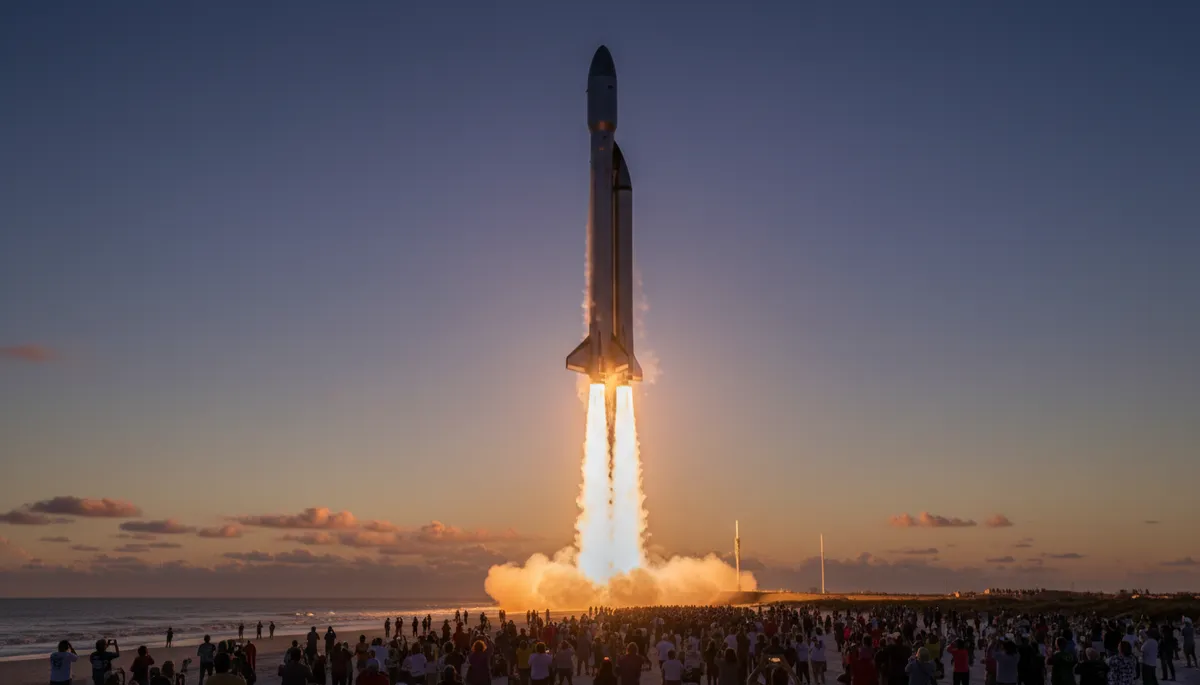
Over the weekend, SpaceX successfully launched its long-awaited Starship mega-rocket on a highly anticipated debut flight from the company’s Starbase facility on the Texas Gulf Coast. The fully integrated launch system, combining the Super Heavy booster and Starship upper stage, lifted off in a roar of methane-fueled Raptor engines, validating years of testing, iteration, and regulatory review (SpaceX/Starship program overviews).
The mission demonstrated key aspects of the vehicle’s performance, from liftoff through ascent, and represents a crucial step toward SpaceX’s goal of building a fully reusable transportation system for missions to the Moon, Mars, and beyond (CNET; Space.com).
Launch Follows SpaceX Public Offering Announcement
The debut launch came just two days after SpaceX CEO Elon Musk announced he is taking the company public, following a formal S‑1 filing with the U.S. Securities and Exchange Commission in May 2026. SpaceX plans to list on Nasdaq under the ticker “SPCX,” in what could become one of the largest initial public offerings in market history (Bloomberg; Le Monde).
The timing underscores how central Starship is to SpaceX’s long-term business strategy, spanning launch services, deep-space missions, satellite deployment, and broader infrastructure for space-based connectivity and AI-enabled systems.
Key Milestone for NASA’s Artemis Lunar Program
Starship is not only a flagship vehicle for SpaceX; it is also a critical component of NASA’s Artemis program, which aims to return humans to the Moon and establish a sustained presence there by the end of the decade (NASA Artemis; SpaceX Human Spaceflight: Moon). SpaceX’s variant of Starship has been selected as the Human Landing System that will ferry astronauts from lunar orbit down to the surface and back.
In a statement following the launch, NASA Administrator Jared Isaacman declared that Starship is now one step closer to the Moon, emphasizing that the successful flight significantly reduces technical risk for future Artemis landings. Demonstrating Starship’s launch capability is a foundational requirement before NASA can proceed with integrated lunar mission tests.
Spectators, Viral Footage, and Renewed Public Excitement
The launch drew thousands of spectators along the Texas coastline, with crowds lining beaches, causeways, and viewing areas near Starbase. Many had traveled long distances to witness what they saw as a defining moment in commercial spaceflight and human exploration.
Within minutes of liftoff, high-resolution footage and smartphone videos of the towering rocket climbing through the atmosphere went viral worldwide across social media platforms and news outlets. The spectacle has reignited public enthusiasm for space exploration, echoing the excitement of the Apollo era while showcasing the role of private industry in shaping the next chapter of human activity beyond Earth.
As Starship moves into its next series of test flights, both SpaceX and NASA will seek to build on this momentum, turning a successful debut into a reliable transportation system that could redefine access to the Moon—and ultimately, to Mars.




