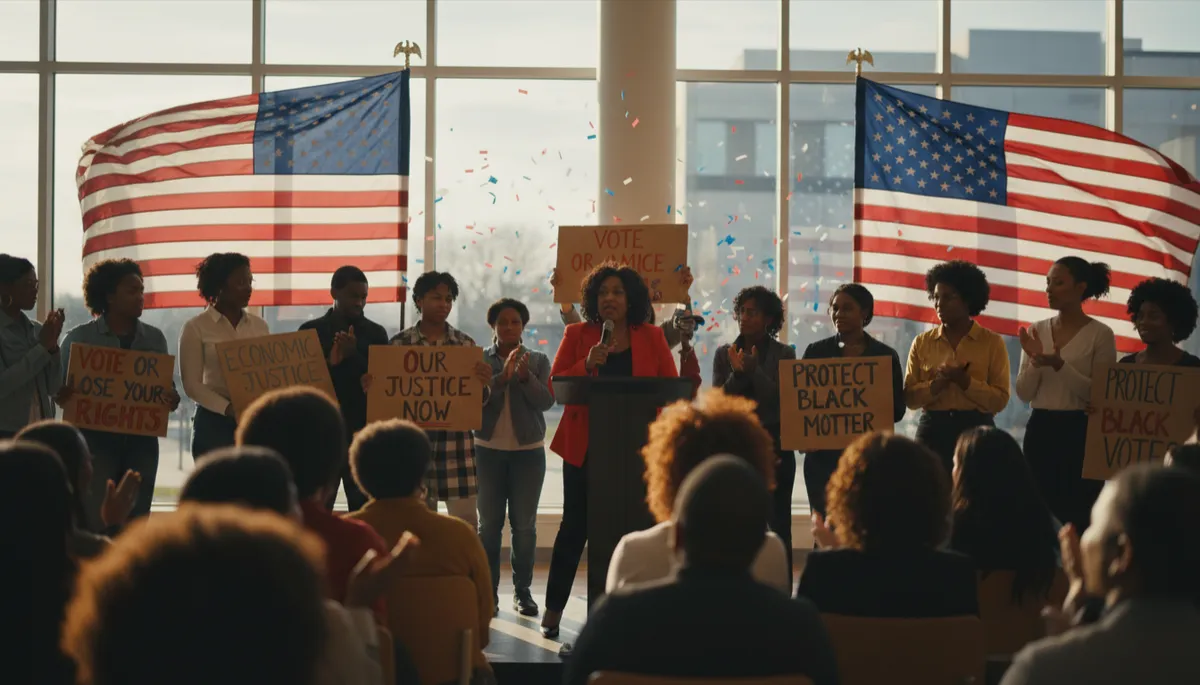
The Great Black Realignment: Why 2026 Is Reshaping Black Political Power
A Historic Shift Underway
For decades, Black voters have been the most reliable constituency in the Democratic Party. That reliability is now being tested in real time.
Black Democratic Party identity has seen a historic 11-point drop in 2026. Analysts are calling it the Great Black Realignment, and it is being driven by forces that neither major party fully anticipated.
Three Forces Driving the Shift
1. Generational Disconnect
Gen Z and Millennial Black voters are shifting away from traditional party loyalty. Polling shows that while these younger voters are not massively flocking to the Republican Party, they are increasingly identifying as Independent or Unaffiliated. They are prioritizing current material needs including housing, job security, and economic stability over historical civil rights legacies. To this generation, symbolic gestures and political rhetoric are not enough. They want results, and they want them now.
2. Economic Anxiety
In the first quarter of 2026, Black unemployment rose significantly, with some urban segments reaching nearly 8 percent. Black homeownership stands at roughly 45% compared to about 74% for white households, a gap that has persisted for generations. The widespread rollback of DEI programs has created a vacuum of opportunity in corporate America, and the growing perception that neither party is truly protecting Black economic interests is fueling a sense of political homelessness.
3. The Pivot to Autonomy
Perhaps most significantly, there is a growing belief that economic autonomy, the ability to build wealth and infrastructure outside of government support, is a more reliable path to progress than traditional electoral participation. This is best seen in the explosion of independent economic festivals and platforms like Black on the Block, which prioritize Black-owned business ecosystems over party affiliation.
Political Homelessness and What It Means
This political homelessness is forcing both major parties to change how they communicate with Black communities. Voter rights organizations are responding with a $20 million campaign to mobilize Black voters following a Supreme Court decision expected to reduce the number of nonwhite members of Congress.
In states like Georgia, where Black voters have been central to major electoral wins in recent years, the implications of this realignment are enormous. Black Atlanta is not just watching this shift. It is driving it.
What This Means for You
Whether you identify as Democrat, Republican, Independent, or none of the above, the Great Black Realignment is a signal. Black communities across America are demanding more than loyalty tests. They are demanding accountability, economic protection, and real representation. The question for 2026 is not which party Black voters will choose. The question is whether either party will be worthy of that choice.
Sources: Urban City Podcast; Brookings Institution; NBC BLK; NewsOne




