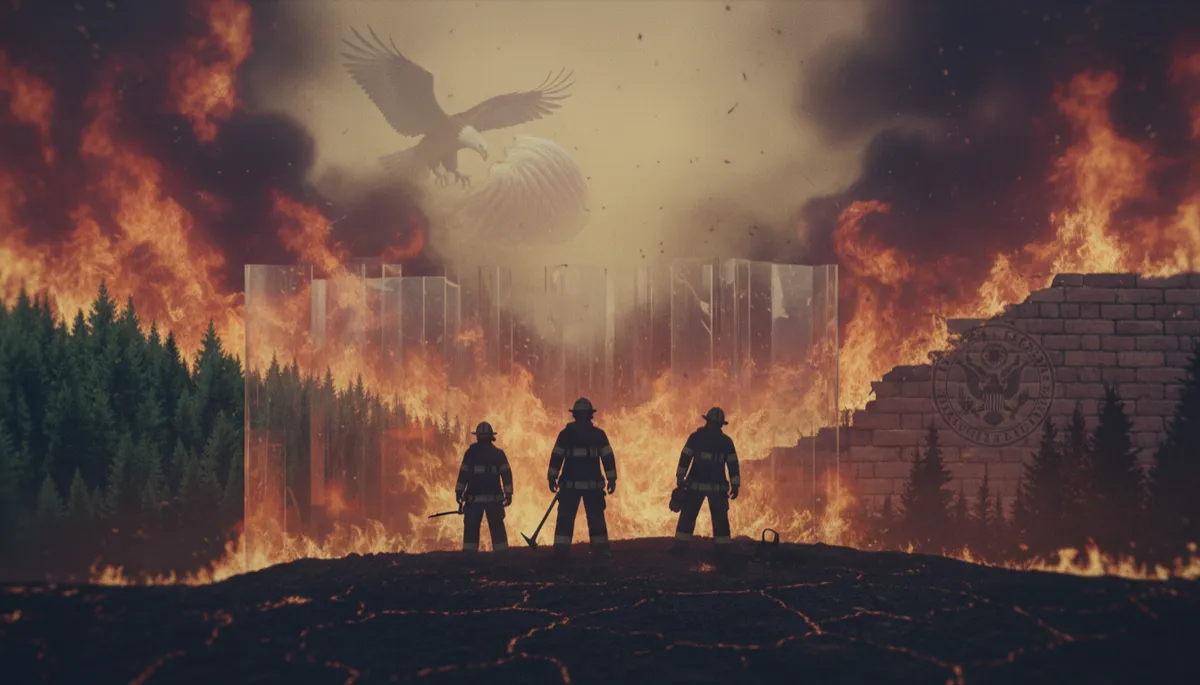
Trump's Ban on Controlled Burns Fuels Megafires
Environment, Wildfire Policy, Climate Risk
How the Trump Administration’s Crackdown on Controlled Burns Is Priming America for Megafires
Firefighters, scientists, and tribal fire practitioners are sounding the alarm: the Trump administration’s effective shutdown of large-scale prescribed fire is not “caution” — it is a direct path to catastrophic wildfire seasons.
Not a Paper “Ban” — But a Real-World Shutdown of Prescribed Fire
On paper, the Trump administration has not signed an executive order that literally says “no more controlled burns.” But on the ground, the effect is the same. Through a mix of aggressive full-suppression mandates, delayed funding, and narrowed burn windows, the administration has throttled the very forest management tool experts say we need most: prescribed fire.
In 2023 and 2024, the U.S. Forest Service used controlled burns on more than 1.6 million acres each year. In 2025, that dropped to roughly 900,000 acres — almost half the work, even as the climate crisis drives hotter, drier, longer fire seasons (OPB). Total vegetation treatment fell from over 4 million acres to just 2.6 million. That is not a tweak; it is a retreat.
“Full Suppression” Sounds Tough. It’s Actually Dangerous.
In April 2026, Interior Secretary Doug Burgum ordered a “presumption of full suppression for every wildfire” on federal land. That phrase may sound decisive to people far from the flames. To firefighters, it reads like a death wish for the landscape — and a direct threat to their own safety.
Full suppression means this: put out everything, everywhere, as fast as possible. No strategic use of naturally ignited fires under safe conditions. No letting low-intensity burns clean up fuels. And under the new directive, prescribed fire is forced into an ever-shrinking seasonal box, with burns extinguished by arbitrary cutoff dates unless special approval is granted (OPB).
Fire crews know what that means on the ground: more unburned fuel building up year after year. More dense underbrush, ladder fuels, and deadfall waiting for the next lightning strike or downed power line. When that spark comes — and it will — suppression-first policy guarantees that wildfire won’t creep; it will explode.
What Controlled Burns Actually Do — and Why We’re Ignoring the Science
Controlled burns, or prescribed fire, are not experimental. Indigenous communities have used them for millennia. Modern ecologists and the U.S. Forest Service rely on them because they work. According to the Forest Service and groups like The Nature Conservancy, prescribed fire:
- Reduces fuel loads, so future wildfires burn cooler and slower, not as lethal infernos.
- Protects communities by creating buffers around towns, roads, and critical infrastructure.
- Restores ecosystems that evolved with frequent, low-intensity fire, boosting biodiversity and resilience.
- Reduces long-term smoke, because a series of planned, smaller burns is far cleaner than one season of megafires choking entire regions.
National Geographic and the Forest Service are blunt: prescribed fire is one of the most effective tools we have to prevent extreme wildfire behavior and protect both people and forests. Ignoring that evidence now is not caution. It is negligence.
Grants Held Hostage, Communities Left Exposed
The administration’s damage doesn’t stop with policy memos. The Community Wildfire Defense Grant Program, designed to fund local and tribal partners for wildfire prevention and controlled burns, has been tied up in delays and new ideological requirements around immigration and hiring (OPB).
Groups ready to burn — with crews trained, burn plans approved, and weather windows open — are standing down because the money never arrived. Each missed season means another year of fuel accumulation. We are squandering the narrow windows when prescribed fire is safest, and we are doing it for reasons that have nothing to do with wildfire science or public safety.
Firefighters’ Message Is Clear: This Is How You Build a Disaster
Frontline firefighters, incident commanders, and wildland fire scientists are not speaking in hypotheticals. They see the fuel loading. They see the hotter, drier conditions driven by climate change. They see the drop in prescribed fire acreage. And they are warning, plainly, that this combination is setting up future fire seasons to be more explosive, more expensive, and more deadly.
Climate research published in journals like Nature Climate Change and summarized by the IPCC is unequivocal: as temperatures rise, the western United States faces longer fire seasons and higher wildfire risk. Smart forest management — especially widespread use of controlled burns — is one of the few levers we still control. The Trump administration is choosing to let go of that lever right when we need it most.
What Policy-Aware Americans Must Demand Now
If you care about climate, public lands, or simply breathing clean air in August, you cannot treat this as an obscure bureaucratic shift. The Trump administration’s effective ban on meaningful prescribed fire is a wildfire policy choice with consequences that will play out in your insurance premiums, your local hospital’s ER, and your regional economy when tourism shuts down under a sky the color of ash.
Here is what needs to happen, immediately:
- Reverse the full-suppression mandate and restore flexibility for firefighters to use fire intelligently, not just reactively.
- Expand, not shrink, burn windows based on science and local expertise, not political optics.
- Unfreeze and fully fund wildfire grants without ideological strings, so states, tribes, and nonprofits can carry out planned burns now, not years from now.
Wildfire is not waiting for the next election cycle. Every year we postpone prescribed fire, we stack the deck for the next record-breaking fire season. The Trump administration’s rollback of controlled burns is not abstract. It is measurable, it is happening now, and if it continues, it will turn entire regions of the United States into recurring disaster zones.
Policy-aware Americans cannot afford to look away. The choice is stark and immediate: burn a little, on purpose, under control — or burn a lot, by accident, out of control. The administration is steering us toward the second option. It is on us to force a course correction before the next fire season proves, yet again, that wishful thinking is no match for a forest loaded with fuel.




