Trump and Xi's High-Stakes Beijing Summit
World News, U.S.–China Relations, Diplomacy
Trump and Xi Open High-Stakes Beijing Summit as Taiwan Warning Looms
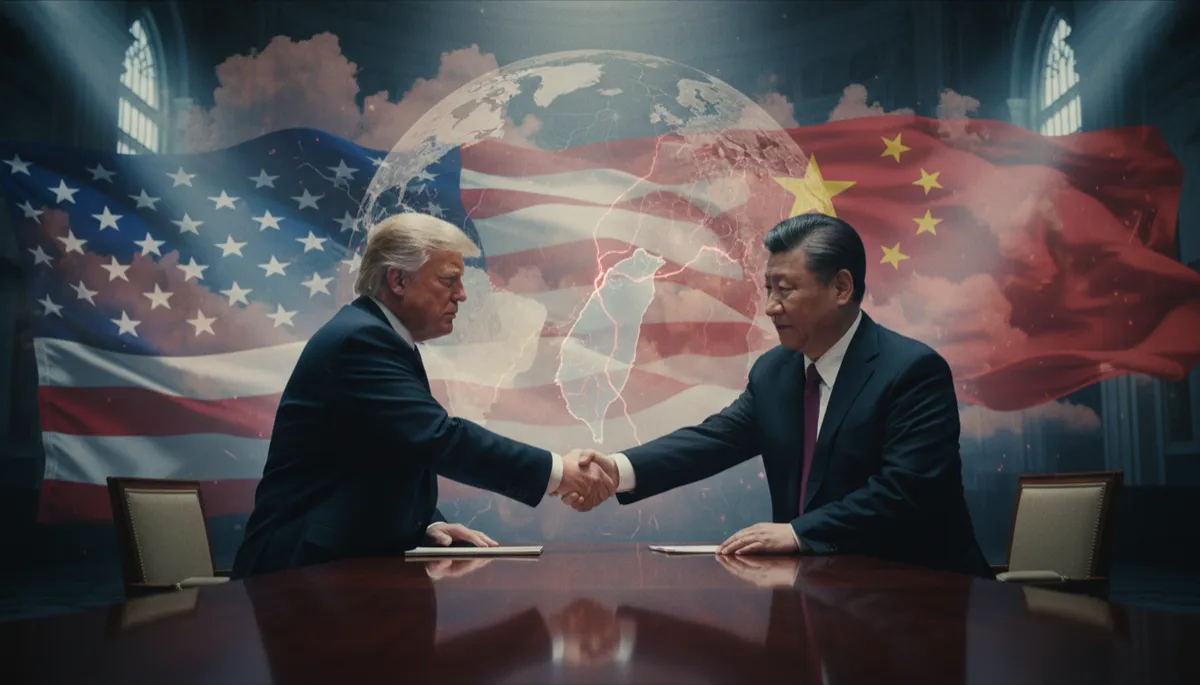
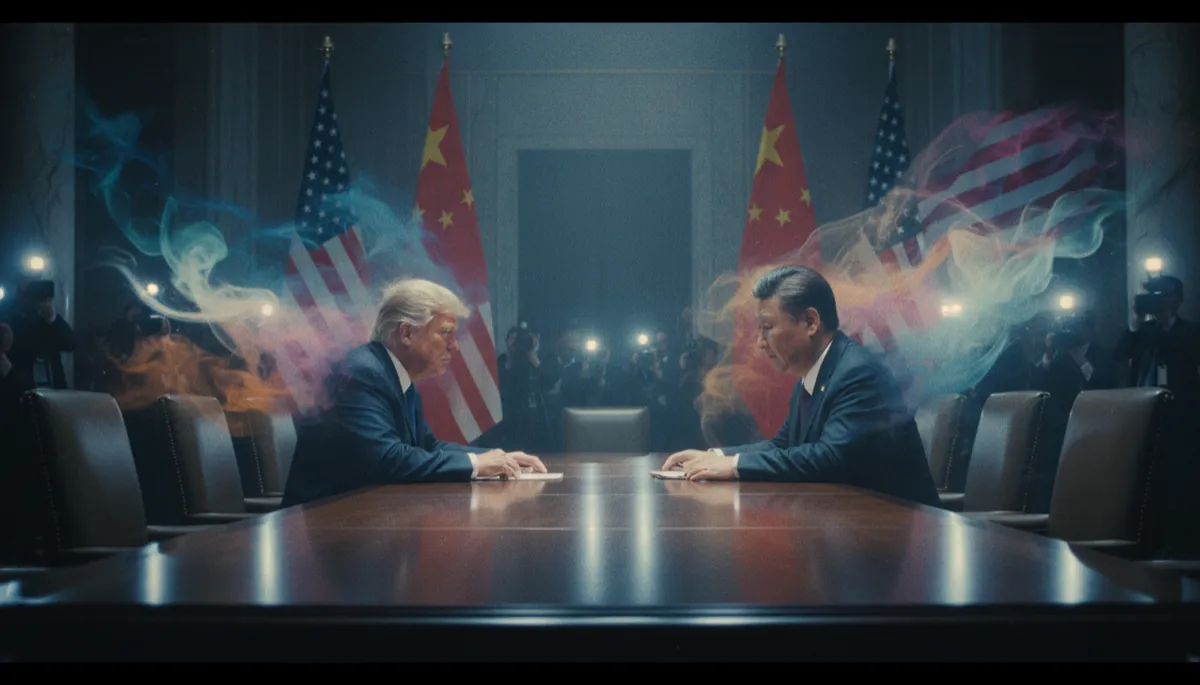
In a carefully choreographed summit in Beijing’s Great Hall of the People, Chinese President Xi Jinping warned U.S. President Donald Trump that mishandling Taiwan could trigger “clashes and even conflicts,” underscoring the fragile balance between cooperation and confrontation in the world’s most consequential bilateral relationship.
A Historic Visit Framed by Ceremony and Caution
Trump’s arrival in Beijing on May 13, 2026, marked the first state visit by a sitting U.S. president to China in nearly nine years, a gap that highlighted how strained the relationship had become. Xi received him with full state honors: a 21-gun salute, military band, honor guard and children waving Chinese and American flags along a red carpet at the Great Hall of the People, according to Chinese state media (english.gov.cn).
Behind the pageantry, both leaders signaled a desire to stabilize ties. Trump spoke of a “fantastic future” for U.S.–China relations and praised Xi as a “great leader,” while Xi promoted what he called a “constructive bilateral relationship of strategic stability” — one that is cooperative, openly competitive, but ultimately aimed at avoiding open confrontation (english.gov.cn, Bloomberg).
Diplomatic Significance: Reset, Not Reconciliation
Diplomatically, the Beijing summit represents a carefully managed reset in a relationship defined in recent years by tariff wars, technology restrictions and military incidents in the South China Sea. Analysts say the decision by both governments to stage a full state visit — rather than a brief sideline meeting at another international forum — reflects a recognition that unmanaged rivalry carries mounting risks (CSIS).
Trump’s delegation underscored that point. Joining him in Beijing were high-profile U.S. business leaders, including Apple’s Tim Cook, Tesla and SpaceX chief Elon Musk, and Nvidia’s Jensen Huang. Their presence signaled that, despite talk of “decoupling,” both economies remain deeply intertwined, particularly in advanced manufacturing, semiconductors and artificial intelligence (The Atlantic).
The summit agenda ranged across five contentious fronts: tariffs and trade, Taiwan, the Iran conflict, rare earths, and AI regulation (Mercopress). While no sweeping agreements were announced on the opening day, both sides emphasized steady communication and “managed competition” as the new baseline — a shift away from the rhetoric of outright confrontation that has dominated recent years.
Taiwan at the Center of Tension
It was Xi’s blunt warning on Taiwan, however, that quickly emerged as the summit’s defining moment. In remarks later published by China’s official Xinhua news agency and cited by multiple outlets, Xi described Taiwan as “the most important issue” in U.S.–China relations and cautioned that if mishandled, the issue could lead to “clashes and even conflicts” (AP, Washington Post).
The warning comes after months of rising pressure on the self-governed island. China’s military has intensified exercises around Taiwan, including the “Justice Mission 2025” drills and thousands of incursions into Taiwan’s air defense identification zone. At the same time, Taiwan has deepened its economic and security ties with Washington, including a landmark agreement committing Taiwanese chipmakers to invest an estimated US$250 billion in U.S. facilities in exchange for lower tariffs (Le Monde, Wikipedia).
Trump, for his part, maintained an upbeat tone in public, insisting that relations with China were “good and getting better,” even as he acknowledged deep disagreements, including over Taiwan (AP). Secretary of State Marco Rubio stressed that both countries understood the need to avoid destabilizing moves in the Indo-Pacific, but offered few specifics on how that would be achieved (Bloomberg).
In Taipei, officials reacted sharply. Taiwan’s Ministry of Foreign Affairs condemned Beijing’s rhetoric as “threatening” and accused China of being “the sole risk to regional peace and stability,” citing ongoing military and “gray-zone” activities around the island (The Guardian). For many in the region, Xi’s explicit language in Beijing reinforces the view that Taiwan has become the most volatile flashpoint in U.S.–China competition.
Beyond Taiwan: Iran, Trade and Technology
The talks in Beijing unfolded against the backdrop of an escalating conflict involving Iran. Trump sought Xi’s help in nudging Tehran back to the negotiating table and in keeping the Strait of Hormuz open — a vital chokepoint for global oil shipments (The Atlantic, Al Jazeera). While Xi offered no detailed public commitments, Trump later suggested that China had signaled a willingness to play a stabilizing role in the Gulf (AP).
Trade and technology were also central. Markets had watched the summit closely for any sign of relief from export controls on advanced chips and AI tools. Instead of dramatic moves, the two sides appeared to edge toward a framework of “managed competition” in high tech, with talk of establishing communication channels on AI safety modeled loosely on Cold War-era nuclear hotlines (Axios, MarketPulse).
What the Summit Means for Global Geopolitics
For global geopolitics, the Trump–Xi summit is less a breakthrough than a recalibration. It signals that both Washington and Beijing see value in preventing their rivalry from spiraling into open conflict, even as they double down on competing economic and security visions. Analysts describe the emerging model as “managed rivalry”: a mix of selective cooperation, intense competition and explicit red lines (CSIS, Stimson Center).
Xi’s stark language on Taiwan places that island firmly at the center of this new phase. U.S. allies such as Japan and the Philippines — which recently signed a defense pact to deepen cooperation — are likely to read the summit as a reminder that regional security will increasingly hinge on how Washington interprets and responds to Beijing’s red lines in the Western Pacific (CFR).
At the same time, the summit underscored the depth of economic interdependence between the two powers. From semiconductors and rare earths to energy flows through the Strait of Hormuz, the health of the global economy remains closely tied to U.S.–China cooperation, or at least to their ability to avoid outright confrontation. Investors and governments, watching closely, are likely to draw a guarded conclusion: the relationship is still fraught, but for now both sides appear committed to managing, rather than escalating, their rivalry.
As Trump prepares to depart Beijing and Xi looks ahead to hosting upcoming regional gatherings such as APEC, the impact of this summit will be judged less by any single communiqué than by what follows: whether military incidents around Taiwan are contained, whether trade tensions stay in check, and whether new channels on AI and crisis management take root. For now, the world’s two largest powers have chosen dialogue over drift — but the warning from Beijing about Taiwan makes clear how narrow the margin for error has become.




