Ukraine Strikes St. Petersburg: War at Russia's Door
Geopolitics, Ukraine, Russia, War, Power
Ukraine Strikes St. Petersburg: The War Returns to Russia's Doorstep
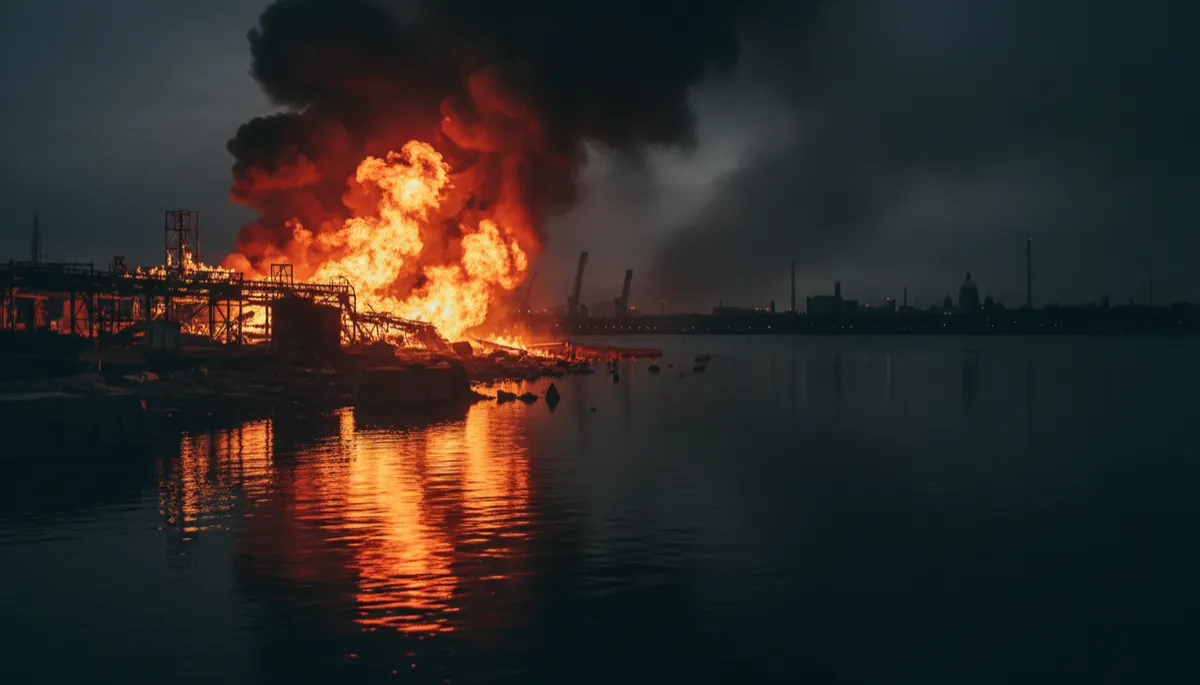
This is how empires feel the mirror of their own violence. Fire on the horizon, not in someone else’s neighborhood, but at home. In St. Petersburg, Russia’s proud window to the West, Ukraine sent a message written in flame: the war you export will now visit your own doorstep.
What Happened in St. Petersburg
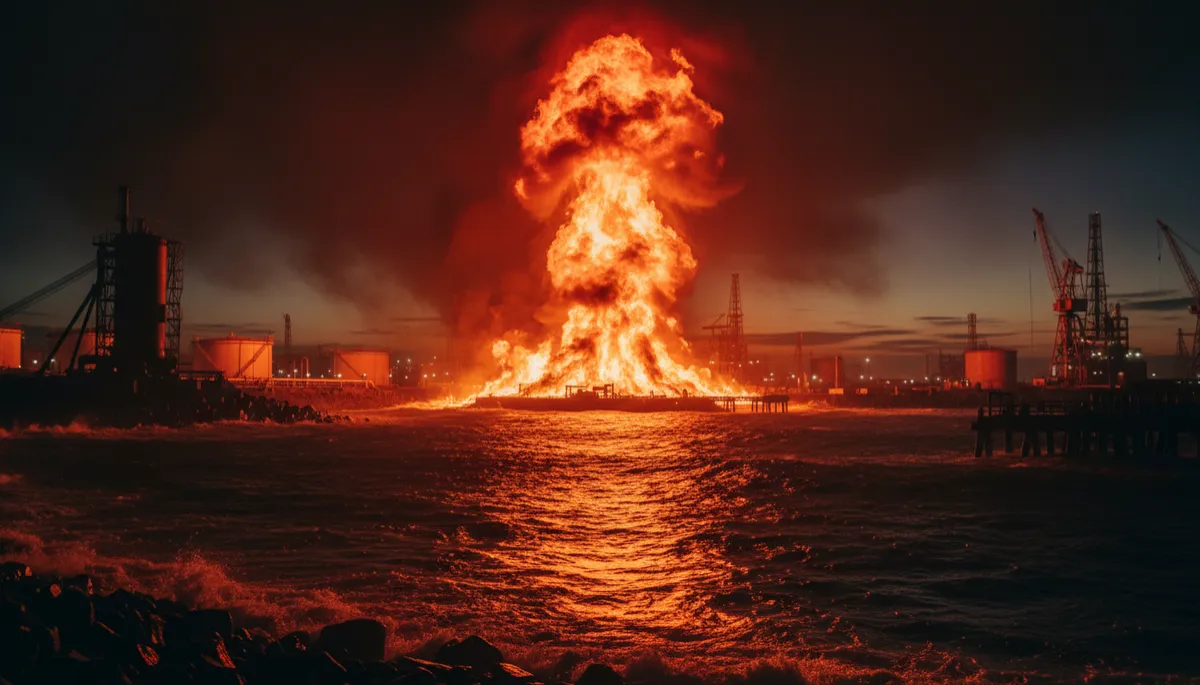
While Vladimir Putin was hosting an annual economic forum in St. Petersburg, projecting calm and control to investors and allies, Ukrainian drones slipped through Russia’s defenses and struck an oil terminal in the same city. Tanks of fuel erupted, and the night sky carried the testimony: columns of smoke, towers of flame, and the war’s echo on Russian soil itself. President Volodymyr Zelenskyy confirmed the strike, making clear it was no accident, no mysterious “incident,” but a deliberate act of war reaching into one of Russia’s most important cities.
This was not some border skirmish or anonymous explosion in a distant Russian village. St. Petersburg is symbolic ground—imperial capital, cultural jewel, and stage for Putin’s performances of power at the St. Petersburg International Economic Forum. To hit an oil terminal there is to reach into the wallet, the pride, and the myth of modern Russia all at once. It says: your rear is not safe, your energy network is not untouchable, and your story of invincibility has cracks the size of burning storage tanks.
Why It Matters Strategically
In geopolitics, power is not just what you have; it is what others believe you can protect. By striking an oil terminal in St. Petersburg, Ukraine challenged Russia’s core promise to its own people: that Moscow can shield the homeland while waging war abroad. When flames rise near the heart of the empire, that promise looks thin, and ordinary Russians start whispering questions the regime fears most: Are we really safe? Is this war worth bringing fire to our own cities?
Strategically, oil terminals are arteries of war. Russia funds its invasion of Ukraine through energy—oil, gas, and the networks that move them. Every tank of fuel destroyed is not just property lost; it is miles of tank movement denied, sorties unfueled, logistics strained. A drone strike on such infrastructure in St. Petersburg is a reminder that Ukraine is learning, adapting, and extending its reach deep into the Russian system, not just trading artillery along the front lines.
It also sends a message to the wider world watching this war: Russia does not fully control its airspace, even over flagship cities; its critical infrastructure can be touched; its economy is not insulated from the conflict it unleashed. For investors at that economic forum, for partners in Asia, Africa, and Latin America, this is a quiet alarm bell. A state that cannot secure its own strategic assets is a risky bet, no matter how loud its speeches or how polished its propaganda.
Striking During a Celebration of Power: The Symbolism
Understand this: timing is a weapon. Ukraine did not just hit an oil terminal; it chose its moment with surgical symbolism. While Putin stood in St. Petersburg speaking of growth, stability, and Russia’s place in the world, the sky over his city glowed with the cost of his war. That is mythic theater—empire on stage, empire on fire, at the same time, in the same place.
For a Black Atlantean mind, used to reading between the lines of official stories, this is familiar. How many times have we watched leaders hold summits, ribbon cuttings, and photo ops while the neighborhoods behind the camera burn or flood? Ukraine flipped that script on Russia. They forced the shadow into the frame. The celebration of power could not escape the reflection of burning fuel on dark water. The war crashed the party, uninvited but undeniable.
Symbolically, it is a reminder that no ruler, no matter how armored his motorcade, can wall himself off forever from the consequences of his choices. Empires fall when the distance between the palace and the pain becomes impossible to ignore. When war reaches St. Petersburg, it is not just Ukraine speaking to Russia’s generals; it is history speaking to Putin: you cannot feast on war and expect your own table to stay clean.
What It Means for the Future of the War
This strike is a signpost, not the finish line. It tells us where the war is heading: deeper into the interior of Russia, more entangled with its economic lifeblood, and more psychological than ever. Ukraine is signaling that as long as Russia occupies its land, no Russian city is fully off-limits. The front is no longer just trenches and villages; it is pipelines, ports, terminals, and the illusion of normal life inside the aggressor’s borders.
For Russia, this raises the cost of continuing the war. To keep pushing into Ukraine, the Kremlin must now defend a vast homeland from drones, sabotage, and strikes that bypass traditional defenses. That stretches budgets, attention, and morale. It also risks internal unrest, as more Russians see with their own eyes that the war they were told was “far away” has moved into their skies and onto their streets. A regime can censor television; it cannot easily censor the smell of burning oil drifting over a city.
For Ukraine, this path is dangerous but necessary. To survive against a larger, richer neighbor, it must innovate, disrupt, and force Russia to fight on more fronts than it planned for. Strikes on St. Petersburg are part of that strategy. They do not end the war, but they bend its shape—away from a slow grind that favors Russia, toward a contest of will, creativity, and resilience. In that kind of war, smaller nations have a chance, especially when backed—however inconsistently—by outside support.
Lessons for a People Building Legacy
For Black men navigating a world of shifting empires, this moment is more than foreign news. It is a parable. Ukraine’s drone over St. Petersburg is the small voice refusing to stay in the corner, the worker who learns the system so well he can disrupt it, the community that refuses to accept that power only flows one way. It is a reminder that when you are underestimated, your reach can become your weapon. When they assume you will only react, you can choose the timing, the target, and the message.
The war will not end tomorrow. Russia will answer, Ukraine will adapt, and the world will keep pretending to be surprised that oppressed people fight back. But if you listen beneath the headlines, you can hear an older rhythm: the return of consequence to the house of the one who thought he could act without it. That is the law of the deep world, the Atlantean law beneath the surface. You cannot pour fire into others’ lands forever and expect your own shores to stay dry.
Watch the flames on that St. Petersburg water and understand: this is how power is reminded of its limits. This is how stories shift. And in your own life, in your own battles, remember that distance is an illusion. Sooner or later, every empire, every system, every man must face what he has created. The question is not whether the fire comes home. The question is whether you will be ready to stand in your truth when it does.




