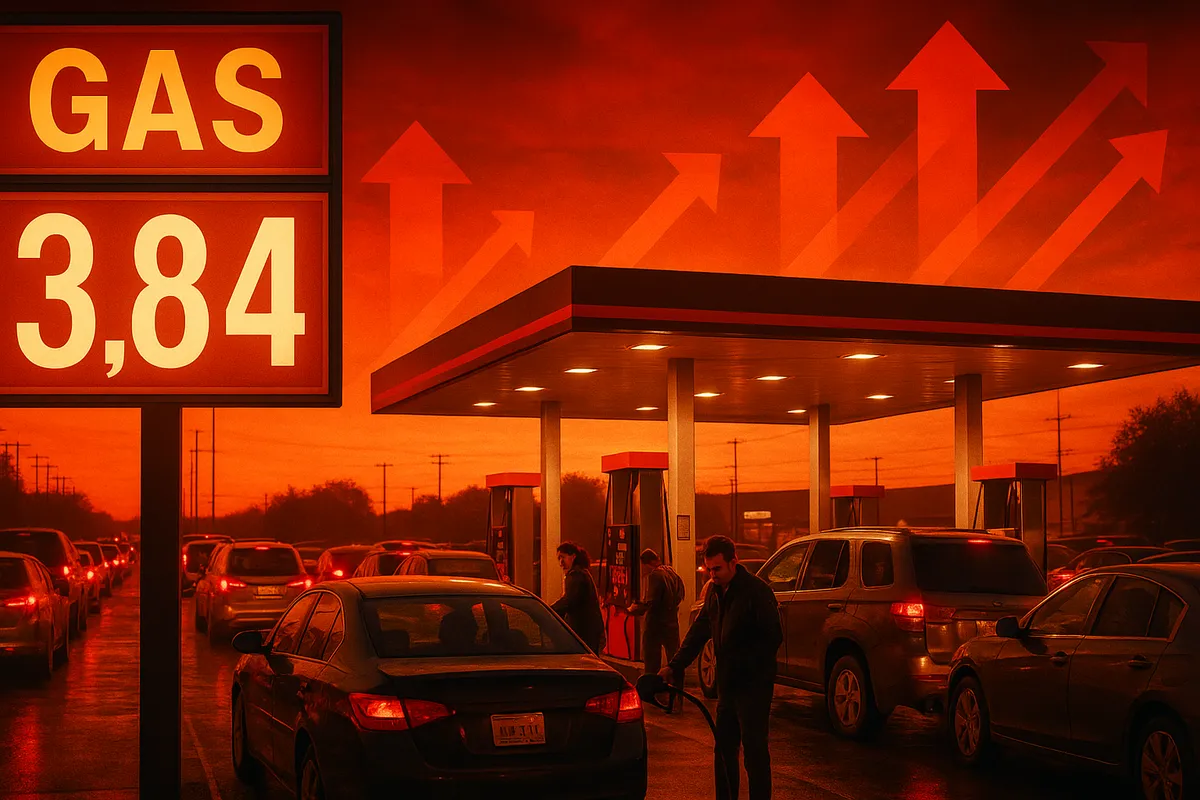
U.S. Gas Prices Surge 29% Since War Began
National Average Hits $3.84 a Gallon and Still Climbing
March 20, 2026 — American drivers are feeling the financial pain of the ongoing conflict in the Middle East in a very direct and daily way: at the gas pump. The national average price for gasoline has reached $3.84 per gallon, rising an alarming 5 cents every single day — a pace that has pushed overall prices up by 29% since the war began nearly three weeks ago.
The Root Cause: The Strait of Hormuz
The dramatic spike in fuel prices can be traced directly to Iran's effective blockade of the Strait of Hormuz — one of the world's most critical oil shipping chokepoints. Approximately 20% of the global oil supply passes through this narrow waterway daily. With the strait severely disrupted, global oil markets have gone into overdrive, with U.S. oil prices climbing toward $93 per barrel in recent trading sessions.
The disruption has sent shockwaves through energy markets worldwide, with the effects now being felt by everyday Americans every time they fill up their tanks.
By the Numbers
- $3.84/gallon — Current national average (as of March 20, 2026)
- +5 cents/day — Daily rate of increase
- 29% — Total price increase since the war began
- $93/barrel — U.S. oil price in recent trading
- 20% — Share of global oil supply passing through the Strait of Hormuz
Who Is Being Hit Hardest?
Low and middle-income Americans are bearing the brunt of the fuel price surge. With wages not keeping pace with the rapid price increases, families are being forced to make difficult choices — cutting back on driving, combining errands, or reducing spending in other areas to offset their fuel bills. Small businesses, particularly those in transportation and logistics, are also reporting significant strain.
Could the Jones Act Help?
Some policymakers have floated the idea of temporarily lifting the Jones Act — a law that restricts which ships can carry goods between U.S. ports — as a way to ease supply pressures. However, energy experts say that even a temporary suspension of the Act would do little to meaningfully reduce gas prices, as the core problem is the global oil supply disruption caused by the Strait of Hormuz blockade, not domestic shipping capacity.
Efforts to Reopen the Strait
In a potentially positive development, Israel has stated that it is actively cooperating with the United States to reopen the Strait of Hormuz to international shipping. If successful, this could ease the global oil supply crunch and begin to bring prices down — though analysts warn that any relief would likely take weeks to filter through to retail gas prices.
The Broader Economic Threat
The fuel price crisis is not occurring in isolation. The United Nations has warned that 45 million people worldwide are at risk of acute hunger due to rising food prices — prices that are directly tied to the cost of transporting goods and the broader inflationary pressure caused by the war. In the United States, consumers are already seeing higher prices at grocery stores, with food inflation beginning to accelerate alongside fuel costs.
The Federal Reserve and financial markets are watching closely, with concerns growing that sustained energy price inflation could force central banks to tighten monetary policy — adding yet another layer of economic pressure to households already stretched thin.
What to Expect Going Forward
Unless the Strait of Hormuz is reopened quickly and global oil supplies stabilize, Americans should brace for continued increases at the pump. Some energy analysts project that if the conflict drags on for another two to four weeks without resolution, the national average could approach or exceed $4.50 per gallon — levels not seen since the peak energy crisis years.
For now, the message from energy markets is clear: the war in the Middle East is not just a geopolitical event — it is an economic reality being felt in driveways and parking lots across America, every single day.
This blog is based on international and domestic news reporting as of March 20, 2026. Energy prices fluctuate daily — please consult current sources for the latest figures.




