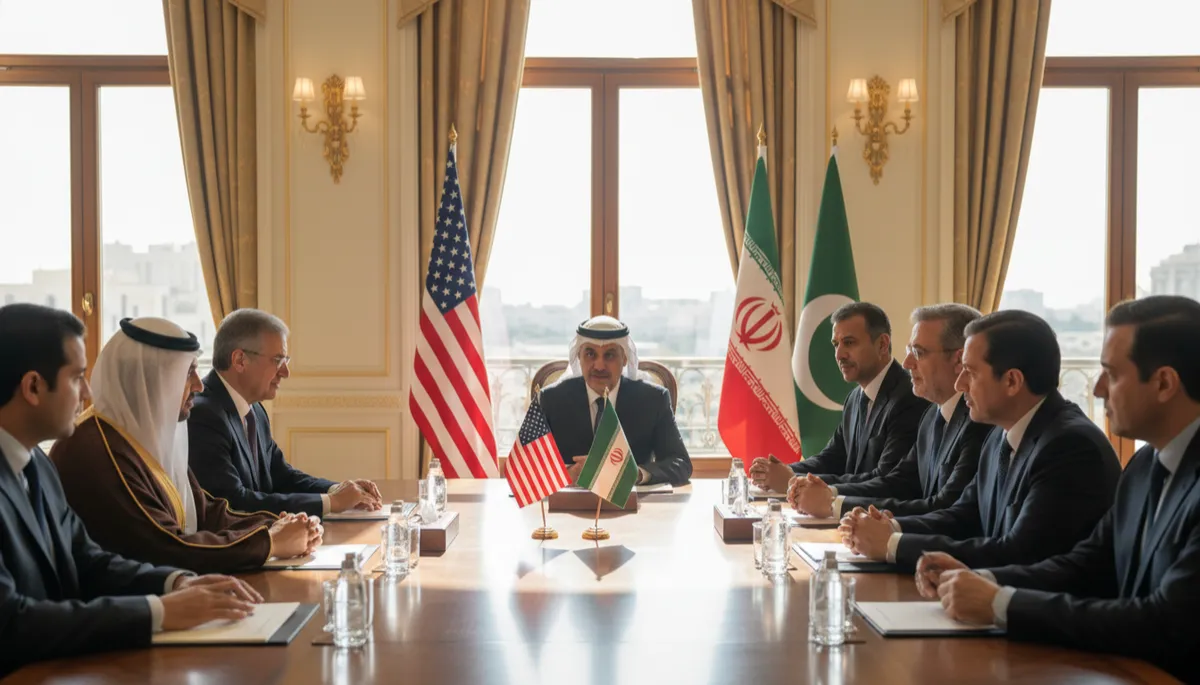
U.S. and Iran Near Historic Peace Agreement
World News, Diplomacy, Middle East
U.S. and Iran Edge Closer to Historic Peace Deal
After weeks of tense diplomacy and a fragile ceasefire on the brink, the United States and Iran appear to be nearing a landmark agreement that could formally halt the war and open a new chapter of negotiations over Tehran’s nuclear program.

Ceasefire Holds as Framework for Peace Emerges
The apparent breakthrough comes after weeks of back-and-forth talks conducted under the shadow of a nearly two-month ceasefire that has repeatedly been described by officials on both sides as fragile. The truce, initially brokered in early April with help from regional mediators including Pakistan and Gulf states, was designed to create space for a one-page memorandum of understanding to end active hostilities and chart a path toward broader negotiations (Axios, AP).
Trump: Deal “Largely Negotiated,” Calls with Regional Leaders
On Saturday, President Donald Trump said on Truth Social that “An Agreement has been largely negotiated, subject to finalization” between the United States, Iran, and several regional partners. The statement followed what Trump described as a “very good call” with leaders from Qatar, Saudi Arabia, Turkey, Pakistan, Jordan, Egypt, and the United Arab Emirates, underscoring the extent to which key regional actors are invested in preventing a return to full-scale conflict (Axios, AP).
According to U.S. and regional officials, the proposed memorandum of understanding would formally end the current phase of the war and extend the ceasefire for roughly two more months. During that window, negotiators would focus on a structured process for talks over Iran’s nuclear program, while also moving to reopen the Strait of Hormuz and allow Iran to resume limited oil exports (Axios).
Tehran Cautious, Washington Faces Domestic Skepticism
In Tehran, officials struck a more guarded tone. Iran’s Foreign Ministry said that the two sides’ positions have “become closer,” but emphasized that they have not yet reached the point of a finalized agreement. Iranian leaders have repeatedly voiced concern over what they see as inconsistent messaging from Washington, contributing to lingering mistrust after months of clashes and sanctions (The Daily Beast).
In Washington, the emerging deal is already drawing criticism from some Republican lawmakers. Senator Roger Wicker and other hawkish voices have warned against what they characterize as premature concessions to Tehran, arguing that any agreement must impose strict, enforceable limits on Iran’s nuclear activities and regional influence. Their opposition signals that even if negotiators succeed in finalizing the memorandum, the administration will face a contentious debate at home over how to lock in and oversee the terms of any long-term peace.
For now, diplomats on all sides are racing to convert what Trump calls a “largely negotiated” framework into a signed document. If they succeed in the coming days, it would mark the most significant step toward de-escalation since the conflict erupted, while setting the stage for difficult, high-stakes nuclear talks over the months ahead.




