Vanishing Atlanta: Gentrification Is Erasing Black Neighborhoods Across the City
Community News, Housing Justice, Atlanta Gentrification
Vanishing Atlanta: Gentrification Is Erasing Black Neighborhoods Across the City
Once hailed as the crown jewel of Black American prosperity, Atlanta is now a battleground where rising rents, soaring property taxes, and speculative development are pushing Black families out of neighborhoods they built and sustained for generations.
A National Epicenter of Displacement
Atlanta’s growth headlines often celebrate new residents, new towers, and new investment. Less visible is who is being pushed out to make room. According to the National Community Reinvestment Coalition, metro Atlanta now ranks fourth in the nation among areas where gentrification has eliminated majority-Black census tracts (atlantadailyworld.com). Of the 31 tracts that were majority-Black in 1980, nearly half had transitioned out of that designation by 2010 — and the trend has only accelerated through the 2010s and into the mid‑2020s.
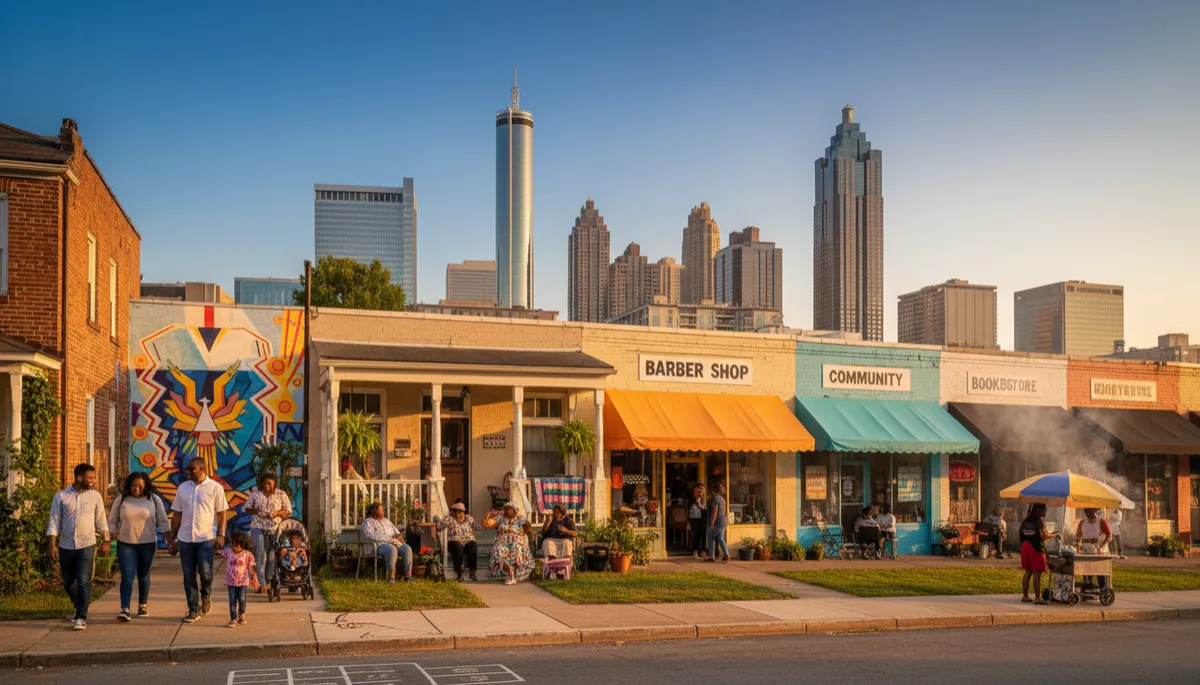
This quiet demographic shift is not abstract. It shows up as a grandmother priced out of a home she owns but can no longer afford to tax, a renter pushed to Clayton County after a luxury renovation, a Black-owned shop on a historic corridor shuttered when commercial rent jumps 30 percent overnight. It is the slow erasure of Black Atlanta from the very neighborhoods that made the city famous.
Historic Neighborhoods Under Pressure
On the east side, the story is already painfully familiar. Once-solidly Black neighborhoods like Old Fourth Ward, Edgewood, Reynoldstown, Kirkwood, and East Atlanta have undergone near-total transformation. In Old Fourth Ward — cradle of the Civil Rights Movement and home to Dr. King’s childhood streets — the neighborhood is now majority white, with just about one-third Black residents, a reversal of its historic character (gpb.org; en.wikipedia.org). Craft breweries and high-end apartments now sit where modest homes and mom‑and‑pop businesses stood for decades.
To the west, neighborhoods such as West End, Oakland City, and surrounding Westside communities are facing what some call “leapfrog gentrification” — displacement jumping from the already-transformed east side into historically Black areas that once felt safely distant from speculation. Longtime residents report a drumbeat of cash offers, rising assessments, and investors snapping up single‑family homes, often converting them into high‑priced rentals or short‑term stays.
Summerhill, carved up decades ago by stadium construction and highway projects, has become another flashpoint. There, residents mobilized against a major development proposal that threatened to worsen environmental and infrastructure problems — including traffic and flooding — without clear protections for current neighbors. Organizers ultimately won a significant victory, forcing changes and signaling that communities are not powerless, even in the shadow of powerful developers.
The BeltLine: Engine of Renewal — and Displacement
No project better captures Atlanta’s contradictions than the Atlanta BeltLine. Touted as the city’s greatest infrastructure investment, the 22‑mile loop of trails, parks, and future transit has also become its most powerful engine of displacement. Research shows that rents along the Eastside Trail surged by about 43 percent, and home values within a half‑mile of the BeltLine rose 17.9 to 26.6 percent more than properties farther away (emoryeconomicsreview.org).
For Black renters and homeowners living near the BeltLine, those numbers translate into hardship. Tenants face rent hikes that outpace wages. Homeowners — many of them elders on fixed incomes — watch property tax bills soar, sometimes doubling or tripling in a few years. Without strong anti‑displacement tools, the same green space that attracts joggers and cyclists is pushing out the very communities that endured decades of disinvestment before the BeltLine was ever imagined.
West End Organizing, Southside Warnings
In the West End and neighboring Westside communities, the clash between redevelopment and rooted Black life is especially sharp. Luxury apartments, BeltLine‑adjacent townhomes, and speculative flips are appearing block by block. Yet West End has also become a hub of resistance: neighborhood associations, faith leaders, and housing advocates have demanded community benefits, fought predatory investors, and pushed for more deeply affordable housing. Their work has slowed, though not stopped, displacement in some pockets, proving that organizing can bend the curve, even if it cannot fully reverse it.
Further south, in South and Southwest Atlanta, Black communities remain more intact than in many other parts of the city. Neighborhoods stretching south of I‑20 still hold a critical mass of Black homeowners, renters, and businesses. But they are not immune. Gentrification follows transit lines, new parks, and tax‑funded investment zones. As the city extends Tax Allocation Districts and infrastructure upgrades into these areas, residents worry that “revitalization” will once again mean revitalization for everyone but them.
Beneath the Gleaming Skyline
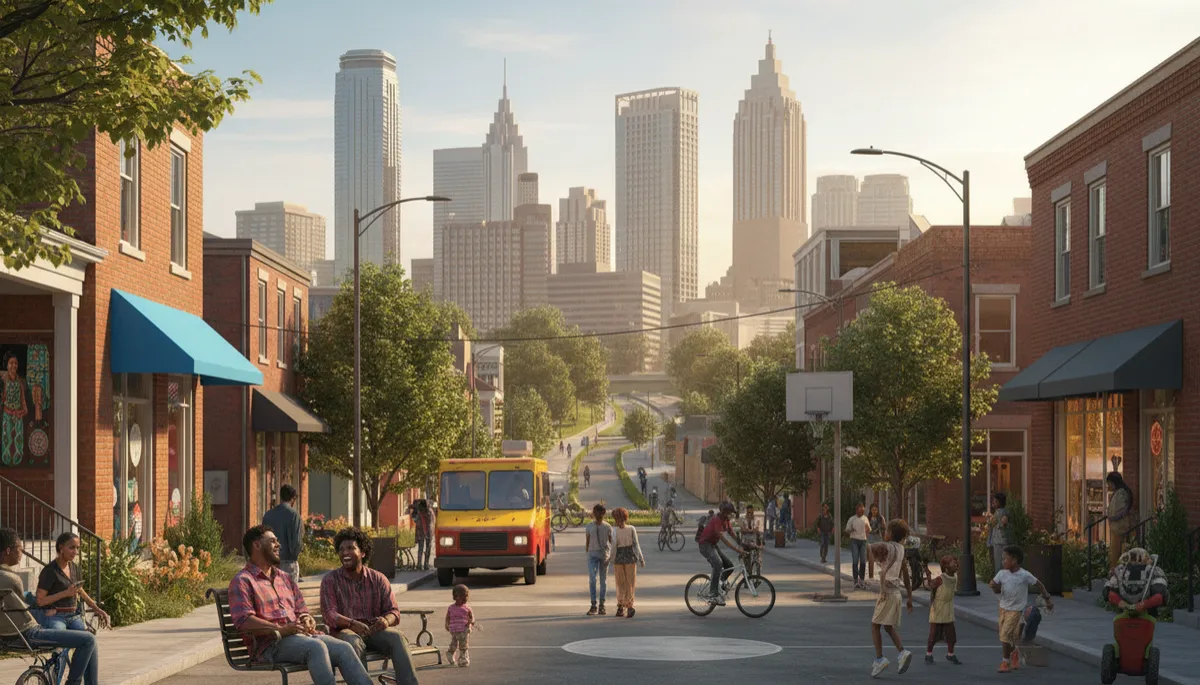
For decades, Atlanta has been held up as the Black Mecca — a place where Black political power, HBCUs, corporate leadership, and cultural influence converged. That story is real and hard‑won. But beneath the gleaming skyline, a quieter, more devastating story is unfolding: the slow unmooring of Black Atlantans from the land, homes, and neighborhoods that anchored that success.
Between 2010 and 2018, roughly 38 percent of Atlanta’s residents lived in neighborhoods undergoing intense change — often “growth” for higher‑income households and “low‑income displacement” for everyone else (atlantaga.gov). Home prices in the city have jumped nearly 50 percent in recent years, while affordability indexes for Fulton County and the metro region have fallen well below sustainable levels (atlantahousing.org). For many Black families, the math simply does not work anymore.
What Black Atlantans Can Do Now
Policy change is essential, but there are concrete steps Black residents, allies, and institutions can take right now to resist displacement and strengthen rooted communities.
- Know your tenant rights. If you rent, understanding your protections can buy you time and options. Organizations like Legal Aid Atlanta provide free legal assistance and can help challenge illegal evictions, retaliation, and unsafe conditions.
- Support community land trusts. Groups such as the Westside Future Fund and the Atlanta Land Trust use a shared‑ownership model to keep homes permanently affordable and rooted in community control. Donating, volunteering, or simply spreading the word helps build a buffer against speculative displacement.
- Vote in local elections. City Council, school board, county commission, and mayoral races determine zoning rules, tax incentives, and development deals. Showing up at the ballot box — and at public meetings — is critical to shaping how and for whom Atlanta grows.
- Shop Black-owned businesses in at‑risk neighborhoods. From West End and Old Fourth Ward to Summerhill and the Southside, Black entrepreneurs are fighting the same cost pressures as residents. Every dollar spent at a Black‑owned business in a neighborhood under gentrification pressure is a vote for that community’s survival.
Holding on to Black Atlanta
Atlanta’s future is still being written. The question is whether that future includes the people and neighborhoods that made the city what it is — from Old Fourth Ward and Edgewood to West End, Summerhill, and the broad stretches of South and Southwest Atlanta that remain defiantly Black and deeply rooted. Protecting those communities will require policy shifts, public investment, and private restraint. But it will also require everyday acts of solidarity: helping a neighbor appeal a tax bill, showing up to a zoning hearing, choosing a Black‑owned café over the new chain on the corner.
The stakes are clear. If current trends continue, the city long known as a haven for Black ambition could become yet another place where Black presence is celebrated in murals and museum exhibits, but pushed out of the actual neighborhoods. Whether Atlanta remains a living, breathing Black city — not just a brand — depends on what all of us do now.




