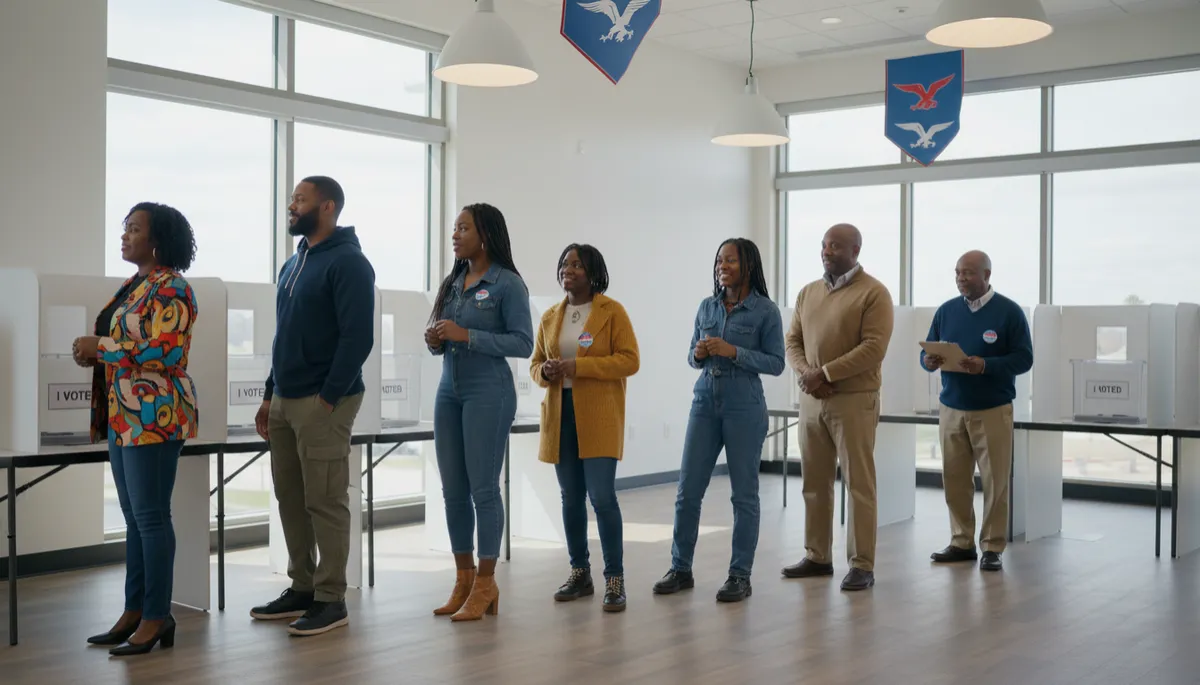
Voter Rights Are Under Siege: What Black Americans Must Know Before the 2026 Midterms
Voter Rights Are Under Siege: What Black Americans Must Know Before the 2026 Midterms
The right to vote has never been freely given to Black Americans. It has been marched for, bled for, and legislated for — and right now, it is being quietly stripped away again. As the 2026 midterm elections approach, Black voters across the country are facing a coordinated wave of voter suppression tactics that threaten to silence millions of voices before a single ballot is counted.
This is not a drill. This is not alarmism. This is the documented reality facing Black communities from Atlanta to Detroit, from Houston to Philadelphia — and it demands our full attention.
What's Happening: The New Wave of Voter Suppression
The Trump administration has moved aggressively to reshape how Americans vote. Mail-in voting — a method disproportionately used by Black voters, seniors, and working families — is under direct attack. New restrictions have made it harder to request, submit, and have mail ballots counted. In several states, mail ballot rejection rates in predominantly Black precincts are already significantly higher than in majority-white areas.
Former Vice President Kamala Harris has sounded the alarm directly, warning voters that the administration is making it deliberately harder to vote by mail ahead of the November midterms. "Every vote should count," Harris said in a recent address. "When we make it harder to vote, we make it harder for democracy to work — and that burden falls hardest on Black communities."
Beyond mail voting, disparate-impact rules — which allowed civil rights advocates to challenge policies that disproportionately harm Black voters even without proving explicit intent — are being gutted. Desegregation cases that took decades to litigate are being closed. The tools that protected the Black vote are being dismantled one by one.
Atlanta Is Ground Zero
For Black Atlanteans, the stakes could not be higher. Georgia's 2026 governor's race between Democrat Keisha Lance Bottoms and Republican Rick Jackson is one of the most consequential elections in the state's history. Bottoms — a former Atlanta mayor with deep ties to the city's Black community — represents a direct line to leadership that centers Black Atlanteans' needs. Jackson, meanwhile, has so far avoided debates and faces scrutiny over his record on minority communities.
Georgia's U.S. Senate race, with Jon Ossoff defending his seat against Republican challenger Mike Collins, is equally critical. Ossoff has been a consistent voice for voting rights and economic equity. Collins has been embroiled in controversy over hate speech and faces questions about his commitment to all Georgians.
These are not just political contests. They are battles over who gets to shape Georgia's future — and whether Black Atlanteans will have an equal voice in that future.
The People's Revival: A Movement Fighting Back
While suppression tactics escalate, so does resistance. The People's Revival — a coalition uniting faith communities, labor unions, and civil rights organizations — is mobilizing aggressively to boost Black voter turnout in key Southern election hubs ahead of November. Operating across Georgia, Alabama, Mississippi, and the Carolinas, the coalition is running voter registration drives, providing transportation to polling sites, and training community members to serve as poll watchers and voter protection advocates.
"We've been here before," said one coalition organizer. "Every time they build a wall, we build a door. The vote is our power, and no one is taking that from us without a fight."
In Atlanta specifically, HBCU students from Morehouse, Spelman, Clark Atlanta, and Morris Brown are organizing voter registration blitzes on campuses. Faith communities along Auburn Avenue and in southwest Atlanta are holding voter education forums every Sunday through October.
What You Can Do Right Now
The window to act is closing. Here is what every Black Atlantean and Black American needs to do before Election Day:
- Check your registration: Voter rolls have been purged in several states. Verify your registration is active and your address is current at vote.org or Georgia's My Voter Page.
- Vote early or in person: Given the new restrictions on mail ballots, early in-person voting — which begins in Georgia in mid-October — is the most reliable option for most voters.
- Know your rights: If you're turned away at the polls, call the Election Protection Hotline at 1-866-OUR-VOTE immediately. You have the right to a provisional ballot.
- Bring a friend: The most effective voter mobilization tool is a personal ask. Call your family, your neighbors, your church members. Make a plan together.
- Report problems: Document any issues at polling places — long lines, broken machines, intimidation — and report them to the Georgia Secretary of State's office and civil rights organizations.
The Bigger Picture: What's at Stake
The 2026 midterms will determine the balance of power in Congress at a moment when decisions about healthcare, housing, education, and criminal justice reform hang in the balance. Every issue that disproportionately affects Black Americans — from the Atlanta eviction crisis to the rollback of race-focused university programs — is connected to who holds political power.
Voter suppression works because it creates the illusion that participation is futile. Do not believe that lie. The margins in Georgia's recent elections have been razor-thin. Black voters have decided elections in this state before, and they will do it again.
The right to vote was not given to us. It was won. And it must be defended — not just with marches and speeches, but with ballots.
Register. Vote. Organize. The 2026 midterms cannot wait.




