Voting Rights Under Attack: What the Supreme Court's Louisiana v. Callais Ruling Means for Black America
Voting Rights, Black America, Georgia Politics
Voting Rights Under Attack: What the Supreme Court’s Louisiana v. Callais Ruling Means for Black America
A 6–3 Supreme Court ruling out of Louisiana has quietly redrawn the map of American democracy — and Black voters, from Baton Rouge to Bankhead, will feel the impact unless we organize, litigate, and vote like everything is on the line in 2026.
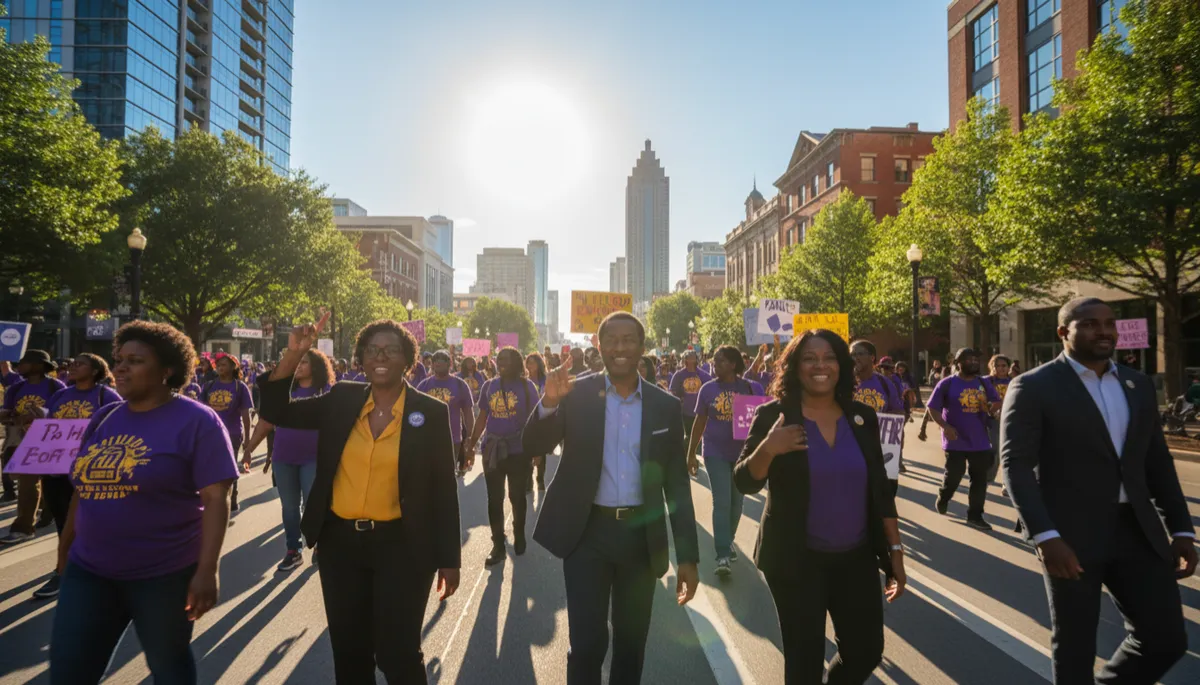
The 6–3 decision that erased a second Black district
On April 29, 2026, in Louisiana v. Callais, the U.S. Supreme Court struck down Louisiana’s attempt to create a second majority-Black congressional district. In a 6–3 opinion by Justice Samuel Alito, the Court called the remedial map an unconstitutional “racial gerrymander” and ruled that Section 2 of the Voting Rights Act did not require that additional Black district at all (seelaw.cornell.edu, brennancenter.org).
For Black Louisianans — nearly a third of the state — that second district represented a long-overdue chance to elect another candidate of choice to Congress. Instead, the Court sided with a map that keeps Black political power boxed into a single seat, even as our communities drive population growth across the South.
Kagan’s warning: Section 2 made “nearly meaningless”
Justice Elena Kagan, writing in dissent and joined by Justices Sonia Sotomayor and Ketanji Brown Jackson, sounded an alarm that every Black voter should hear. The majority, she argued, has taken the landmark Voting Rights Act of 1965 and “hollowed out” its core protection against vote dilution, rendering Section 2 “nearly meaningless” in the redistricting context (brennancenter.org, americanbar.org).
Congress amended Section 2 in 1982 so that Black voters would not have to prove racist intent behind a map — only that the map’s results left us with less opportunity to elect our preferred candidates. Callais effectively drags us back to a pre-1982 world, demanding proof that is almost impossible to produce in court and dismissing decades of history showing how race and power intersect in the South (americanbar.org, supremecourt.gov).
A green light to hide racial discrimination behind “partisanship”
The most dangerous part of Callais may be what it invites states to do next. The Court now demands that plaintiffs disentangle race from partisanship — proving that racially polarized voting cannot be explained by party preference (everycrsreport.com, hks.harvard.edu). In the real world, especially in the Deep South, that is a lawyer’s nightmare: Black voters overwhelmingly support Democrats, while white voters in many districts lean Republican. Legislatures can now claim, with a straight face, that they are merely drawing maps for “partisan advantage,” not racial exclusion.
By blessing this framing, the Court has given statehouses a green light to dilute Black voting power while hiding behind the language of party politics. As voting-rights experts have warned, racial gerrymanders can now be rebranded as partisan gerrymanders — and survive so long as lawmakers are careful with their emails and talking points (theatlantic.com, demos.org).
Why November 2026 — and Hakeem Jeffries’ future — runs through Black districts
The 2026 midterm elections will likely be the first full national test of the post-Callais map. In state after state, including Louisiana, Alabama, and potentially Georgia, Republican legislatures are already exploring new ways to shore up their power before voters head to the polls (demos.org).
The stakes could not be higher. A handful of seats in the Deep South and Sun Belt could decide whether Democrats retake the U.S. House — and whether Hakeem Jeffries, the first Black leader of a congressional party, becomes the first Black Speaker of the House. Every district where Black voters have been cracked, packed, or silenced is one less path to that historic moment. Every district where we turn out, organize, and protect the vote is one more step toward a House that actually looks like America (nytimes.com, cnn.com).
The front line: civil rights groups’ election-protection coalition
Even as the Court narrows federal protections, Black-led legal organizations are building a firewall. The Lawyers’ Committee for Civil Rights Under Law, the NAACP, and the National Urban League are part of a national election-protection coalition that is already gearing up for 2026. They are filing lawsuits in state courts, monitoring mid-decade redistricting, training poll monitors, and staffing hotlines for voters who face intimidation or illegal barriers at the polls.
These groups cannot replace the Voting Rights Act — but they can enforce what remains, expose discriminatory maps, and push Congress and state legislatures to restore protections. Their work matters most in places like Georgia and Louisiana, where Black turnout has already reshaped national politics and where backlash is fiercest.
What Black voters in Georgia and Atlanta can do right now
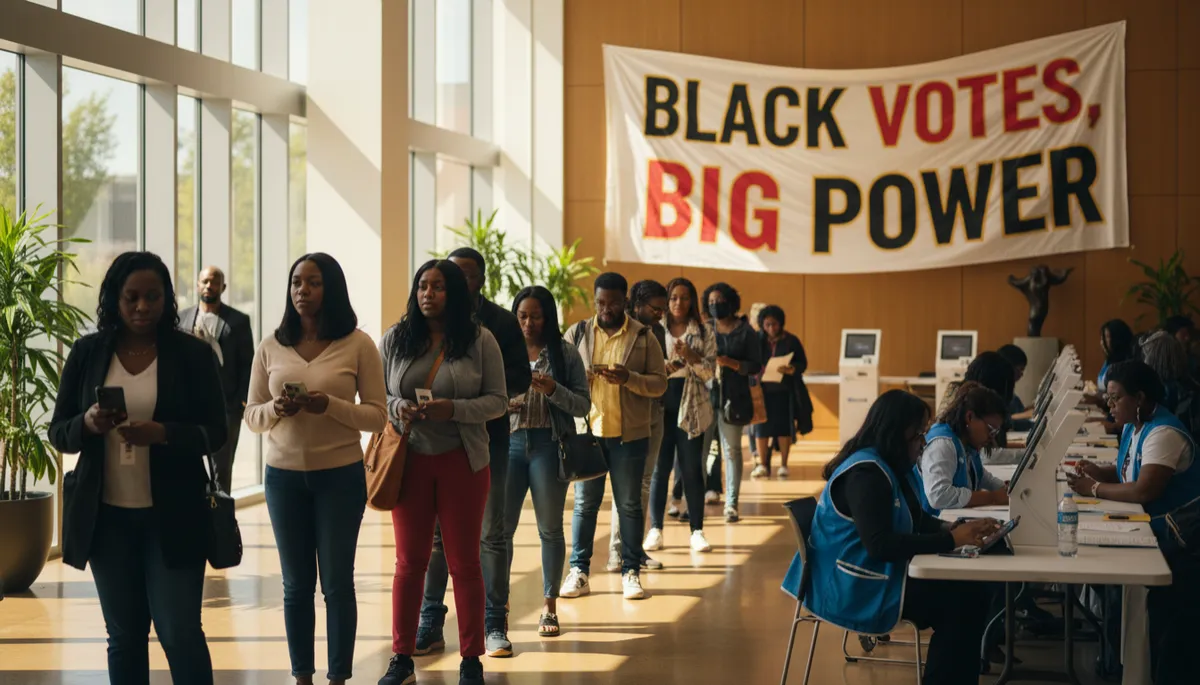
The message of Callais is brutal but clear: the Supreme Court will not save our voting rights. That means the burden — and the power — falls on us. For Black Georgians and Black Atlanteans, here are concrete steps to take now, not in October 2026:
- Lock in your voting plan early. Check your registration status, confirm your polling place, and understand Georgia’s ID and absentee rules. Do it this month, not next year.
- Join local election-protection efforts. Volunteer with groups linked to the Lawyers’ Committee, NAACP, and Urban League, or with Atlanta-based organizations that recruit poll monitors and hotline volunteers.
- Show up to redistricting and legislative hearings. The fight over maps is not abstract; it happens in committee rooms at the Gold Dome. Testify, submit written comments, and demand fair districts that reflect metro Atlanta’s Black growth.
- Support litigation with your dollars and your story. Donate to trusted civil-rights organizations and share your experiences with long lines, closed polling places, or confusing rules. Those stories become evidence in court.
- Turn your group chat into a turnout machine. Churches, alumni chapters, neighborhood associations, and family text threads can organize rides to the polls, early-vote Sundays, and information sessions about what Callais means.
From Baton Rouge to Atlanta: we are still the margin of victory
Louisiana v. Callais is not just a Louisiana story. It is part of a long effort to shrink Black political power precisely because we have proven how powerful we are. Georgia showed the world in 2020 and 2021 that Black voters can flip the White House and the U.S. Senate. In 2026, with the Voting Rights Act weakened and the maps tilted, our task is harder — but our leverage is just as real.
The Supreme Court may have narrowed the legal tools available, but it did not cancel our agency. The question for Black Atlanteans and Black Americans is simple and urgent: Will we allow our districts, our communities, and our future Speaker to be decided without us — or will we flood the polls and the courts with our presence? The answer begins now, long before November 2026, in every neighborhood where a Black voter decides that their voice is still non-negotiable.
SEO Title: Voting Rights Under Attack: What Louisiana v. Callais Means for Black America and Georgia Voters
SEO Description: The Supreme Court’s 6–3 ruling in Louisiana v. Callais weakens the Voting Rights Act and opens the door to new attacks on Black political power. Here’s what it means for Black America, Georgia, and the 2026 midterms — and how Black voters can fight back now.




