Voting Rights Under Siege: The Battle for Black Ballots in 2026
Law, Politics, Voting Rights, Black Atlanteans News
Voting Rights Under Siege: The Battle for Black Ballots in 2026
As the November 3, 2026 midterm elections approach, Black voters face a collision of history and hardball politics: a Supreme Court retreat from the Voting Rights Act, aggressive new voting restrictions, and a nationwide mobilization to defend the Black ballot at any cost.
Echoes of 1963 on the National Mall
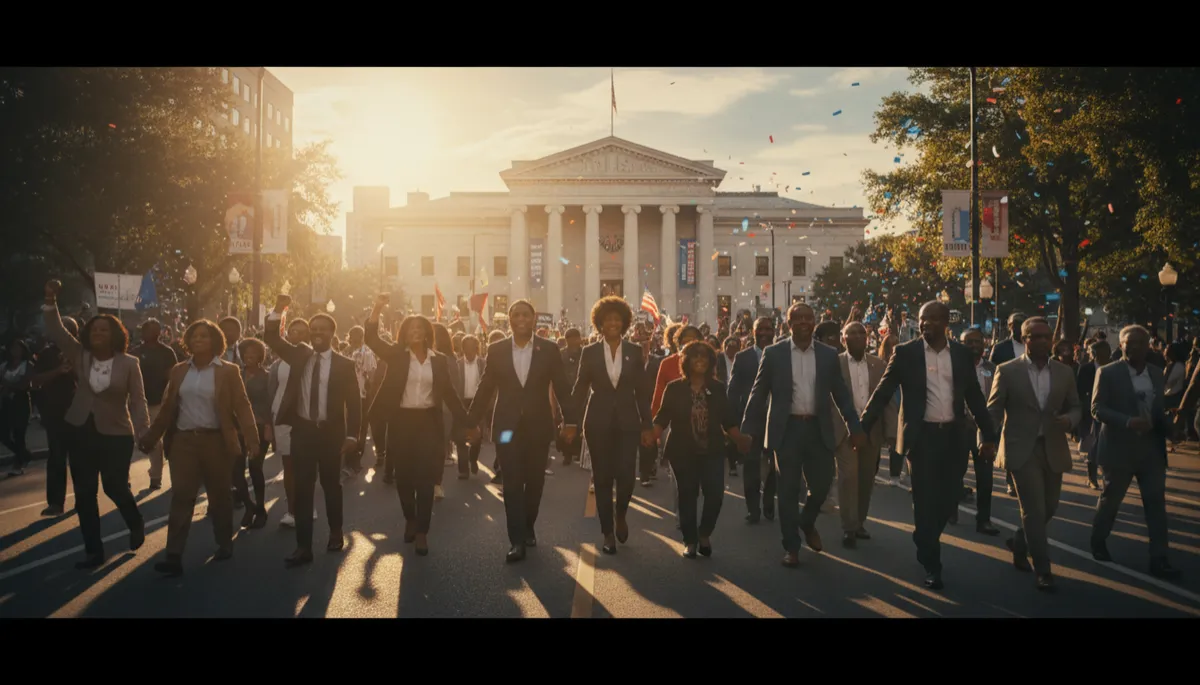
On August 28, 2026, thousands of people filled the Lincoln Memorial steps and stretched down the National Mall for the “Defend the Vote” March on Washington. Organized by Rev. Al Sharpton’s National Action Network alongside Martin Luther King III and Arndrea Waters King, the rally deliberately echoed the 1963 March on Washington where Dr. Martin Luther King Jr. delivered his “I Have a Dream” speech.
Under a hot August sun, speakers from civil rights organizations, labor unions, and faith communities warned that voting rights for Black Americans are once again under direct assault. The call from the stage was clear: with the 2026 midterm elections weeks away, the fight for racial justice now runs straight through the ballot box. Sharpton told the crowd that when the vote is weakened, “every other right we’ve fought for is on the chopping block.”
The Callais Decision and the New Redistricting Wars
The urgency on the Mall was fueled in part by a single Supreme Court case: Louisiana v. Callais. In April, a 6–3 conservative majority reinterpreted core protections of the Voting Rights Act of 1965, ruling that Section 2 does not require Louisiana to draw a second majority-Black congressional district. The Court went further, labeling the state’s attempt to add that district a racial gerrymander, even though it was designed to remedy Black vote dilution after the 2020 Census.
Civil rights lawyers warn the Callais decision effectively narrows when race can be considered to protect minority voters, while doing little to stop politicians from using race quietly to dilute Black power. Justice Elena Kagan, writing in dissent, accused the majority of ignoring “enduring patterns of racial discrimination” and opening the door for maps that scatter Black communities just enough to keep them from electing candidates of their choice.
The ruling’s impact is already rippling across the South. In the months since Callais, more than a dozen states — including Louisiana, Alabama, Mississippi, Georgia, and Texas — have signaled plans to redraw congressional and state legislative maps ahead of November. That means district lines, ballot layouts, and even polling locations could change between now and Election Day, raising the risk of confusion and long lines in heavily Black precincts.
191 Black Seats on the Line
The National Urban League estimates that at least 191 Black-held state legislative seats are now at risk because of the Callais decision and copycat legal challenges. These are not abstract numbers. They represent Black lawmakers who champion police accountability, affordable housing, reproductive rights, and economic opportunity in state capitols from Jackson to Atlanta — and whose districts may be carved up in the next round of redistricting.
At the Congressional Black Caucus Foundation’s Annual Legislative Conference on September 17, 2026, Rep. Gregory Meeks of New York did not mince words. “This is the most consequential election of our lifetime,” he told a packed room of activists and local officials, citing the combination of redistricting, Supreme Court retrenchment, and new state-level voting restrictions. For Black voters, Meeks argued, the stakes are nothing less than “who speaks for our communities in the decade to come.”
The SAVE Act and a New Wave of Voter Suppression
While maps are being redrawn, Congress is also a battleground. The SAVE Act — branded by supporters as an election security measure — has drawn fierce criticism from civil rights advocates, who call it a new form of voter suppression. The proposal would require stringent proof-of-citizenship documents that many eligible Americans, especially low-income and elderly voters, do not have easy access to.
Voting-rights groups estimate that if fully implemented, the SAVE Act could disenfranchise up to 21 million Americans. Black voters, naturalized citizens, students, and renters — people who move frequently or lack ready access to passports and birth certificates — would be hit hardest. Even though the bill has stalled in the Senate, its language is already inspiring state-level copycat laws that tighten registration rules in key battleground states.
Courts, Trump, and the Fight Over the Mailbox
Even as some lawmakers seek to narrow who can register, the courts have handed voting-rights advocates an important win. The Supreme Court recently blocked a Trump executive order restricting vote-by-mail, siding with states and civil rights groups who argued that the order would create chaos and unfairly burden voters who rely on absentee ballots — including seniors, disabled voters, military families, and Black voters in communities with fewer polling places.
The ruling preserves existing mail voting systems in more than a dozen states and protects “grace period” rules that allow ballots postmarked by Election Day to be counted if they arrive a few days later. In a landscape where so many changes are making it harder to vote, this decision offers a rare measure of stability for 2026 — especially for Black voters who used mail ballots in high numbers during the pandemic and never looked back.
Legal Firepower: A New Protection Alliance
Recognizing the scale of the threat, three major civil-rights institutions have formed a new strategic partnership ahead of the midterms. The Lawyers’ Committee for Civil Rights Under Law, the National Bar Association, and the National Urban League announced a coordinated effort to protect voters during the 2026 midterm elections.
The alliance plans to deploy hotlines, on-the-ground legal observers, and rapid-response litigation teams to challenge illegal purges, discriminatory polling-place closures, and last-minute rule changes. For Black communities in metro areas like Atlanta — where precinct consolidation and long lines have become familiar barriers — that legal backup could prove decisive when problems arise on or before Election Day.
Sixty-One Years After the Voting Rights Act: “Civic Engagement Is Survival”
This summer marked the 61st anniversary of the Voting Rights Act of 1965, the landmark law won through blood, jail, and sacrifice in Selma and across the Jim Crow South. But instead of a quiet celebration, advocacy groups used the anniversary to sound an alarm. Their message: “Protect the ballot — civic engagement is survival.”
With federal protections weakened and state legislatures moving fast, organizers stress that no court decision can substitute for turnout. From Atlanta churches to HBCU campuses, from barbershops to Instagram Lives, local leaders are pushing a simple but ambitious organizing formula: “Me Plus Five.”
“Me Plus Five”: Turning Anxiety into Action
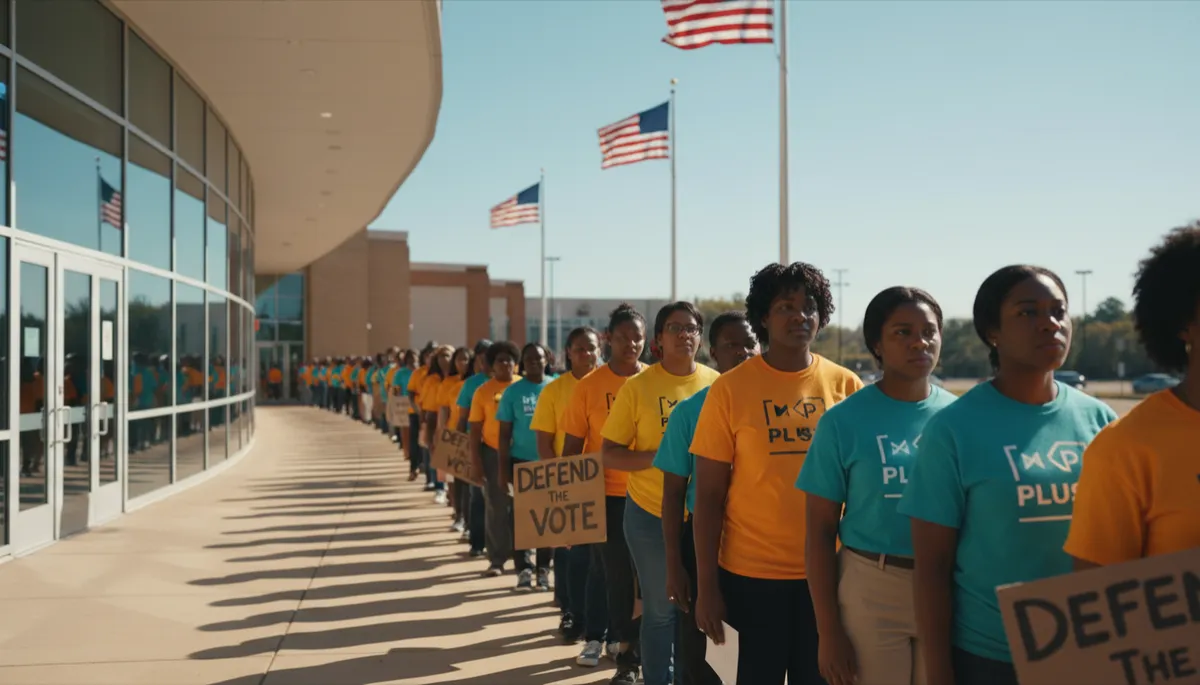
The “Me Plus Five” strategy asks every committed voter to bring at least five others with them to the polls — family, neighbors, coworkers, sorority sisters, teammates. It is part civic pledge, part organizing math: if even a fraction of Black voters adopt the model, it could counteract the impact of voter suppression, gerrymandered maps, and low midterm turnout in a single stroke.
Community groups in Atlanta and across the South are building “Me Plus Five” lists, pairing them with practical tools: text reminders, rides to early voting sites, and neighborhood teach-ins on how redistricting and the Callais decision may have changed local ballots. The goal is not just to vote, but to vote informed — understanding which races will decide control of state legislatures, school boards, prosecutors’ offices, and the very officials who draw the next decade’s lines.
SEO Title: Voting Rights Under Siege: The Battle for Black Ballots in 2026
SEO Meta Description: As the 2026 midterm elections approach, Black voters face new threats from the Callais decision, redistricting, the SAVE Act, and voter suppression — and answer with mass mobilization, legal alliances, and a “Me Plus Five” strategy to defend the Black vote.
SEO Keywords: voting rights, Black voters 2026, Callais decision, Defend the Vote March, midterm elections, redistricting, Congressional Black Caucus, SAVE Act, voter suppression, Black Atlanteans News




