We Bombed Iran. But Who Is We? What This War Is Really Costing Black America
We Bombed Iran. But Who Is We? What This War Is Really Costing Black America
When the headlines read "We bombed Iran," many Black Americans had one question — who exactly is "we"?
On February 28, 2026, the United States and Israel launched a coordinated military attack on Iran, killing the country's Supreme Leader and triggering a war that is now in its 19th day. The White House calls it a national security matter. But for Black America — a community that has always been asked to fight for a country that doesn't always fight for us — this war hits differently.
Let's break down exactly why this matters to YOU.
It's Already Hitting Your Wallet — Hard
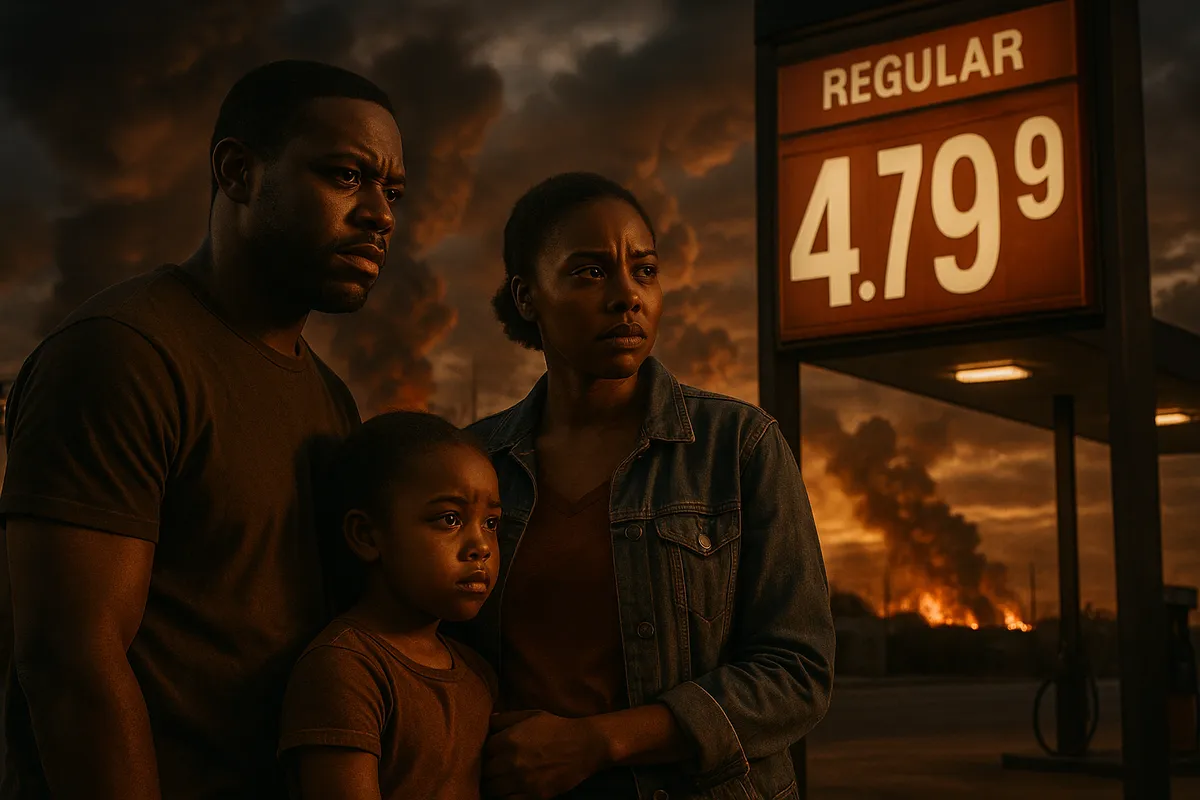
You felt it at the pump. You felt it at the grocery store. And it's going to get worse before it gets better.
The effective closure of the Strait of Hormuz has caused a major supply shortage of petroleum products, leading to immediate surges in oil and gas prices. The conflict disrupted approximately 20% of global oil supplies, causing Brent Crude oil prices to rise from around $70 to over $110 per barrel within days. The national average gasoline price reached $3.79 a gallon — up about 87 cents, or 30%, from just a month ago.
And it's not just gas. "The war is putting upward pressure on prices for gasoline, electricity, and groceries through higher transportation, packaging, and fertilizer costs," says Wayne Winegarden, an economist at the Pacific Research Institute. Even if you don't drive, the impact of higher gas prices is nearly impossible to avoid. Companies that see their fuel costs increase may pass at least some — if not all — of that expense on to consumers, either as a surcharge or price hike. And experts warn that every week this continues, we could see another 25 to 40 cent increase at the pump.
The K-Shaped Economy Is Getting Worse — And Black Folks Are on the Down Slope
The Iran war — and the accompanying spike in oil and gasoline prices — risks exacerbating the so-called K-shaped economy. The term uses the letter K to illustrate diverging economic experiences: higher-income households do better and better, forming the upward arm, while lower-income households fall further behind, forming the downward arm.
As Moody's chief economist Mark Zandi put it: "It's particularly hard on lower-income households that spend a higher share of the budget on gas. That's the group that's already under a lot of financial pressure."
Black households are disproportionately represented in that lower-income bracket. This war isn't just an overseas conflict — it's a tax on Black survival.
Black Bodies on the Front Line — Again
Here's the part that should make every Black American stop and think.
Black Americans are not ambivalent to war, service, or sacrifice. Even though Black people make up only 13.7% of the population, we comprise 21.4% of all military branches. And the loved ones who enlisted with the promise of paying for school and working themselves out of poverty will be sucked into a war that 93% of Black people openly oppose.
We've always been here when America needed us. But when America claims a collective "we" in war, many Black Americans hear a familiar question — belonging when sacrifice is required, exclusion when justice is demanded. The plain truth: Black Americans are extended the identity of "we" when sacrifice is required — in war, in labor, in culture. But we are seen as disposable and excluded when benefits, payment, and respect are asked for.
Black America Is Speaking Out
The Black community isn't silent on this. Protests were held in cities including Atlanta, Baltimore, Boston, Chicago, Los Angeles, Miami, Minneapolis, Philadelphia, and more. Among those organizing on the ground: Black Alliance for Peace.
And Black voices online have been even more direct: "Dear Iran, Black People don't have a damn thing to do with this war. We want to avoid these folks because they hate us too. Signed, Black Americans."
So What Do We Do?
This war is happening whether we want it or not. But being informed is the first act of resistance.
- Watch your budget — gas, groceries, and electricity bills are going up. Plan accordingly.
- Know your rights — if you or someone you love is in the military, stay informed about deployment risks.
- Stay engaged — local anti-war organizing is happening in your city right now.
- Reject the "we" — until this country shows up for Black people the same way it asks Black people to show up for it.
The question isn't just what's happening in Iran. The question is — what is this war costing us, and who's going to pay for it?
Spoiler: History says it won't be the people who started it.
Stay informed. Stay organized. Stay Black.




